What This Document Is
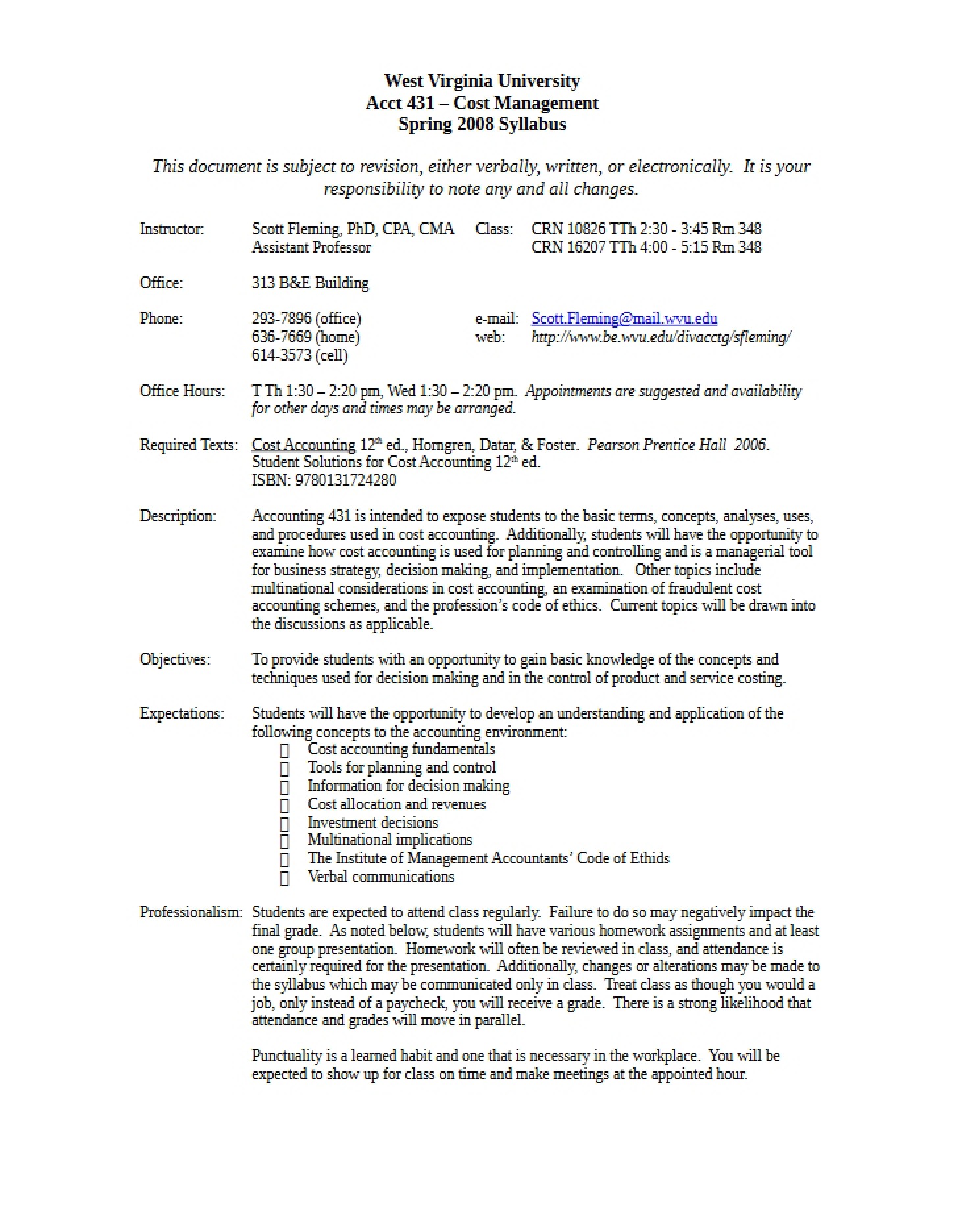
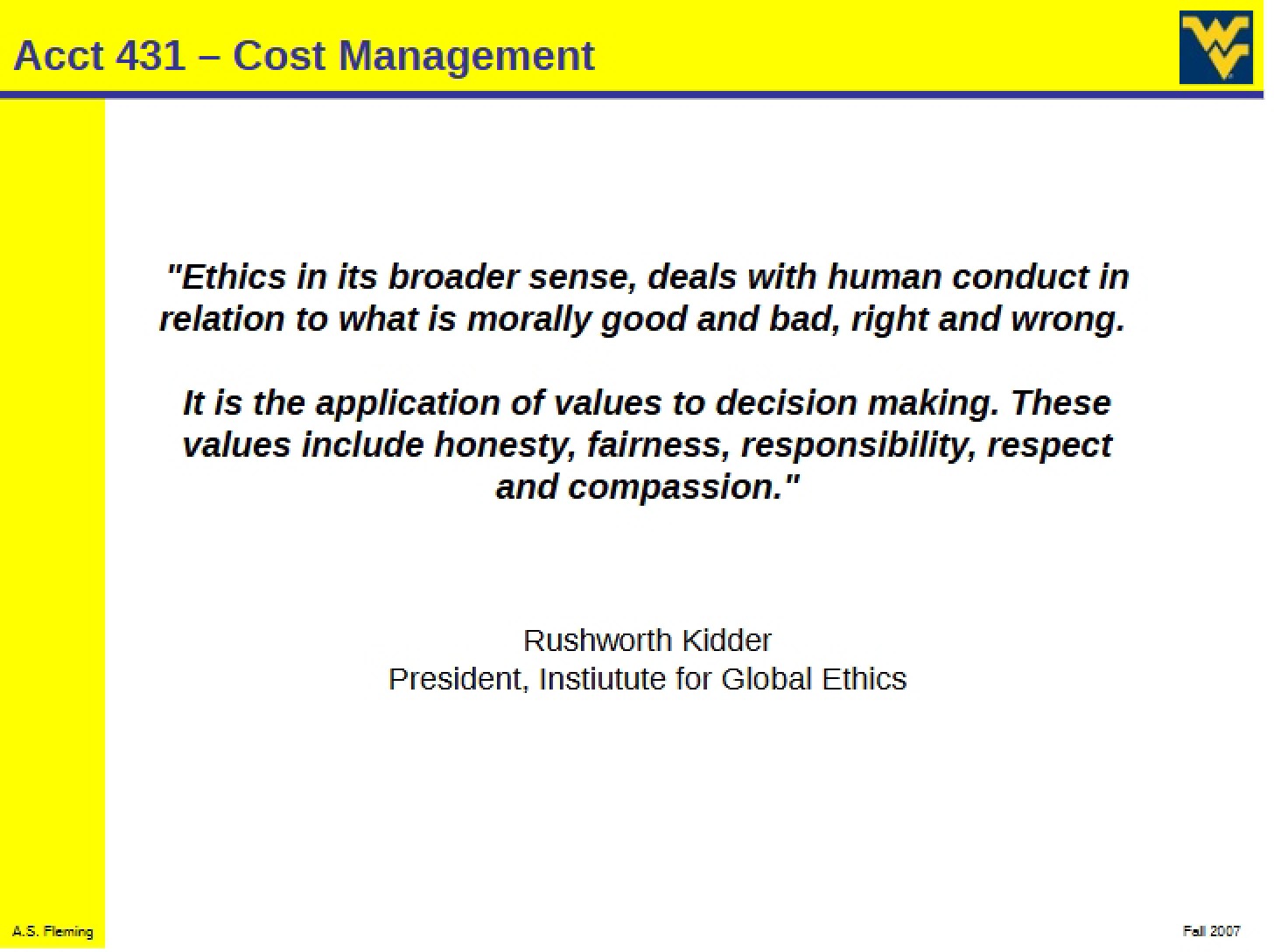
This resource is a compilation of foundational principles and guidelines related to ethical conduct within the field of cost management and accounting. Specifically, it focuses on the ethical standards set forth by the Institute of Management Accountants (IMA). It delves into the core values that underpin professional responsibility and explores different philosophical approaches to ethical decision-making. The material draws upon historical and contemporary thought, referencing figures from Aristotle to modern commentary, to illustrate the enduring relevance of ethical considerations in business.
Why This Document Matters
This compilation is crucial for students in ACCT 431 (Cost Management) at West Virginia University, and anyone preparing for a career in accounting, finance, or management. Understanding ethical frameworks isn’t just about avoiding legal trouble; it’s about building trust with stakeholders, maintaining professional integrity, and making sound judgments in complex situations. It’s particularly valuable when facing dilemmas involving conflicting interests, data integrity, or reporting responsibilities. Reviewing these principles will help you navigate real-world scenarios and prepare for professional certifications.
Common Limitations or Challenges
This resource provides a broad overview of ethical theory and the IMA’s standards. It does *not* offer specific case studies with detailed resolutions, nor does it provide a step-by-step guide to resolving every ethical challenge you might encounter. It also doesn’t cover the legal ramifications of unethical behavior in exhaustive detail – it focuses on the *principles* guiding ethical conduct. It’s a foundational resource, meant to be supplemented with practical application and further study.
What This Document Provides
* An exploration of the historical roots of ethical thought, drawing from philosophical perspectives.
* An overview of different ethical frameworks – including consequentialist and deontological approaches – and their implications for decision-making.
* A presentation of the core ethical principles advocated by the IMA, such as honesty, fairness, objectivity, and responsibility.
* Discussion of key responsibilities for IMA members, including maintaining competence and upholding confidentiality.
* Links to external resources, including the official IMA Statement of Ethical Professional Practice.