What This Document Is
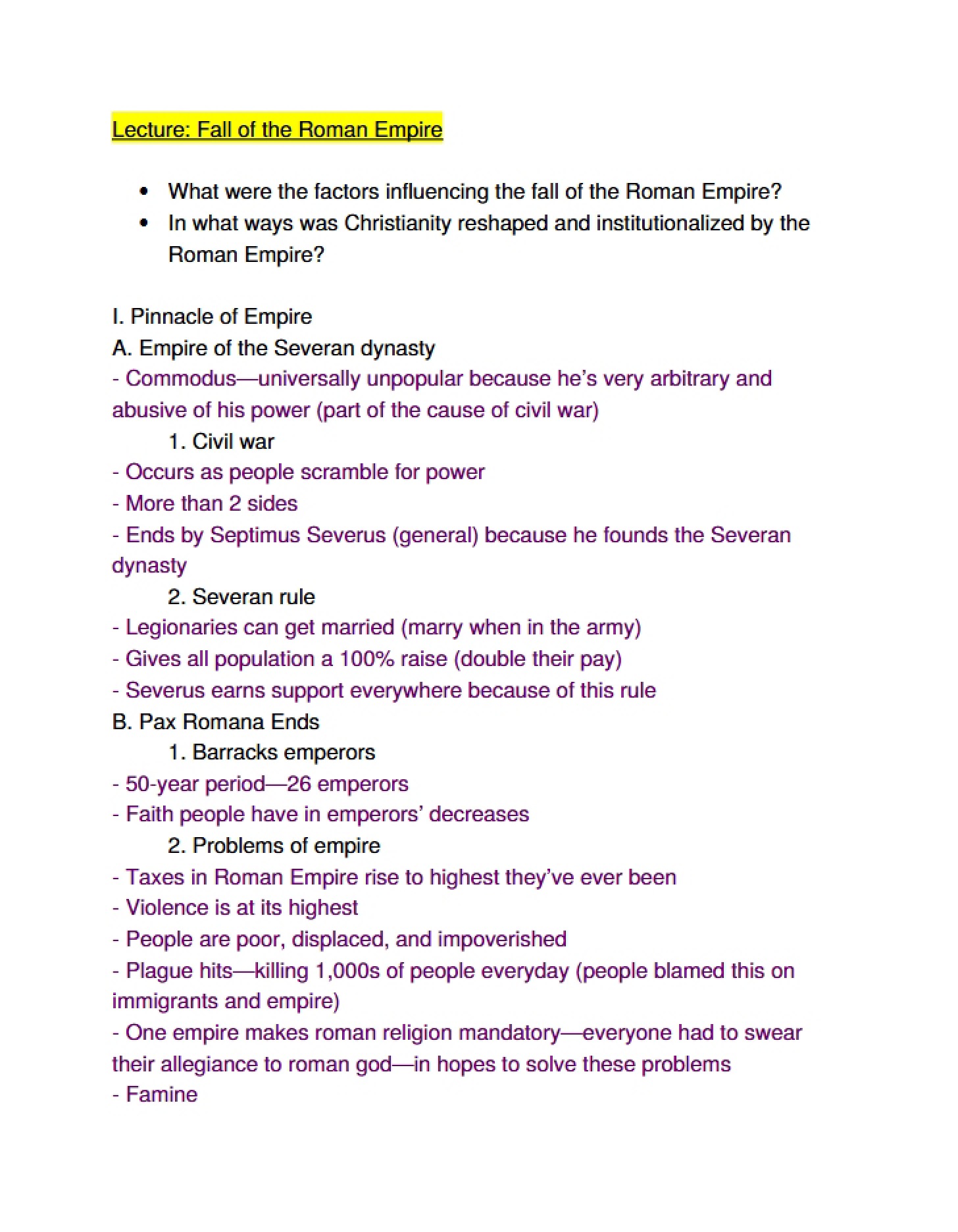
This resource offers a comprehensive exploration of the transformation of Rome from a republic to an empire. Designed for students of Roman history, specifically within a university-level course, it delves into the complex political, social, and economic shifts that characterized this pivotal period. It examines the factors contributing to the rise of the empire and the resulting changes in Roman life and governance.
Why This Document Matters
This material is ideal for students seeking a deeper understanding of the forces that shaped one of history’s most influential civilizations. It’s particularly useful when preparing for in-class discussions, crafting research papers, or studying for assessments related to the Roman Empire. Access to the full content will provide a robust foundation for analyzing the long-term consequences of Rome’s imperial expansion and internal struggles.
Topics Covered
* The expansion of Roman territories and its impact.
* Socioeconomic changes within Roman society during the imperial era.
* The evolving roles of different social classes – senators, patricians, plebeians, and equestrians.
* The impact of wealth distribution and corruption on Roman governance.
* Daily life and cultural norms in Imperial Rome, including family structures.
* Periods of political instability, including slave revolts and internal conflicts.
* The emergence of reform movements and the responses to them.
* Key figures who attempted to address societal issues.
What This Document Provides
* An overview of the key challenges faced by Rome as it transitioned to an empire.
* Insight into the changing dynamics of Roman citizenship and legal rights.
* A framework for understanding the interplay between political power, economic factors, and social unrest.
* Examination of the factors that contributed to both the strength and vulnerabilities of the Roman state.
* Context for understanding the motivations and actions of key historical figures.