What This Document Is
This document presents a detailed exploration of indexing techniques within the field of Search and Data Mining. Specifically, it focuses on the core principles behind building and utilizing inverted indexes – a foundational component of modern information retrieval systems. It’s designed as a lecture plan outlining the key considerations for implementing a functional search system, moving beyond theoretical concepts to practical implementation issues. The material is geared towards students in an advanced undergraduate or graduate-level course.
Why This Document Matters
This resource is invaluable for students seeking a deeper understanding of how search engines work “under the hood.” It’s particularly helpful for those preparing to implement their own information retrieval systems or analyze the performance of existing ones. If you’re grappling with the challenges of efficiently storing and retrieving large volumes of text data, or are interested in the trade-offs involved in different indexing strategies, this material will provide a solid foundation. Accessing the full content will unlock a comprehensive understanding of these critical concepts.
Topics Covered
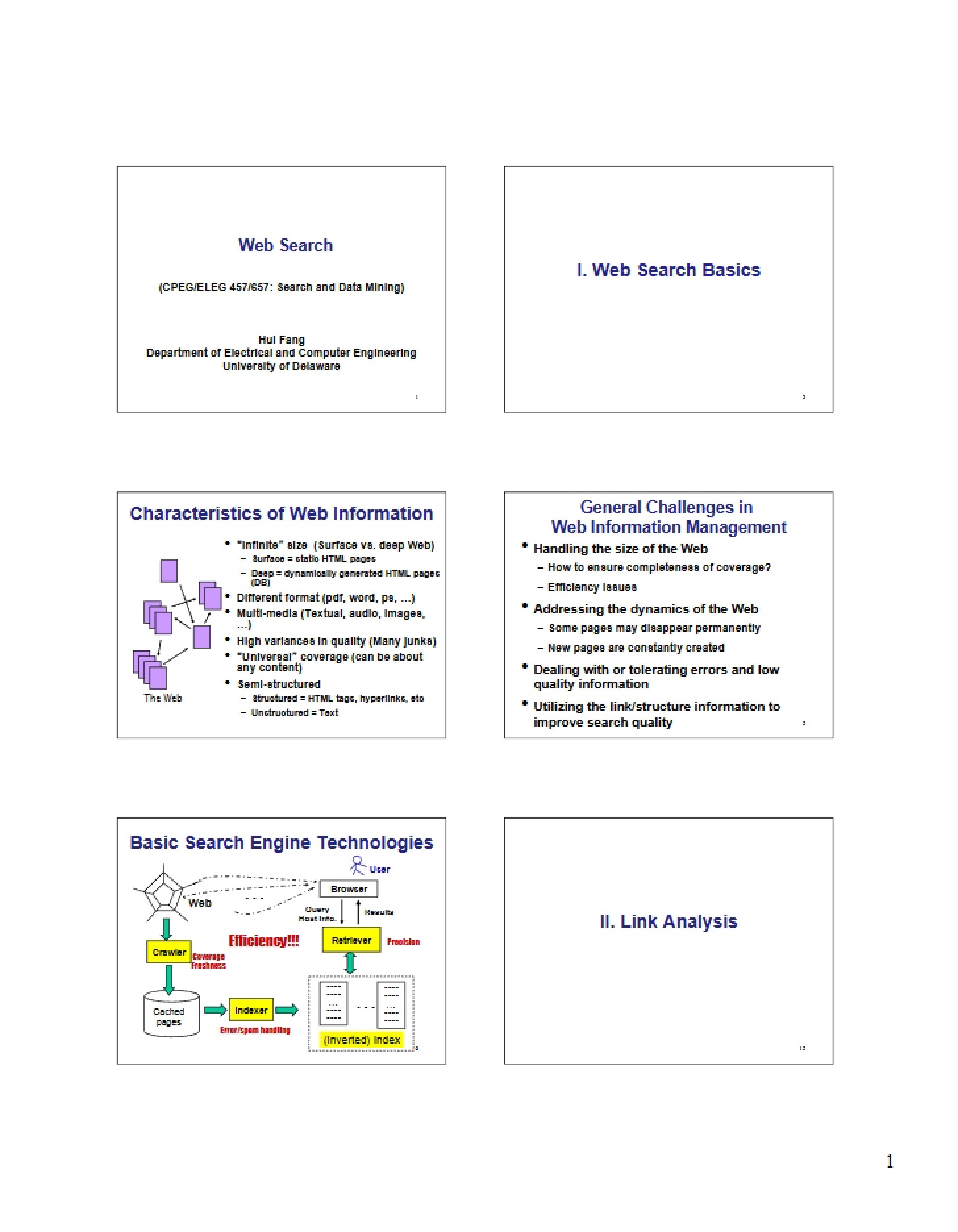
* Fundamentals of Information Retrieval (IR) system architecture
* Inverted Index construction and properties
* Data structures for efficient index storage and retrieval
* Integer compression techniques for optimizing index size
* Sort-based index construction methods for large datasets
* Strategies for ranking documents based on query terms
* Performance considerations related to RAM vs. hard drive access
* Boolean and Ranked Retrieval models
What This Document Provides
* A discussion of the importance of index size and retrieval speed.
* An overview of the components of an inverted index, including dictionaries and postings.
* An examination of various integer compression methods to reduce storage requirements.
* A detailed look at sort-based inversion techniques for handling large collections.
* Insights into improving search efficiency through pre-computation and optimized data access.
* A framework for understanding how to score and rank documents based on query relevance.