What This Document Is
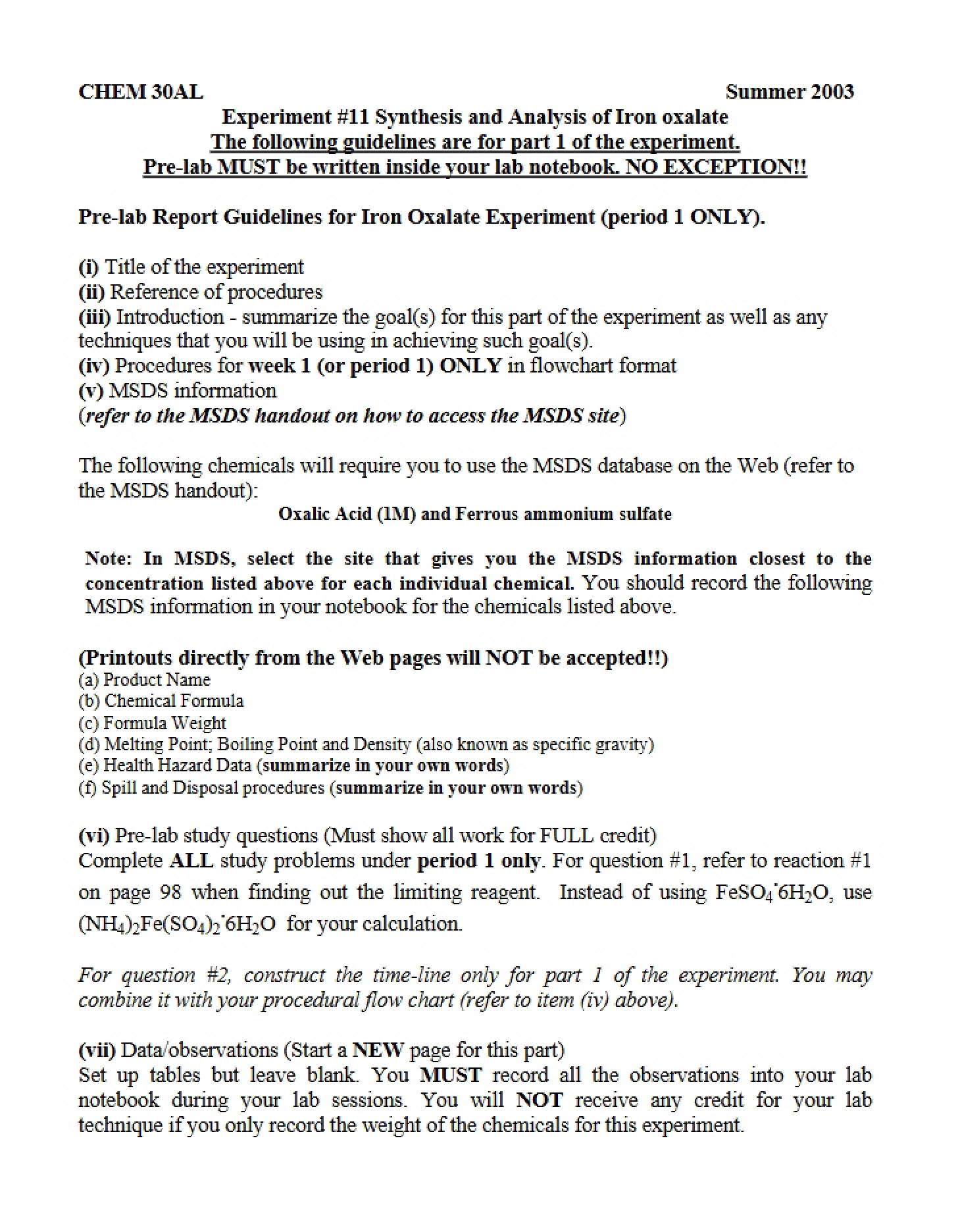
This document provides detailed guidelines for a laboratory experiment in Organic Chemistry I, specifically focusing on the extraction and purification of a naturally occurring compound from a plant source. It’s structured as a combination of pre-laboratory preparation instructions and post-laboratory report expectations, designed to support student success in a multi-session lab setting. It’s intended to be used in conjunction with the course lectures and the experiment itself.
Why This Document Matters
This resource is essential for students enrolled in Organic Chemistry I at UCLA (CHEM 30A) undertaking the caffeine extraction experiment. It will be particularly helpful when preparing for the lab session, ensuring a thorough understanding of the principles involved, and when compiling a comprehensive lab report afterward. Students who carefully review these guidelines will be well-equipped to perform the experiment effectively and accurately document their findings. Access to the full document will ensure you are fully prepared for all stages of this important lab work.
Topics Covered
* Extraction techniques in organic chemistry
* Purification methods for isolating natural products
* Partition coefficients and their application to liquid-liquid extraction
* Data analysis and interpretation of experimental results
* Spectroscopic analysis (UV and Mass Spectrometry) – foundational concepts
* Laboratory safety protocols and proper record-keeping
* Flowcharting experimental procedures
What This Document Provides
* A structured pre-lab report template with specific areas to address.
* Guidance on preparing a visual representation of the experimental process.
* A series of conceptual questions designed to test understanding of extraction principles.
* Detailed instructions for organizing and presenting experimental data.
* Specific requirements for the post-lab report, including sections on abstract writing, data analysis, and spectroscopic interpretation.
* Clear expectations for in-lab observations and their importance to the final report.