What This Document Is
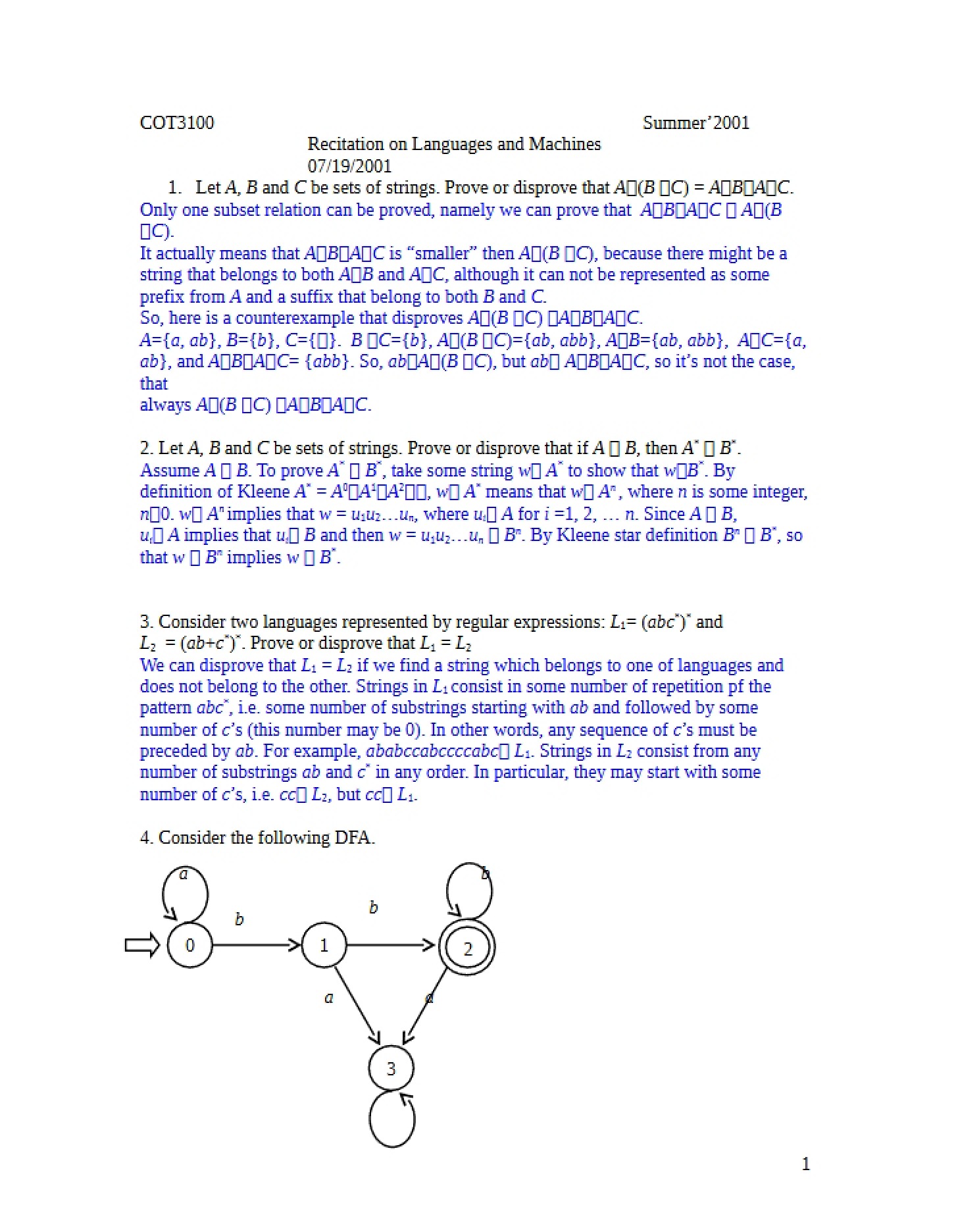
This document presents lecture notes from an Introduction to Discrete Structures course (COT 3100C) at the University of Central Florida. It appears to be a focused exploration of fundamental mathematical concepts crucial for computer science and related fields. The material builds a foundation in abstract thinking and rigorous proof techniques, essential for advanced coursework and problem-solving. It’s designed to supplement classroom learning and provide a structured overview of key ideas.
Why This Document Matters
This resource is ideal for students currently enrolled in a discrete mathematics course, or those preparing to take one. It’s particularly beneficial for individuals who want a clear, concise reference to support their understanding of core concepts. Students who benefit from detailed definitions and a logical progression of ideas will find this material valuable. It can be used for review before exams, clarifying confusing topics, or reinforcing understanding after a lecture. Accessing the full content will provide a deeper understanding of these foundational principles.
Topics Covered
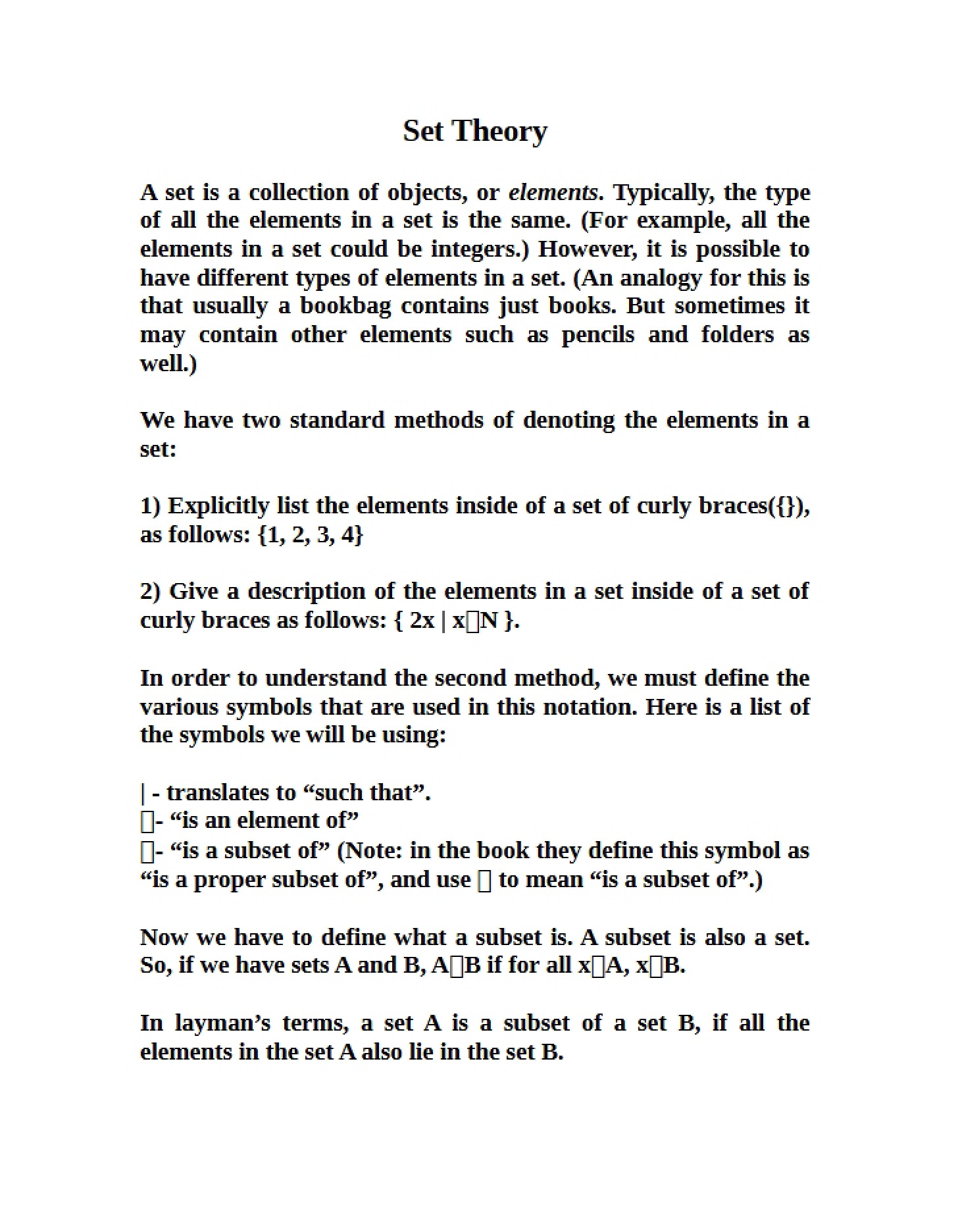
* Set Theory: Generalized unions and intersections of sets.
* Functions: Definitions, properties, and classifications.
* Domain and Codomain: Understanding the input and output spaces of functions.
* Injective, Surjective, and Bijective Functions: Exploring different types of function mappings.
* Inverse Functions: The concept of reversing a function’s effect.
* Composition of Functions: Combining functions to create new functions.
* Graphical Representation of Functions: Visualizing function behavior.
What This Document Provides
* Formal Definitions: Precise mathematical definitions of key terms.
* Conceptual Explanations: Introductions to core ideas in discrete mathematics.
* Structured Presentation: A logical flow of topics, building from basic to more complex concepts.
* Notational Conventions: Standard mathematical notation used throughout the field.
* A focused exploration of functions and their properties, laying the groundwork for more advanced topics.