What This Document Is
This document represents a lecture focusing on advanced techniques within Engineering Mathematics A (ESE 318) at Washington University in St. Louis. Specifically, Lecture Five delves into the powerful world of integral transforms – building upon previously established concepts – and their application to solving complex mathematical problems. The core focus is on the Laplace transform and its inverse, extending its utility to more sophisticated scenarios involving convolution, integro-differential equations, and systems of ordinary differential equations (ODEs).
Why This Document Matters
This lecture material is crucial for engineering students tackling problems that require a deeper understanding of mathematical modeling and solution techniques. It’s particularly beneficial for those studying signal processing, control systems, or any field where dynamic systems are analyzed. Students will find this resource valuable when needing to move beyond basic Laplace transform applications and address more realistic, interconnected systems. It’s best utilized *after* a solid foundation in basic Laplace transforms has been established, and as preparation for more advanced coursework in related areas.
Common Limitations or Challenges
This lecture provides a focused exploration of specific techniques. It assumes prior knowledge of fundamental Laplace transform properties and methods. It does not serve as a comprehensive introductory text to Laplace transforms; rather, it builds upon existing understanding. Furthermore, while the lecture explores the theoretical underpinnings of these methods, it doesn’t offer a substitute for dedicated practice in applying them to a wide range of problems. It also doesn’t cover all possible types of differential equations or integral transforms.
What This Document Provides
* A detailed exploration of the convolution theorem and its implications.
* Methods for tackling integro-differential equations using Laplace transforms.
* An introduction to applying Laplace transforms to systems of ODEs.
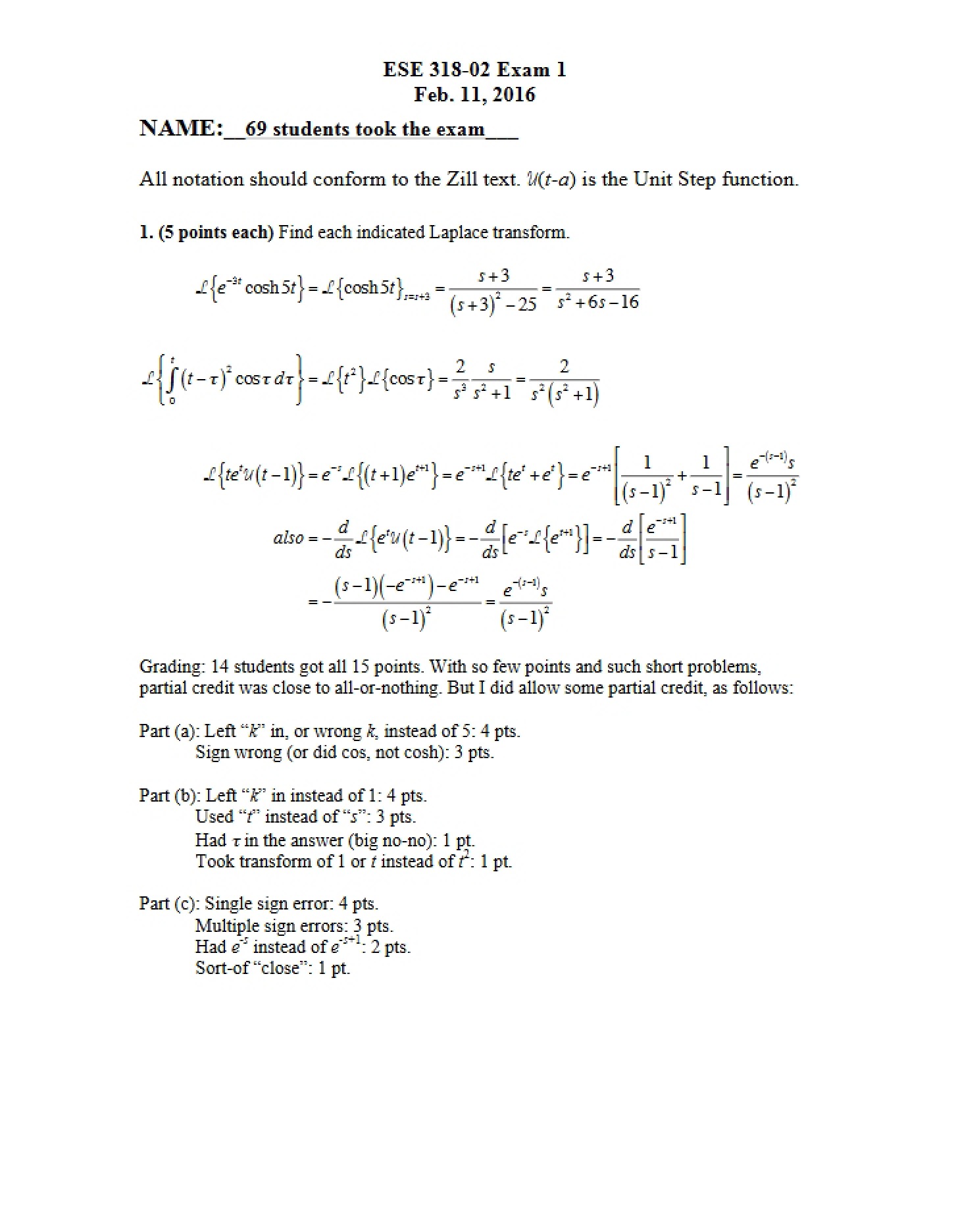
* Illustrative examples demonstrating the application of these techniques (though the specific solutions are not provided here).
* Connections between integral calculus and Laplace transform methods.
* Discussion of common pitfalls and strategies for avoiding errors in applying these transforms.