What This Document Is
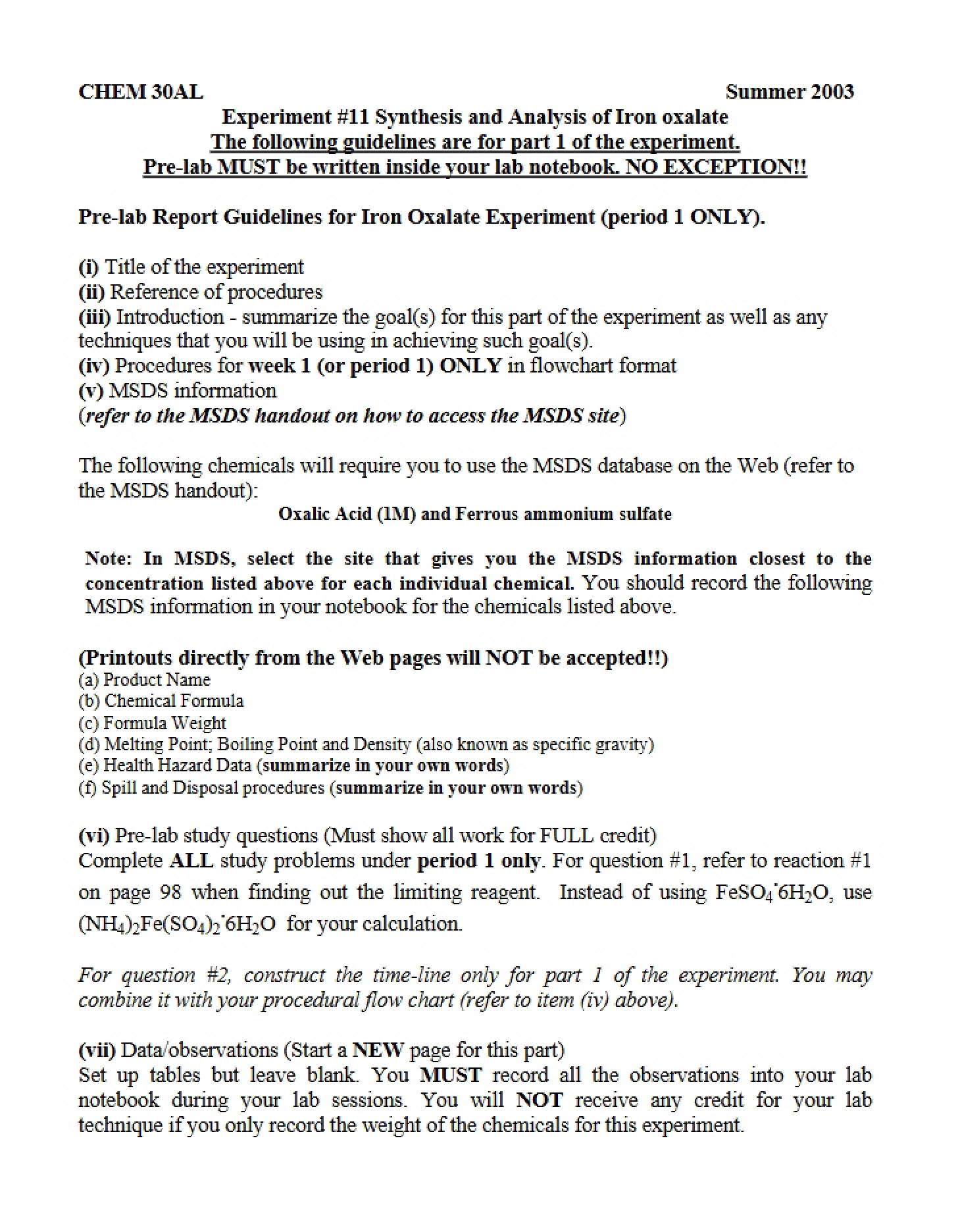
This document is a detailed guide supporting the second part of an experiment focused on the analysis of an iron oxalate complex within an Organic Chemistry I laboratory course (CHEM 30A) at UCLA. It outlines expectations for both pre-laboratory preparation and post-laboratory reporting, specifically concerning redox titration techniques applied to oxalate analysis. It’s designed to help students thoroughly understand the experimental process and effectively communicate their findings.
Why This Document Matters
This guide is essential for students enrolled in CHEM 30AL who are undertaking the iron oxalate experiment. It’s most valuable *before* beginning lab work, to ensure proper preparation, and *after* completing the experiment, to facilitate accurate and comprehensive report writing. Students aiming for a strong understanding of redox titrations, data analysis, and error assessment will find this resource particularly beneficial. Access to the full document will ensure you meet all requirements for a successful lab experience.
Topics Covered
* Redox Titration Principles
* Iron Oxalate Complex Analysis
* Laboratory Safety & Chemical Handling (MSDS information)
* Data Recording & Organization
* Quantitative Data Analysis & Stoichiometry
* Error Analysis (inherent and random error)
* Scientific Report Writing (abstracts, data presentation, conclusions)
What This Document Provides
* Detailed guidelines for pre-lab preparation, including required sections and specific information to gather.
* Instructions for creating a procedural flow chart relevant to the experimental steps.
* A list of chemicals requiring Material Safety Data Sheet (MSDS) review, and the specific data points to record.
* A framework for post-lab report structure, outlining required sections like abstract, data presentation, and error analysis.
* Guidance on calculations related to oxalate determination and error assessment.
* Specific instructions regarding data analysis expectations and the use of provided laboratory equipment uncertainties.