What This Document Is
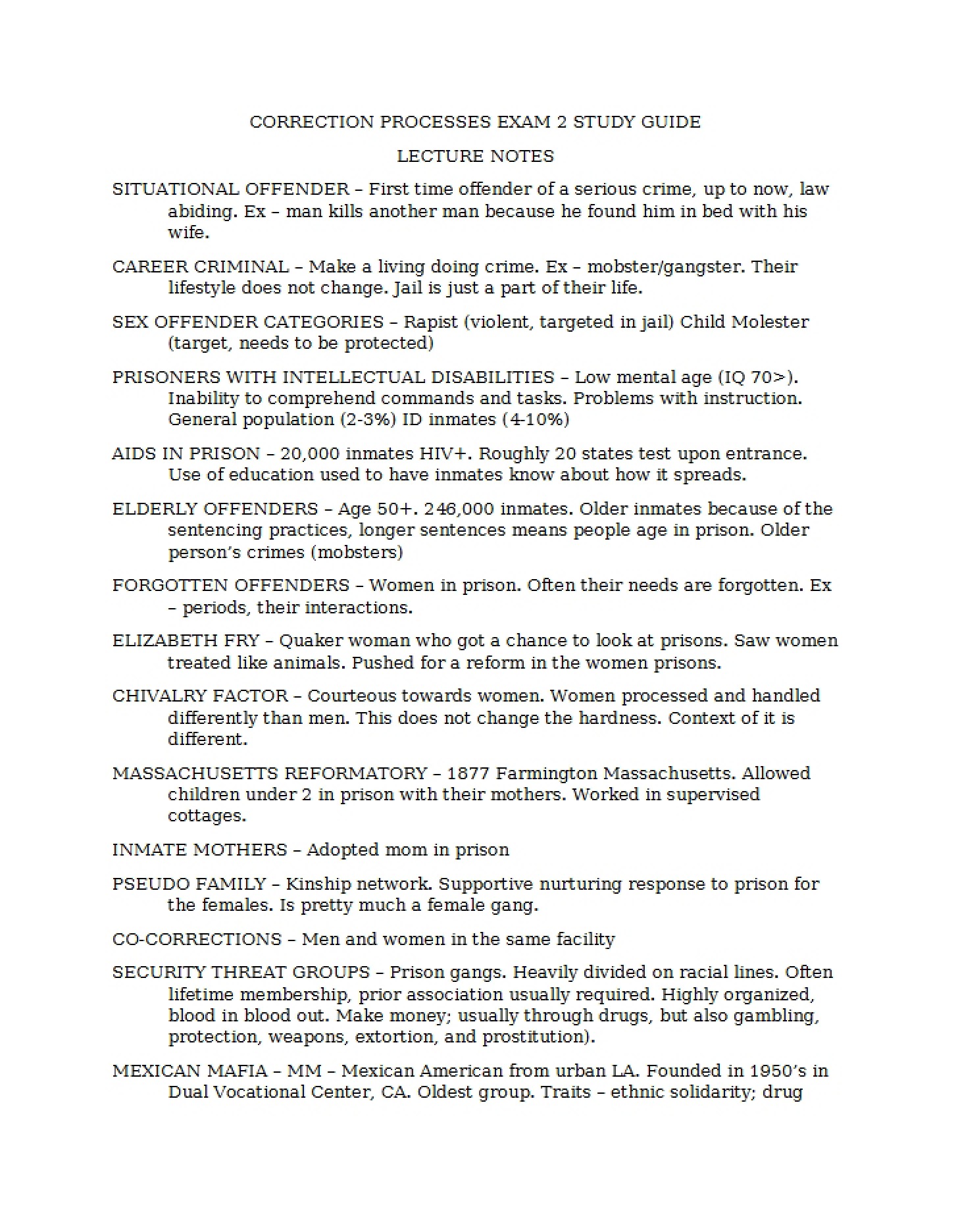
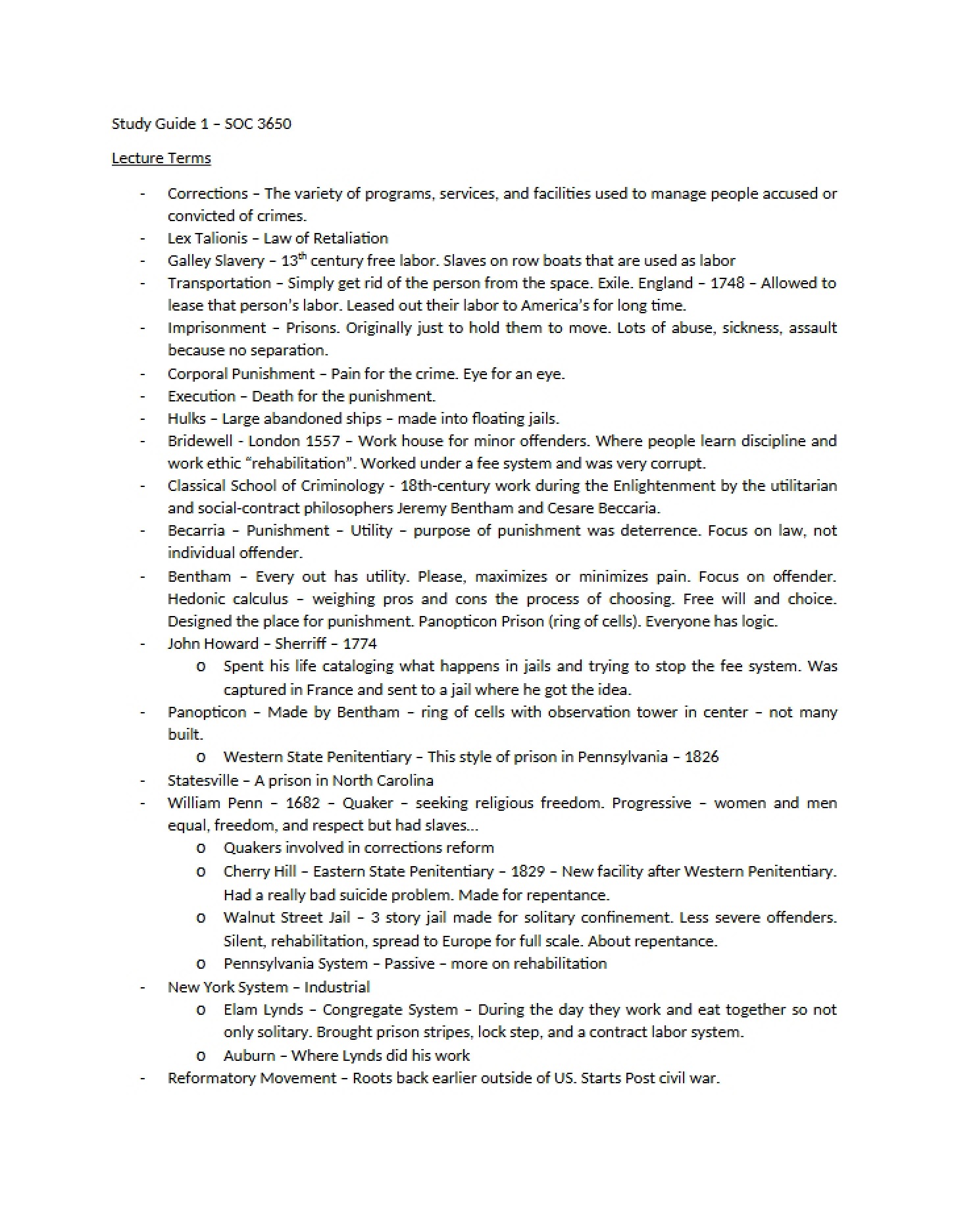
This study guide delves into the complex world of the criminal justice system, specifically within the framework of the correctional process. It explores various theoretical perspectives on the causes of crime and punishment, moving beyond simple explanations to examine the societal forces at play. The material investigates how different schools of thought – conservative, liberal, and critical – approach understanding criminal behavior and the appropriate responses. It’s a focused exploration of the intersection between social structures, individual choices, and the application of justice.
Why This Document Matters
Students enrolled in courses like Correctional Process (SOC 3650) at Western Michigan University, or similar programs in criminology, sociology, and criminal justice, will find this resource particularly valuable. It’s ideal for those seeking a deeper understanding of the philosophical underpinnings of the justice system and the debates surrounding crime control. Use this guide to prepare for class discussions, broaden your understanding of key concepts, and build a strong foundation for more advanced study. It’s especially helpful when grappling with the complexities of social inequality and its relationship to criminal justice outcomes.
Common Limitations or Challenges
This guide provides a theoretical overview and does *not* offer specific case studies, legal precedents, or detailed statistical analyses. It won’t provide definitive answers to complex ethical dilemmas within the system, nor does it offer a step-by-step guide to navigating the legal process. The material focuses on conceptual frameworks and critical perspectives, requiring further research and application to real-world scenarios. It is designed to *supplement* course materials, not replace them.
What This Document Provides
* An overview of major perspectives on crime causation (conservative, liberal, critical).
* Exploration of influential theoretical frameworks related to crime and social structure.
* Discussion of concepts like white-collar crime, strain theory, and the “school-to-prison pipeline.”
* Examination of the role of social factors, including class and race, in the criminal justice system.
* Analysis of arguments for and against the death penalty, including considerations of cost, deterrence, and morality.
* Key terminology related to criminal justice policy and practice.