What This Document Is
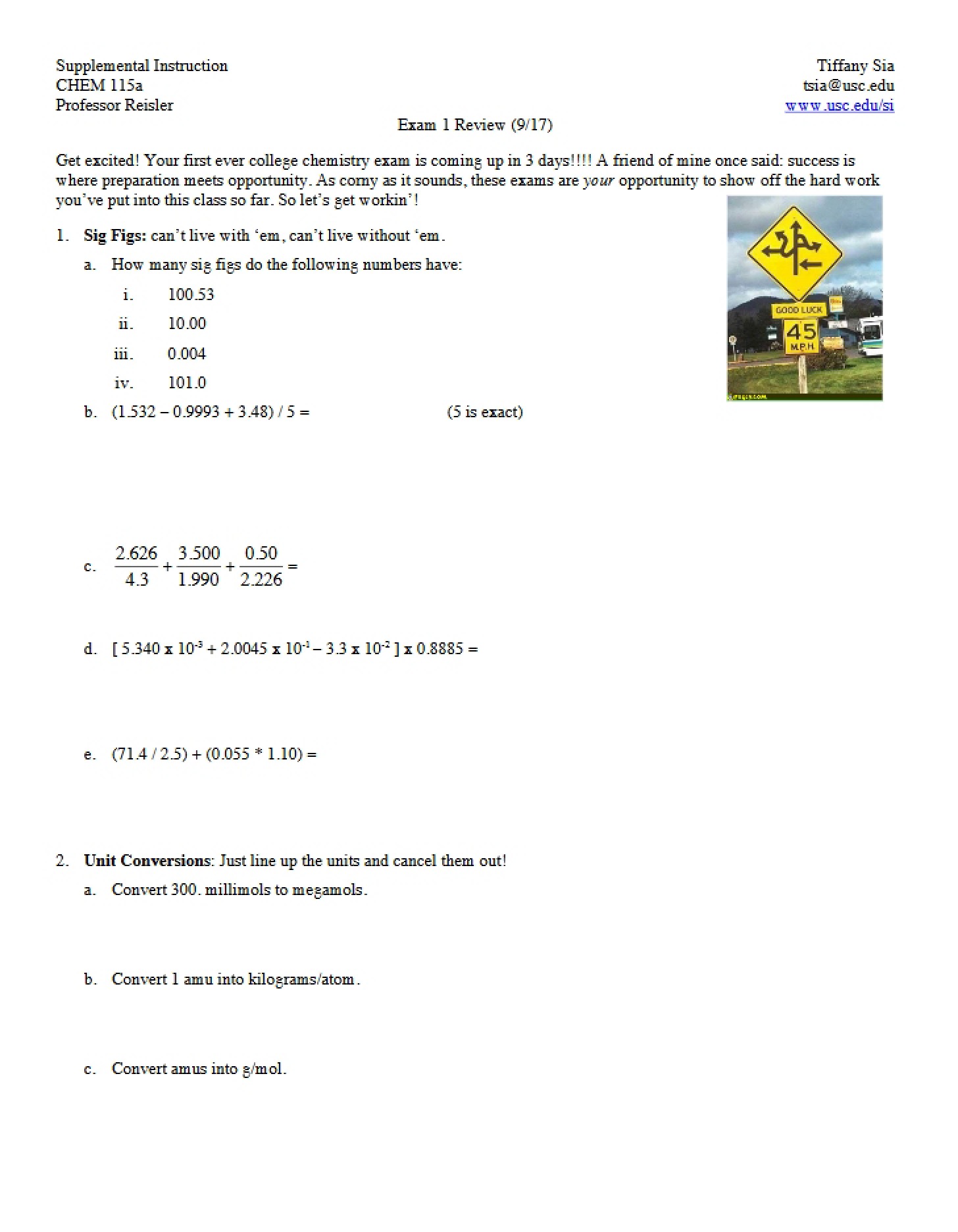
This document is a detailed key for a practice exam in General Chemistry (CHEM 105) at the University of Southern California. Specifically, it’s designed for students preparing for Exam 1 (version 105a). It outlines the expected format and types of questions encountered on the actual exam, covering foundational concepts in chemistry. The key provides a structured approach to reviewing core principles and assessing understanding before a high-stakes evaluation.
Why This Document Matters
This resource is invaluable for USC students enrolled in CHEM 105 who are looking to maximize their exam performance. It’s best utilized *after* attempting the corresponding practice exam – allowing you to identify areas of strength and weakness. By reviewing this key, you can pinpoint specific concepts needing further study and refine your problem-solving techniques. It’s particularly helpful for understanding the expected level of detail and precision required in your answers. Students who proactively use this key alongside the practice exam significantly improve their confidence and preparedness.
Common Limitations or Challenges
This key does *not* contain fully worked-out solutions or step-by-step explanations. It’s designed to be a reference for checking your own work and understanding the correct approaches, not a substitute for independent problem-solving. It also assumes you have a solid grasp of the fundamental concepts covered in the course lectures and readings. Simply memorizing the answers within this key will not guarantee success on the actual exam; a conceptual understanding is crucial.
What This Document Provides
* Identification of key elements and their corresponding names.
* Formula determination based on chemical names, and vice versa.
* Practice with naming and formulating various chemical compounds, including acids and salts.
* Calculations involving isotopic abundance and average atomic mass.
* Elemental composition analysis of molecular compounds.
* Balancing chemical equations.
* Empirical and molecular formula determination from combustion data.
* Limiting reactant identification and excess reactant calculations.