What This Document Is
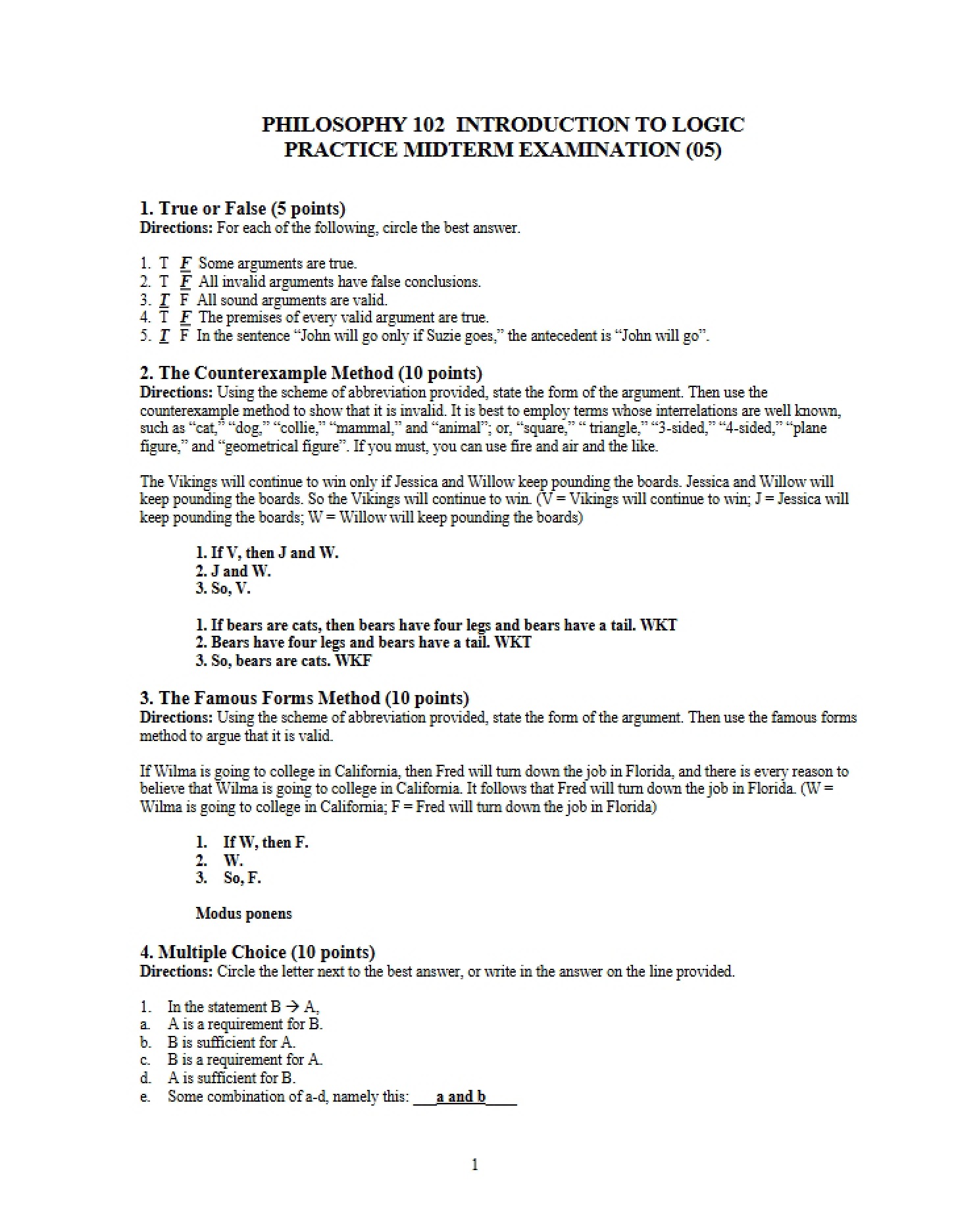
This is a practice examination designed to help students prepare for a midterm assessment in an introductory logic course (PHIL 102) at Western Washington University. It focuses on core concepts and skills related to formal logic, including statement analysis, argument structure, and symbolic representation. The practice exam is structured to mirror the format and difficulty level of the actual midterm, offering a valuable opportunity for self-assessment.
Why This Document Matters
This resource is ideal for students enrolled in introductory logic courses who are looking to solidify their understanding of key principles and test their ability to apply them. It’s particularly useful in the weeks leading up to a midterm exam, allowing students to identify areas where they need further study and practice. Working through this practice exam under timed conditions can also help build confidence and reduce test anxiety. Students who proactively engage with this type of material often perform better on formal assessments.
Common Limitations or Challenges
This practice exam is a tool for self-evaluation and does *not* provide detailed explanations or step-by-step solutions. It’s designed to challenge your existing knowledge, not to teach you new concepts. While it covers a range of topics typically found in an introductory logic midterm, it may not be exhaustive of *every* possible question type or nuance covered in your specific course. Access to the course materials and lectures is still essential for comprehensive understanding.
What This Document Provides
* A selection of multiple-choice questions testing foundational knowledge of logical statements and argument types.
* Exercises requiring the determination of truth values for compound statements, given specific assumptions.
* Argument analysis sections, prompting the identification of argument forms and assessment of validity.
* True/False questions designed to assess comprehension of key definitions and principles.
* Symbolization exercises, challenging students to translate natural language statements into formal logical notation.