What This Document Is
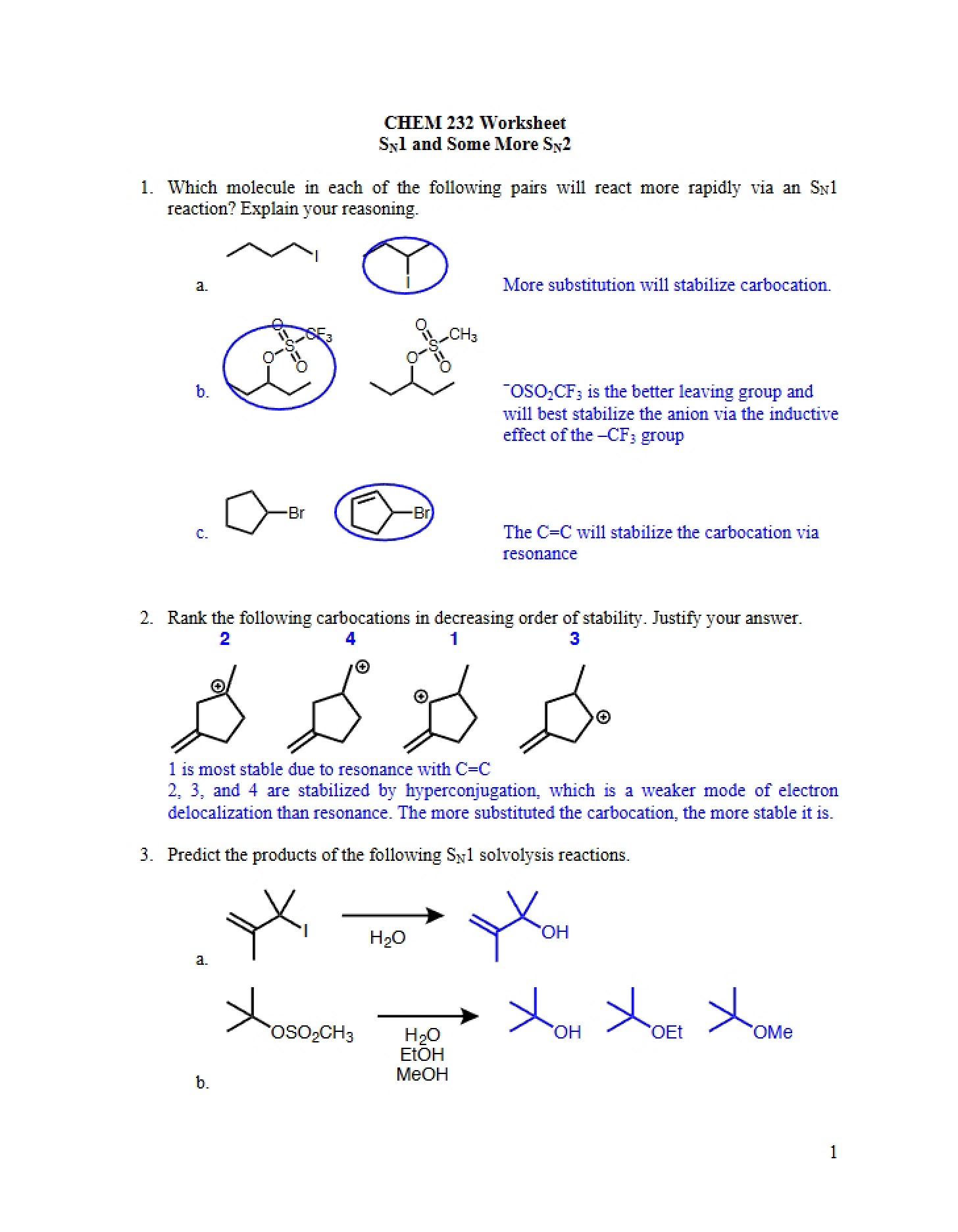
This study guide provides a detailed key specifically designed to accompany Worksheet 13 for CHEM 232, Organic Chemistry I at the University of Illinois at Urbana-Champaign. It focuses on reaction mechanisms, a core component of understanding organic chemistry. This resource is intended to reinforce learning and provide a framework for self-assessment related to nucleophilic substitution reactions. It’s built around a problem-set format, offering a structured approach to mastering key concepts.
Why This Document Matters
This resource is invaluable for students currently enrolled in CHEM 232 who are working through Worksheet 13. It’s particularly helpful for those seeking to check their understanding of reaction mechanisms *after* attempting the problems independently. Utilizing this key allows students to identify areas where they may be struggling and focus their study efforts accordingly. It’s best used as a companion to the original worksheet, not as a substitute for actively working through the problems yourself. Access to this key will help solidify your grasp of fundamental organic chemistry principles.
Topics Covered
* Nucleophile, Electrophile, and Leaving Group Identification
* SN2 Reaction Mechanisms (Arrow-Pushing)
* Predicting Major Organic Products of SN2 Reactions
* Molecular Orbital Theory applied to Reaction Mechanisms
* HOMO (Highest Occupied Molecular Orbital) and LUMO (Lowest Unoccupied Molecular Orbital) analysis in reactions
* Orbital Hybridization (sp3, sp2, sp) and its relation to reactivity
* Reaction rate considerations
What This Document Provides
* A comprehensive breakdown relating to the worksheet problems.
* Detailed analysis of reactant roles within reactions.
* Identification of key orbital interactions during reactions.
* A structured approach to understanding reaction mechanisms.
* A resource to help pinpoint areas needing further review.
* Connections between theoretical concepts (molecular orbitals) and practical application (reaction prediction).