What This Document Is
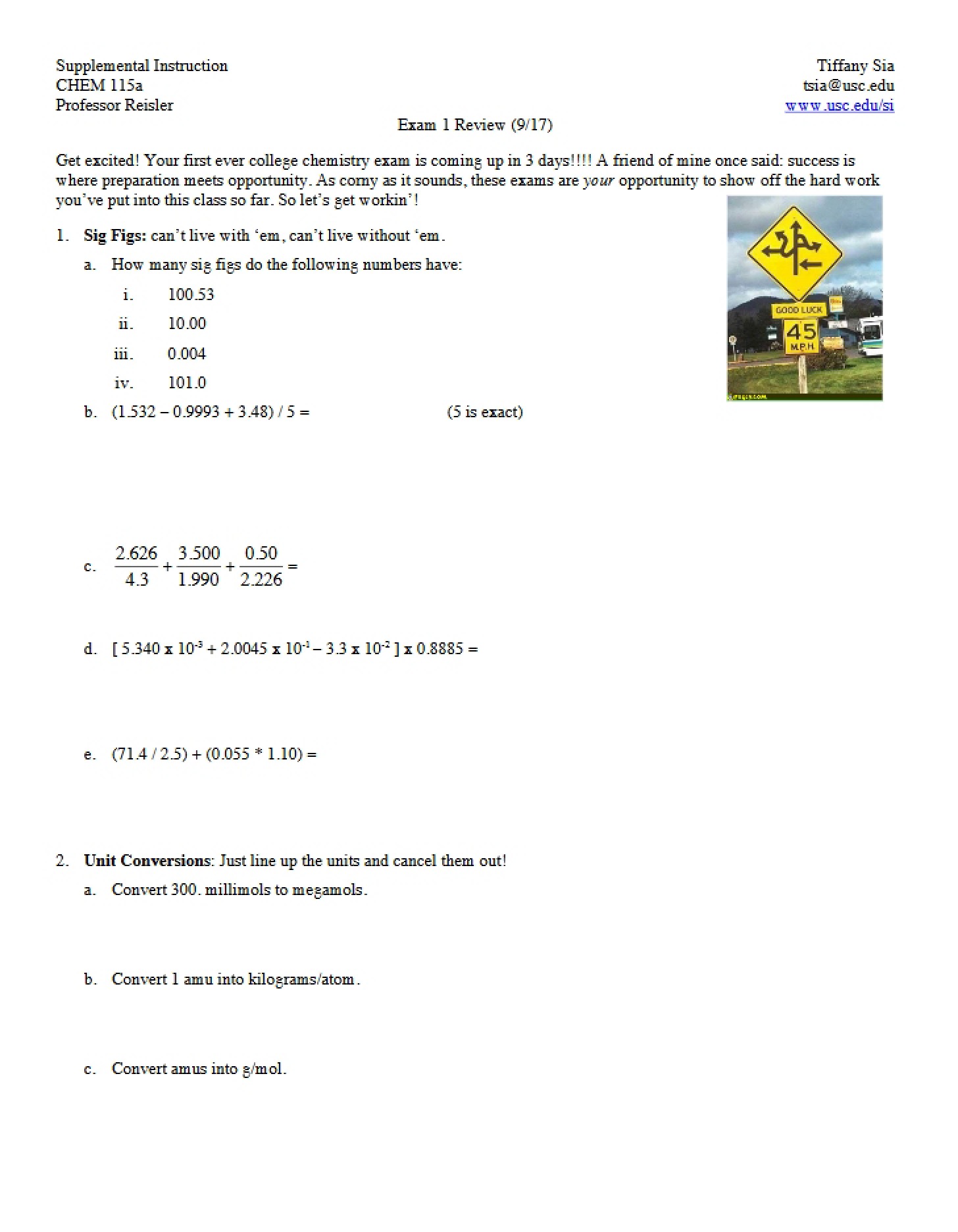
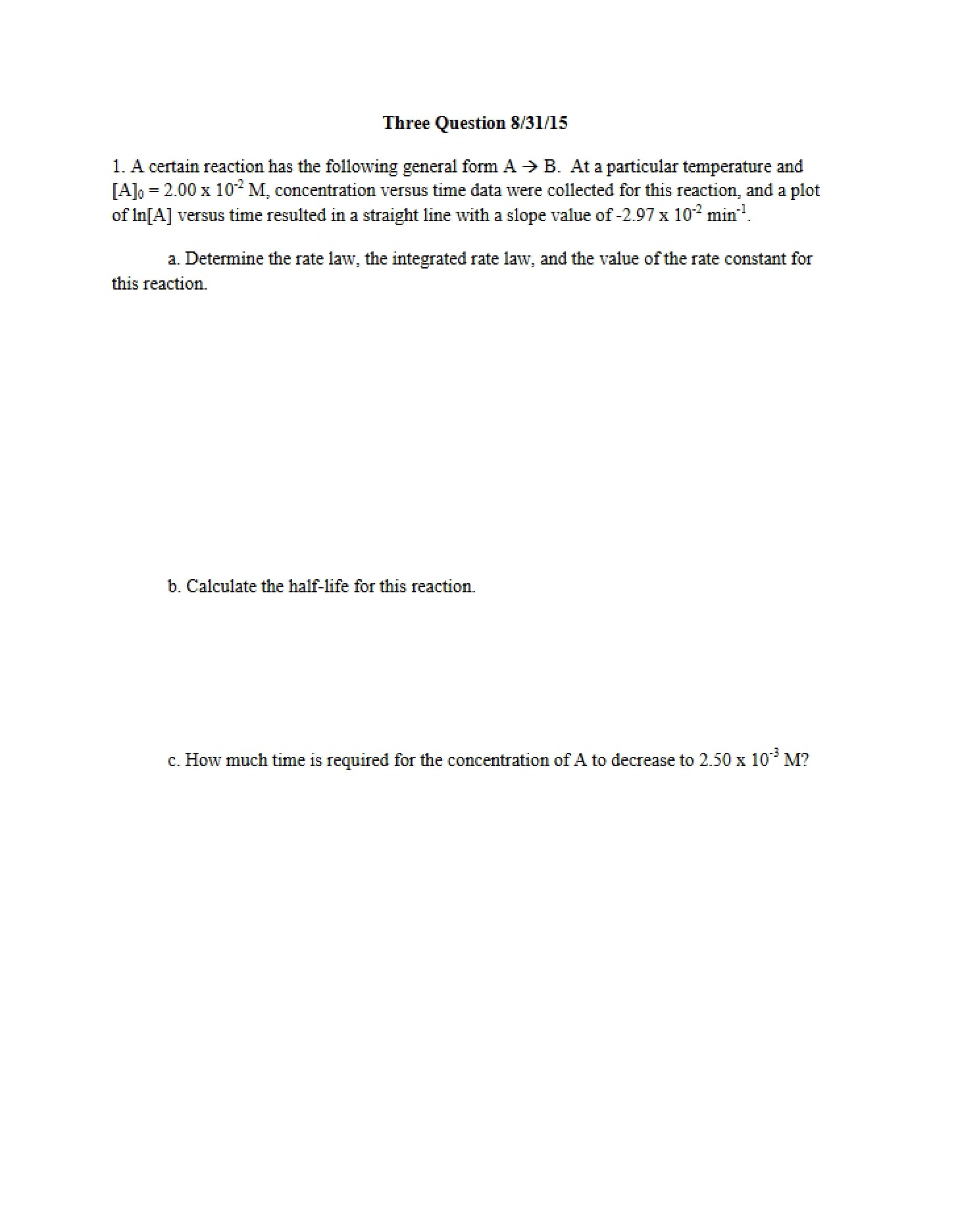
This document is a practice quiz designed to assess your understanding of foundational concepts in General Chemistry (CHEM 105) at the University of Southern California. Specifically, it focuses on topics typically covered in the first laboratory session (105A) and aims to simulate the style and difficulty of an actual quiz. It’s structured as a problem set, requiring you to apply principles rather than simply recall facts.
Why This Document Matters
This resource is invaluable for students preparing for quizzes and exams in CHEM 105. It’s particularly helpful for solidifying your grasp of quantitative problem-solving skills within the context of introductory chemistry experiments. Utilizing this practice quiz will help you identify areas where you need further review and practice *before* being formally assessed. It’s best used after you’ve completed the corresponding laboratory work and reviewed relevant lecture material. Working through these types of problems will build confidence and improve your performance.
Common Limitations or Challenges
This quiz is a sample and does not encompass *all* possible topics that may appear on a graded assessment. It focuses on a specific set of concepts and calculations. While representative of the course material, it doesn’t provide detailed explanations of the underlying principles or step-by-step solutions. Access to the full document is required to view the complete problems and their solutions. This resource is designed to *test* your knowledge, not to teach it.
What This Document Provides
* A set of ten quantitative problems related to experimental chemistry.
* Problems covering topics such as data analysis, significant figures, stoichiometry, and gas laws.
* Questions relating to electrochemical principles and reaction predictions.
* Scenarios based on common laboratory procedures, like calorimetry and dehydration reactions.
* Problems requiring the application of unit conversions and molar mass calculations.
* A focus on interpreting experimental results and drawing conclusions.