What This Document Is
This document is a lab report detailing an experiment conducted in General Physics I (PHYSUA 11) at New York University to investigate and validate Newton’s Second Law of Motion. It outlines a series of experiments designed to explore the relationship between force, mass, and acceleration, and to apply these principles to real-world scenarios involving gravity and pulley systems. The report details the experimental setup, theoretical background, and preliminary data collected.
Why This Document Matters
This lab report is essential for students enrolled in General Physics I who need to demonstrate an understanding of Newton’s Second Law. It’s typically used as a graded assignment to assess practical application of theoretical concepts learned in lectures. Understanding this law is foundational for further study in physics, engineering, and related fields. It provides a concrete example of how physics principles are tested and verified through experimentation.
Common Limitations or Challenges
This document represents a *report* on an experiment, not a comprehensive lesson on Newton’s Second Law. It assumes prior knowledge of the underlying physics principles. The report focuses on the specific experimental setup and data collected during the lab session; it does not cover all possible applications or variations of Newton’s Second Law. It also presents preliminary data and calculations, and does not include a full, polished analysis or discussion of error.
What This Document Provides
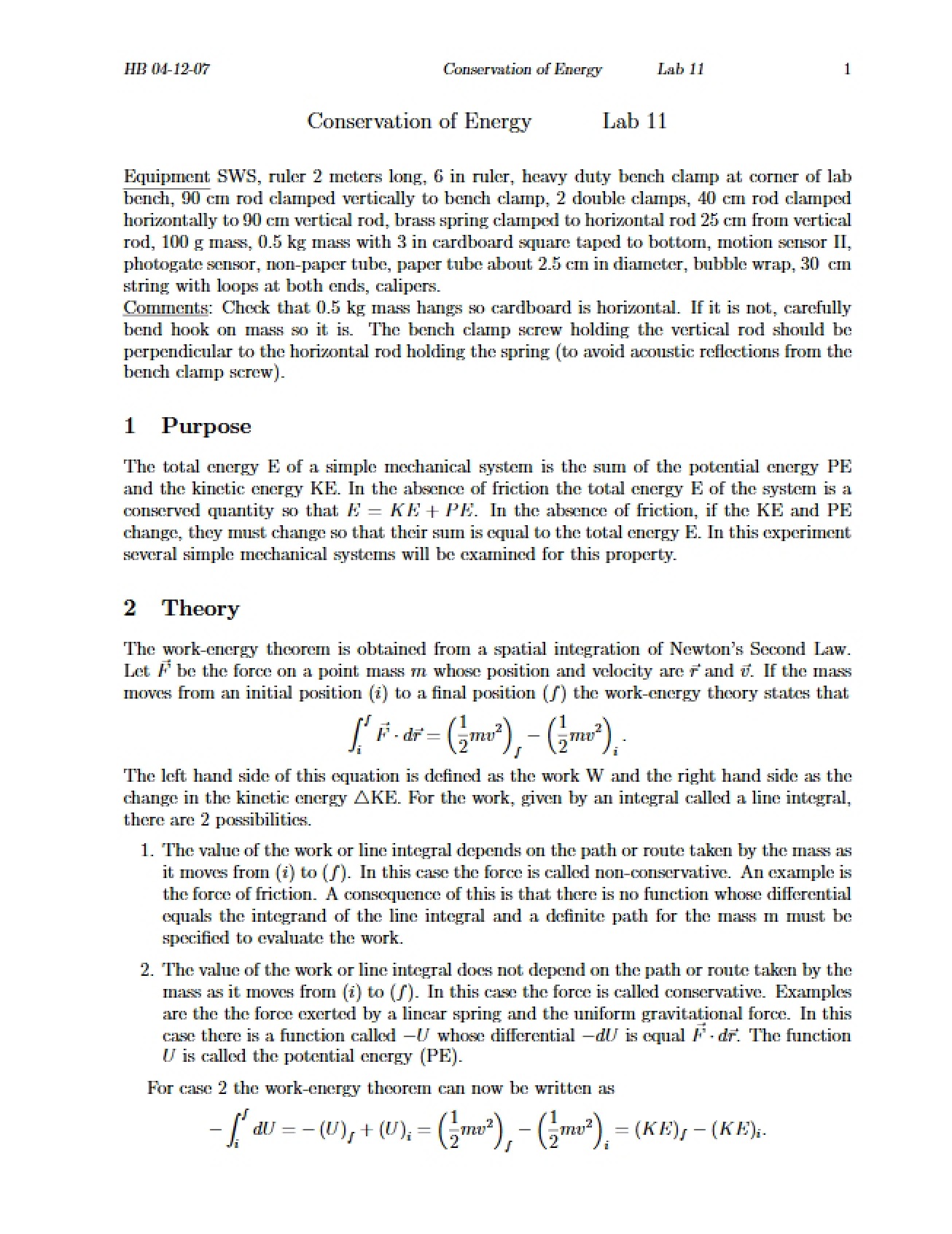
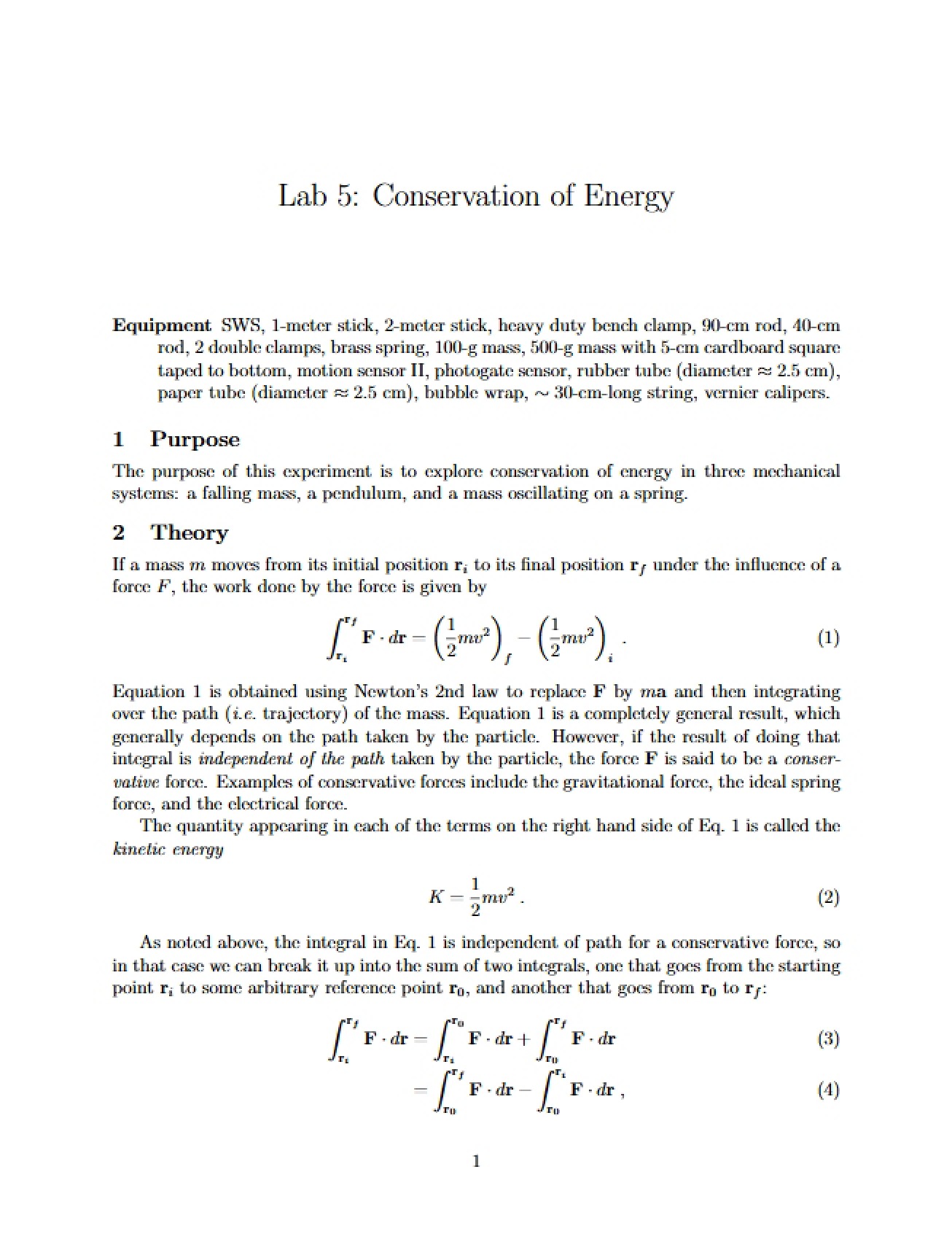
The full document includes: a clear statement of the experiment’s objective, a summary of the relevant theory behind Newton’s Second Law, a detailed description of the experimental procedure used, raw data collected from experiments involving force sensors, photogates, smart pulleys, and picket fences, preliminary calculations and tables of acceleration values, and a comparison of experimental results to theoretical predictions. This preview *does not* include the complete data sets, detailed calculations, error analysis, or the final conclusions drawn from the experiment. It also does not include the full discussion of the results or any potential sources of error.