What This Document Is
This document provides a comprehensive overview of Lab Report guidelines and foundational concepts related to a copper and iron redox reaction experiment, part of the Accelerated Chemistry Lab I (CHEM 203) curriculum at the University of Illinois at Urbana-Champaign. It serves as a detailed guide for students preparing to conduct and report on this specific laboratory investigation. It outlines expectations for a formal scientific lab report and introduces key experimental techniques.
Why This Document Matters
This resource is essential for students enrolled in CHEM 203 who are approaching Lab 3, focusing on Cu/Fe stoichiometry. It’s particularly valuable *before* beginning the experiment, during the data analysis phase, and when drafting the final lab report. Understanding the material within will help ensure a thorough and accurate experimental process and a well-structured, scientifically sound report. Access to the full document will equip you with the necessary information to succeed in this lab and demonstrate your understanding of core chemical principles.
Topics Covered
* Quantitative chemical analysis techniques
* Redox reactions involving copper and iron
* Stoichiometry and limiting reagent identification
* Experimental error analysis and critical thinking
* Proper laboratory reporting procedures
* Techniques for accurate measurement and data collection
* Principles of chemical reactions and solution preparation
What This Document Provides
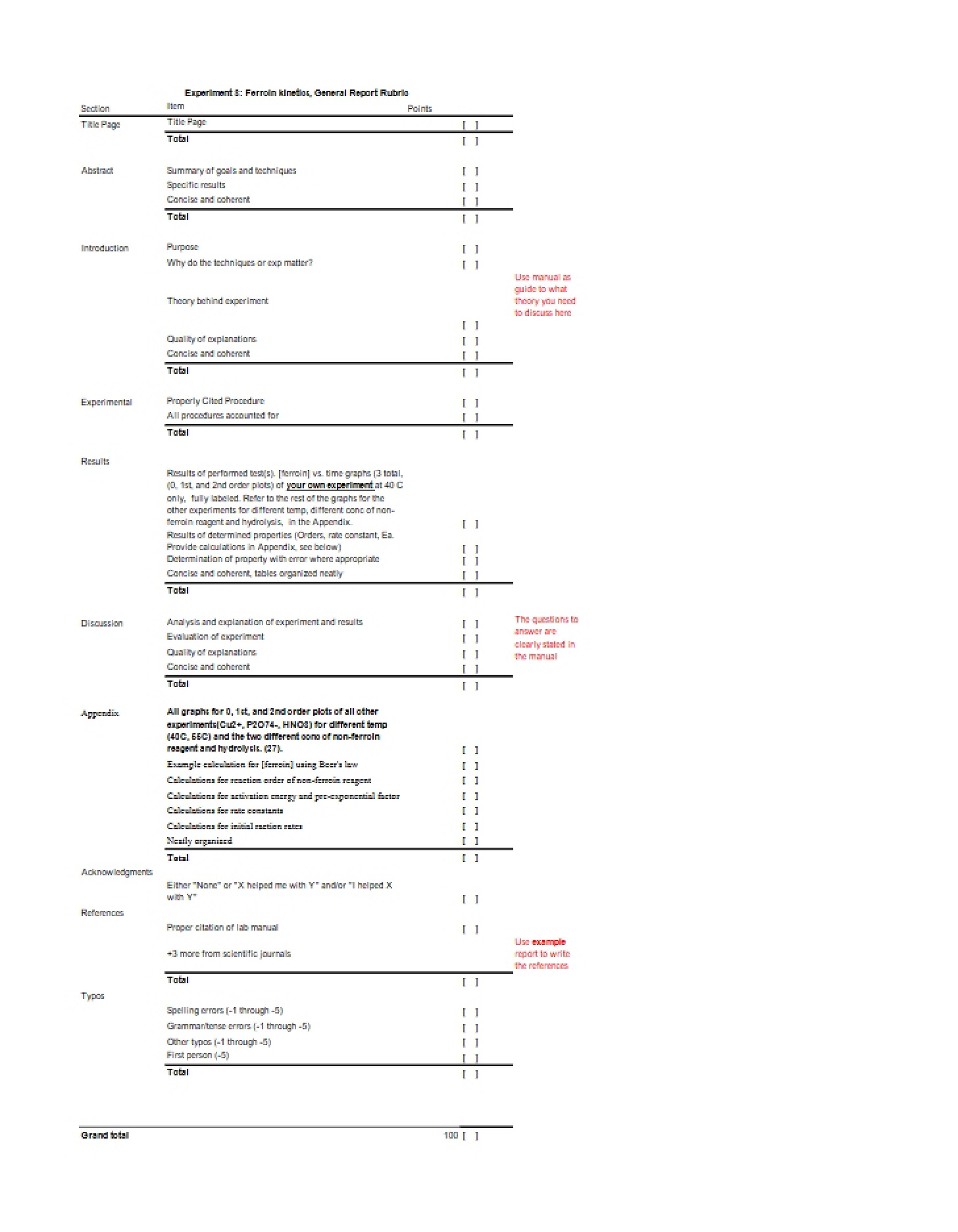
* A detailed outline of the expected sections within a formal lab report (Title Page, Abstract, Introduction, Experimental, Results, Discussion, Acknowledgments, References)
* Guidance on crafting a concise and informative abstract, including key elements to address.
* Insights into the appropriate level of detail for the experimental section, emphasizing the importance of clear and concise descriptions.
* A framework for organizing and presenting experimental results effectively, including the use of tables and graphs.
* Considerations for analyzing data and discussing potential sources of error.
* Pre-lecture questions designed to prepare students for the experimental work.
* An overview of essential laboratory skills, such as weighing by difference and vacuum filtration.