What This Document Is
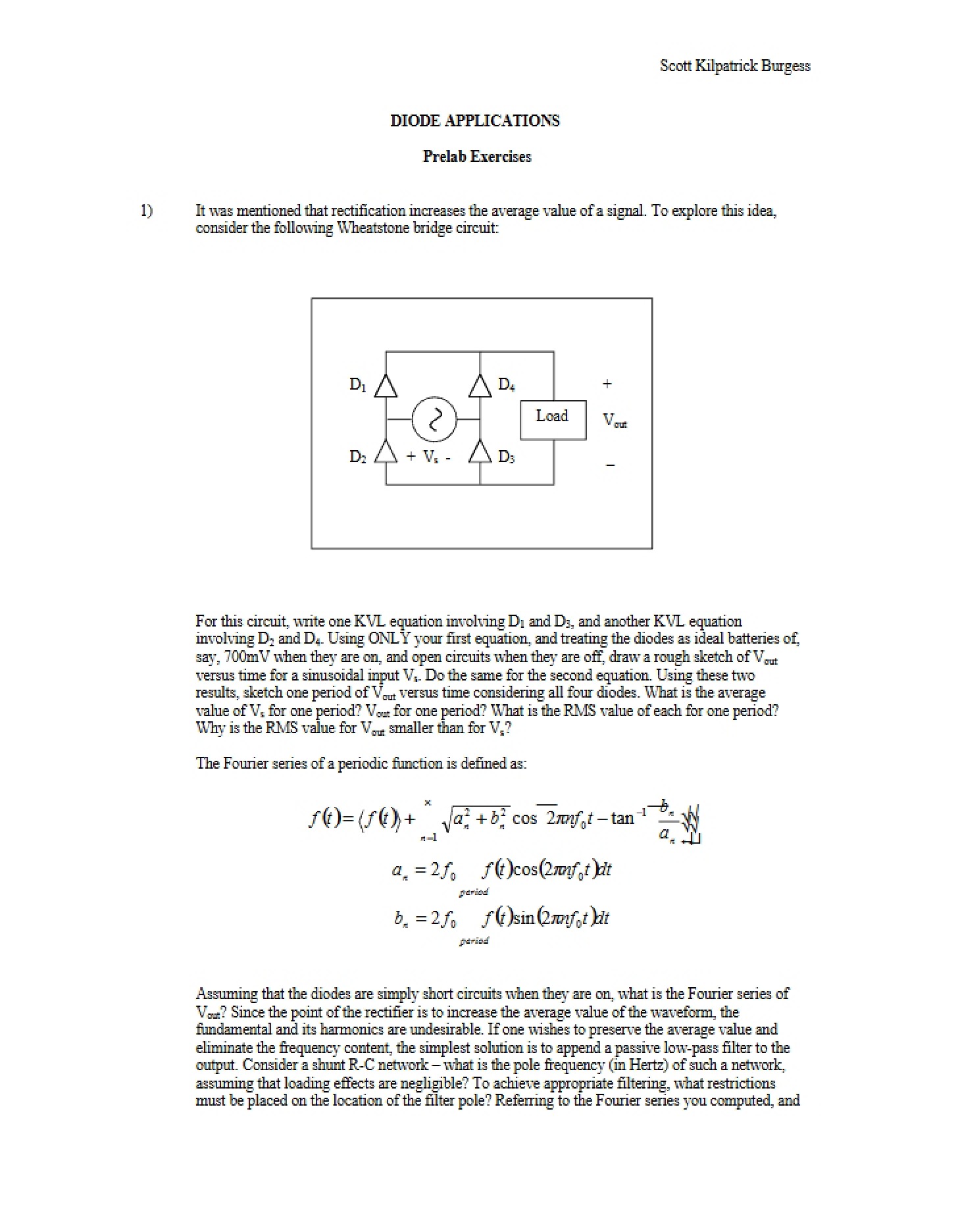
This laboratory exercise is designed to build a foundational understanding of diodes, a fundamental component in electronic circuits. It delves into the theoretical underpinnings of diode behavior, exploring the physics behind their operation and how they interact within a circuit. The material presented focuses on the core principles governing diode functionality, setting the stage for more complex circuit analysis and design. It’s a hands-on exploration of a key passive electronic device.
Why This Document Matters
This resource is crucial for students enrolled in an introductory electronic circuits course, particularly those seeking to solidify their grasp of semiconductor devices. It’s most beneficial when used in conjunction with lectures and other course materials, serving as a practical guide to reinforce theoretical concepts before and during lab sessions. Students preparing to design, build, and troubleshoot circuits involving diodes will find this exercise particularly valuable. Understanding these concepts is a stepping stone to more advanced topics like rectification and voltage regulation.
Common Limitations or Challenges
This exercise focuses on the *theory* and *measurement* aspects of diodes. It does not provide complete circuit designs or step-by-step instructions for building complex systems. It also doesn’t cover advanced diode applications or troubleshooting techniques beyond the scope of basic operation. The document assumes a basic understanding of electrical engineering principles and circuit terminology. It is intended to be used *with* practical lab work, not as a substitute for it.
What This Document Provides
* A detailed exploration of the fundamental principles behind diode operation.
* An examination of p-n junction characteristics and the formation of the depletion region.
* Discussion of the relationship between material properties and diode behavior.
* Theoretical background on the concept of contact potential.
* Contextualization of diodes within broader circuit applications like rectification and voltage referencing.