What This Document Is
This is a comprehensive laboratory manual for Physical Chemistry Laboratory II (CHEM 446) at the University of Delaware. It serves as a foundational resource outlining the procedures, expectations, and essential information for a series of advanced physical chemistry experiments. This manual details the practical application of theoretical concepts learned in the corresponding lecture course, bridging the gap between theory and hands-on experimentation. It’s designed to guide students through a rigorous set of laboratory investigations.
Why This Document Matters
This manual is crucial for students currently enrolled in or preparing for CHEM 446 at the University of Delaware. It’s particularly valuable when beginning preparation for each lab session, ensuring a safe and productive learning experience. Students will find it essential for understanding the scope of each experiment, proper data recording techniques, and the overall expectations for laboratory performance. Access to this manual will help you maximize your time in the lab and achieve a deeper understanding of physical chemistry principles.
Topics Covered
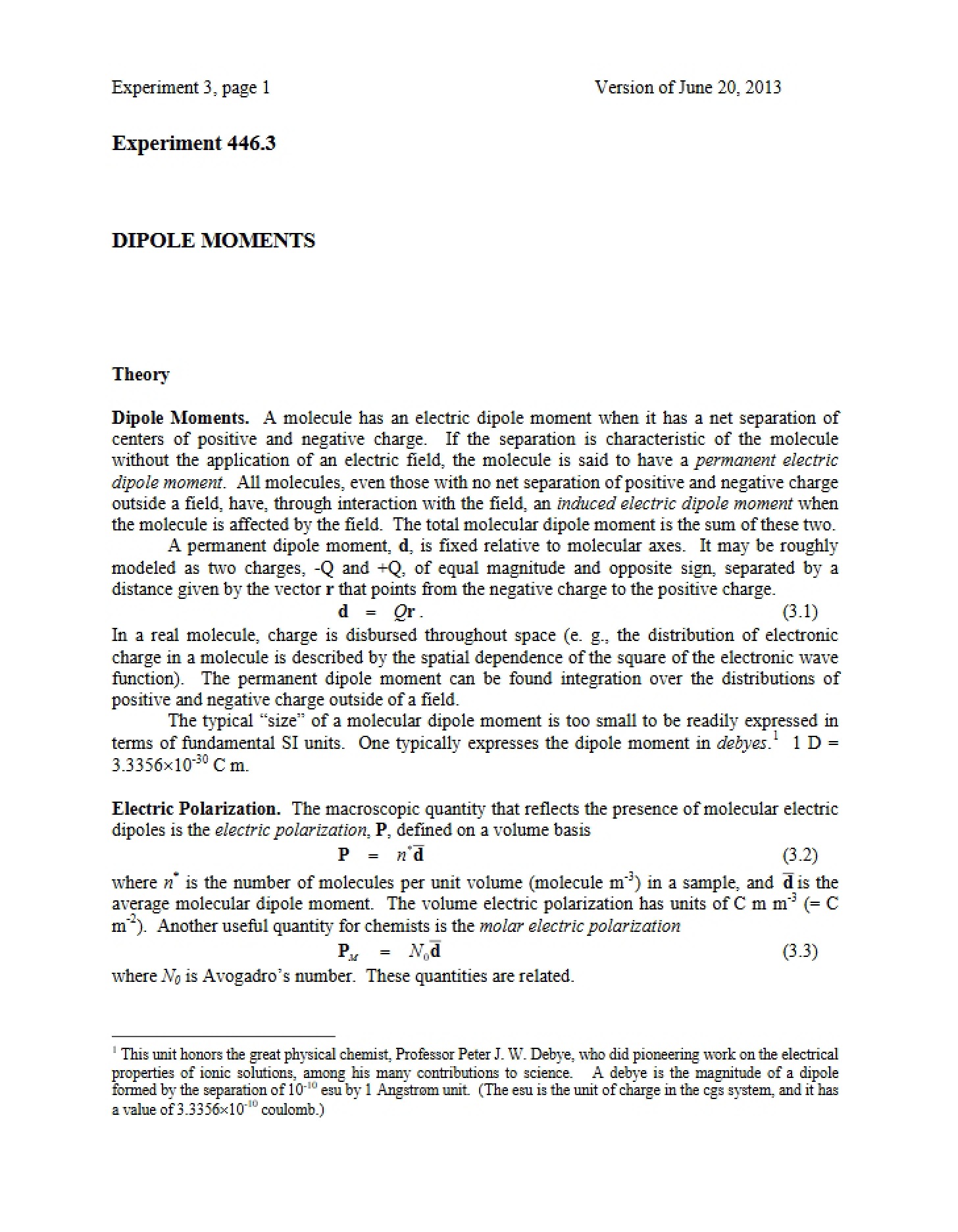
* Molecular properties and their determination through experimentation
* Transport properties of solutions and their relationship to molecular characteristics
* Spectroscopic analysis of molecular vibrations and rotations
* Surface tension and its implications for intermolecular forces
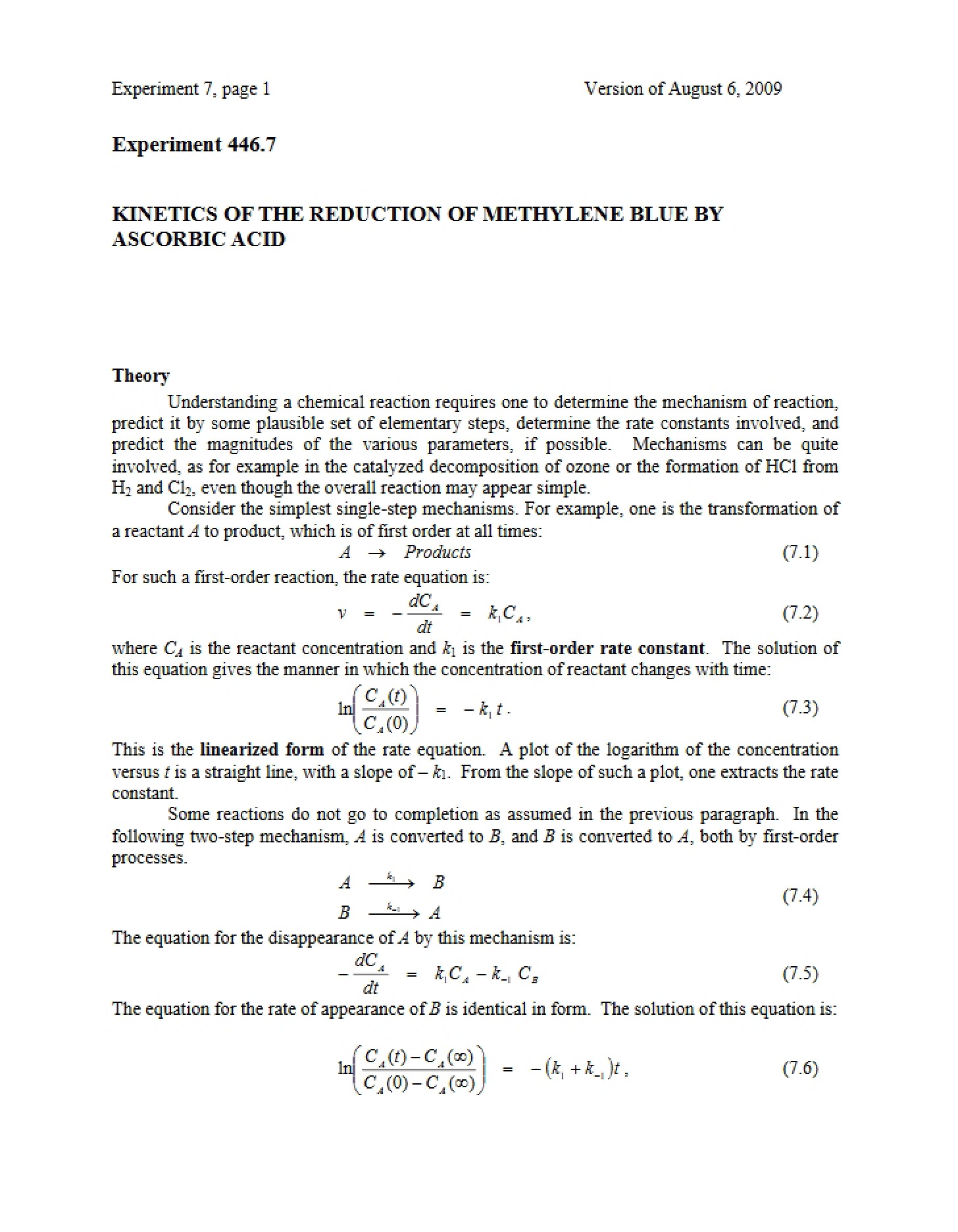
* Chemical kinetics and reaction rate analysis
* Statistical analysis of experimental data
* Proper laboratory safety protocols and instrument usage
What This Document Provides
* A detailed overview of the course structure and laboratory schedule.
* Guidance on pre-laboratory preparation, including suggested resources.
* Expectations for laboratory notebook maintenance and grading criteria.
* Important information regarding instrument usage, safety regulations, and record-keeping best practices.
* A listing of the specific experiments included in the course rotation.
* References to external resources that can aid in understanding experimental concepts.