What This Document Is
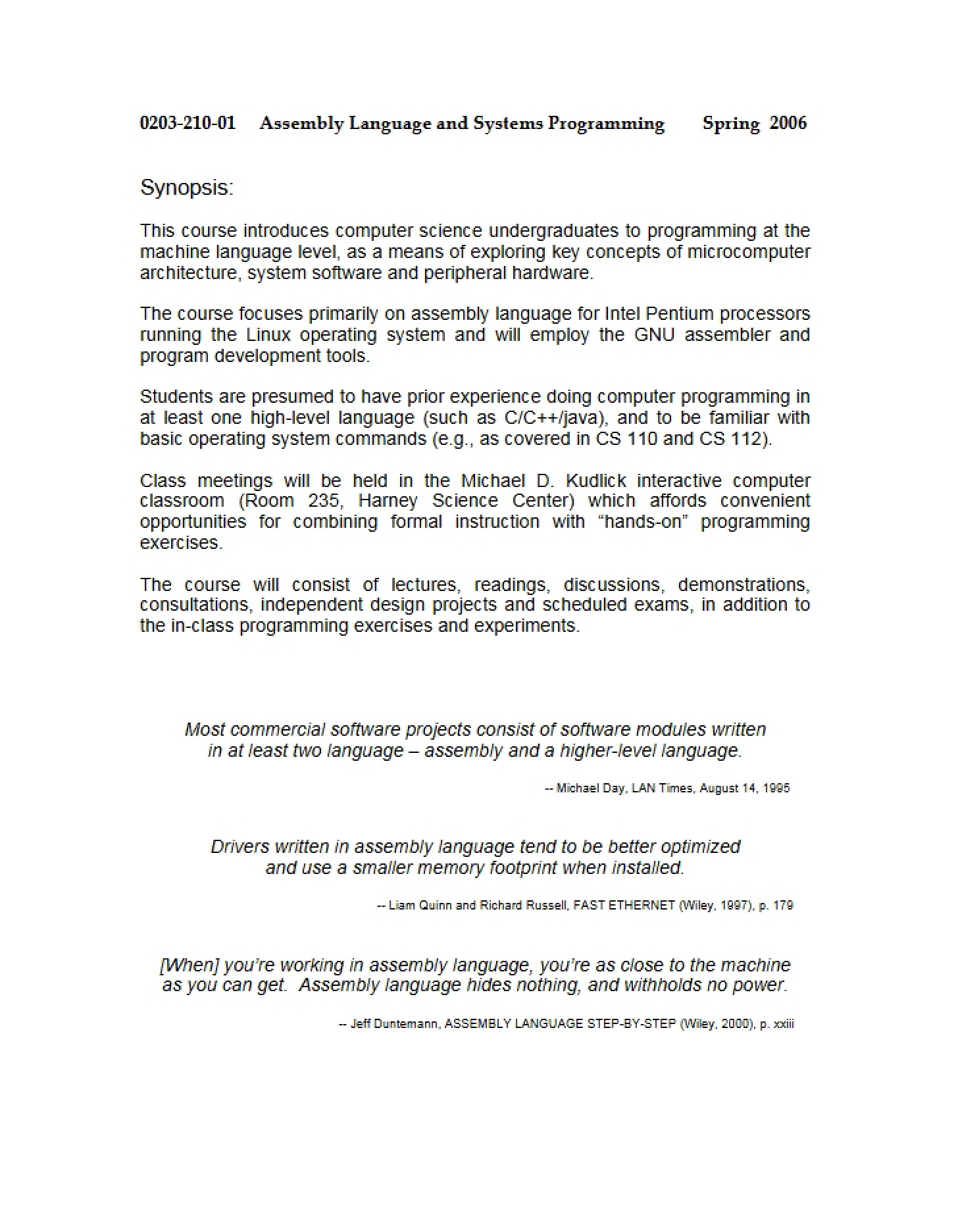
This resource is a foundational exploration of Assembly Language and Systems Programming, specifically tailored for students utilizing Intel Pentium processors. It delves into the core principles of how software interacts directly with computer hardware, moving beyond the abstractions of high-level programming languages. The material establishes a crucial link between the code we write and the underlying machinery that executes it, offering a detailed look at the computer’s fundamental operational language.
Why This Document Matters
This material is essential for computer science students aiming for a deeper understanding of computer architecture and software behavior. It’s particularly valuable for those enrolled in courses focused on operating systems, system-level programming, or computer organization. Students preparing for roles requiring performance optimization, embedded systems development, or reverse engineering will also find this a critical resource. Understanding assembly language provides a powerful tool for debugging, analyzing, and improving software efficiency.
Common Limitations or Challenges
This resource focuses on the theoretical underpinnings and foundational concepts of assembly language. It does *not* provide a comprehensive, step-by-step guide to becoming proficient in writing complex assembly programs. It also doesn’t cover all assembly language variations – the focus is specifically on the Intel Pentium architecture. Practical coding exercises and advanced optimization techniques are beyond the scope of this material.
What This Document Provides
* A comparative analysis of high-level versus low-level programming languages.
* An introduction to the concept of machine language and its representation.
* An overview of the key components within a computer’s central processing unit (CPU).
* A discussion of the “fetch-execute” cycle, the fundamental process of instruction execution.
* An explanation of registers and their roles in data manipulation and memory addressing.
* A foundational understanding of the relationship between assembly language and machine code.