What This Document Is
This study guide delves into the core principles of the Network Layer, a fundamental component of computer networks. Specifically created for students in Computer Networks II (ELEG 651) at the University of Delaware, it offers a focused exploration of how data is transmitted and routed across networks. It builds upon foundational networking concepts and prepares learners for more advanced topics within the field. This resource is designed to supplement lectures and provide a deeper understanding of the theoretical underpinnings of network communication.
Why This Document Matters
This guide is invaluable for students seeking to master the complexities of network layer protocols and architectures. It’s particularly helpful when tackling assignments, preparing for exams, or needing a concentrated review of key concepts. Individuals aiming for a career in network engineering, cybersecurity, or related fields will find this material essential for building a strong theoretical foundation. It’s best utilized alongside coursework and practical exercises to reinforce learning.
Topics Covered
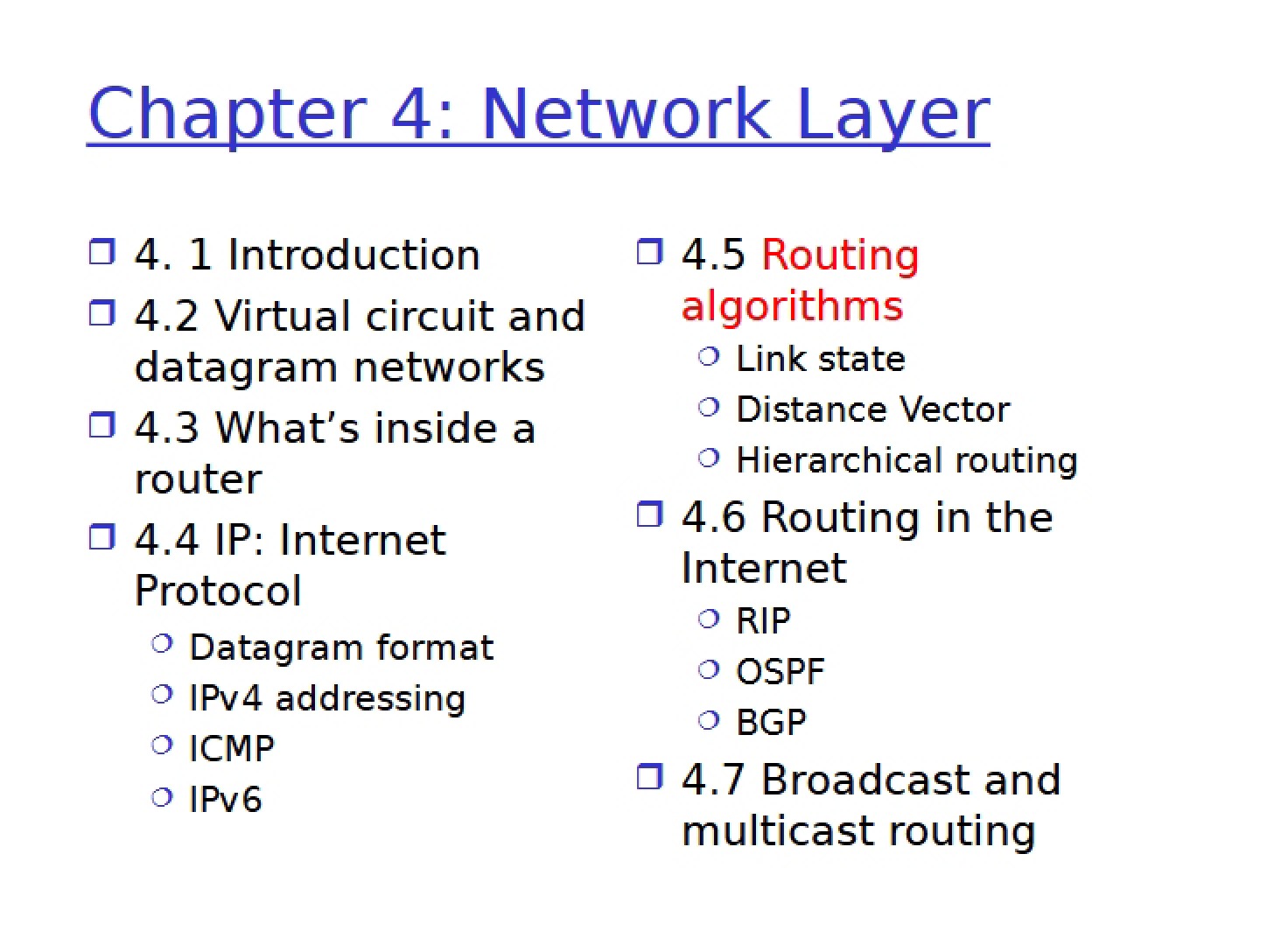
* Virtual Circuit vs. Datagram Networks: Exploring different approaches to data transmission.
* Router Internals: Understanding the components and functions within a network router.
* Internet Protocol (IP): A detailed look at the foundational protocol of the internet.
* IPv4 and IPv6 Addressing: Examining the structure and allocation of IP addresses.
* Routing Algorithms: Investigating methods for determining the best path for data packets.
* Routing in the Internet: Analyzing real-world routing protocols like RIP, OSPF, and BGP.
* Broadcast and Multicast Routing: Exploring techniques for efficient data delivery to multiple destinations.
* CIDR and Hierarchical Addressing: Understanding methods for efficient address management and route aggregation.
What This Document Provides
* A structured overview of the Network Layer concepts.
* Detailed explanations of key protocols and technologies.
* Insights into the practical considerations of network design and implementation.
* A focused exploration of routing principles and their application in the internet.
* A foundation for understanding advanced networking topics.