What This Document Is
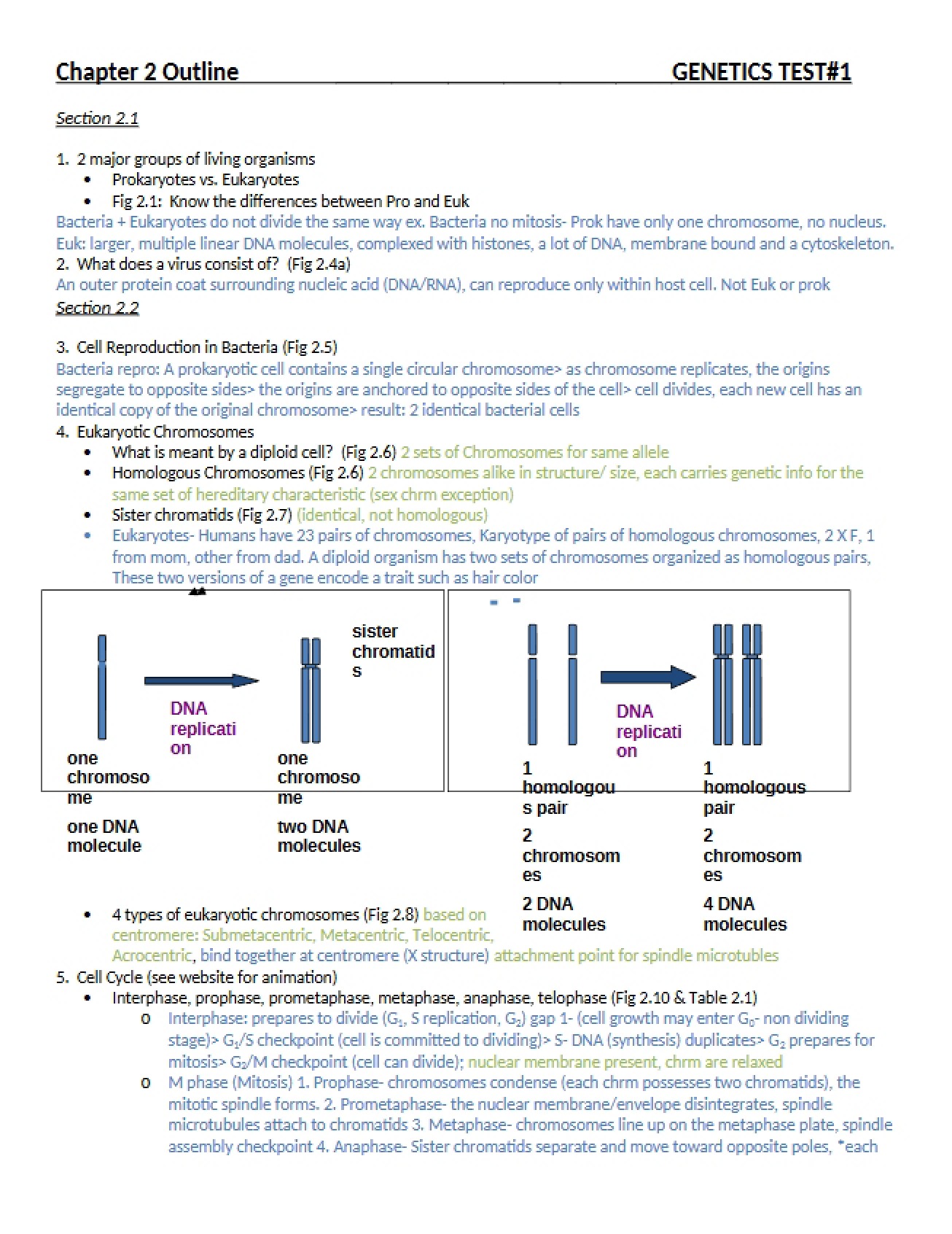
This document outlines the learning objectives for Chapter Two of a Genetics course (BIO 2306) at Baylor University. It serves as a roadmap for student understanding of core concepts related to cell division – both mitosis and meiosis – and the fundamental differences between prokaryotic and eukaryotic cells. It details specific topics students are expected to grasp, referencing corresponding figures within the textbook.
Why This Document Matters
This learning objective guide is essential for students enrolled in the Baylor University Genetics course. It clarifies expectations for Chapter Two, helping students focus their study efforts and prepare for assessments. It’s most useful *before* detailed study of the chapter and *during* review, allowing students to self-assess their comprehension. It also signals which textbook figures are particularly important.
Common Limitations or Challenges
This document does *not* provide explanations of the concepts themselves. It simply lists what students should be able to *do* with the information. It doesn’t include the content of the chapter, worked examples, or answers to the end-of-chapter problems. Students will still need to engage with the textbook, lecture materials, and class activities to fully master the material.
What This Document Provides
The full document includes:
* A breakdown of learning objectives organized by section (2.1, 2.2, 2.3).
* Specific references to figures in the textbook (e.g., Fig 2.1, Fig 2.5a) that illustrate key concepts.
* Objectives related to differentiating prokaryotes and eukaryotes, understanding binary fission, and describing chromosome structure (diploid organisms, homologous chromosomes, sister chromatids).
* Objectives covering the stages of the cell cycle, mitosis, and meiosis, including their purposes and outcomes.
* A list of specific end-of-chapter problems assigned for practice.
* References to a related class activity PDF.
This preview *does not* include the actual explanations, diagrams, or solutions found within the chapter or the class activity PDF. It only provides a high-level overview of the topics covered.