What This Document Is
This document represents Lecture 02 from COMSCI M151B, Computer Systems Architecture at UCLA. It’s a foundational lecture exploring the core concepts of computer performance and the factors that influence it. The material delves into how we quantify and analyze the efficiency of computing systems, moving beyond simple speed metrics to consider broader operational characteristics. It establishes a framework for understanding the relationship between hardware design choices and overall system capabilities.
Why This Document Matters
This lecture is crucial for students seeking a deep understanding of how computers actually *work* beyond the software level. It’s particularly beneficial for those interested in hardware design, system optimization, and performance engineering. Reviewing this material will provide a solid base for subsequent lectures covering processor architecture, memory systems, and I/O performance. It’s best utilized during or immediately after the corresponding lecture to reinforce key ideas and prepare for related assignments.
Topics Covered
* Performance metrics: Response time vs. Throughput
* Relative performance calculations and definitions
* Methods for measuring execution time (elapsed time vs. CPU time)
* The role of CPU clocking and its impact on performance
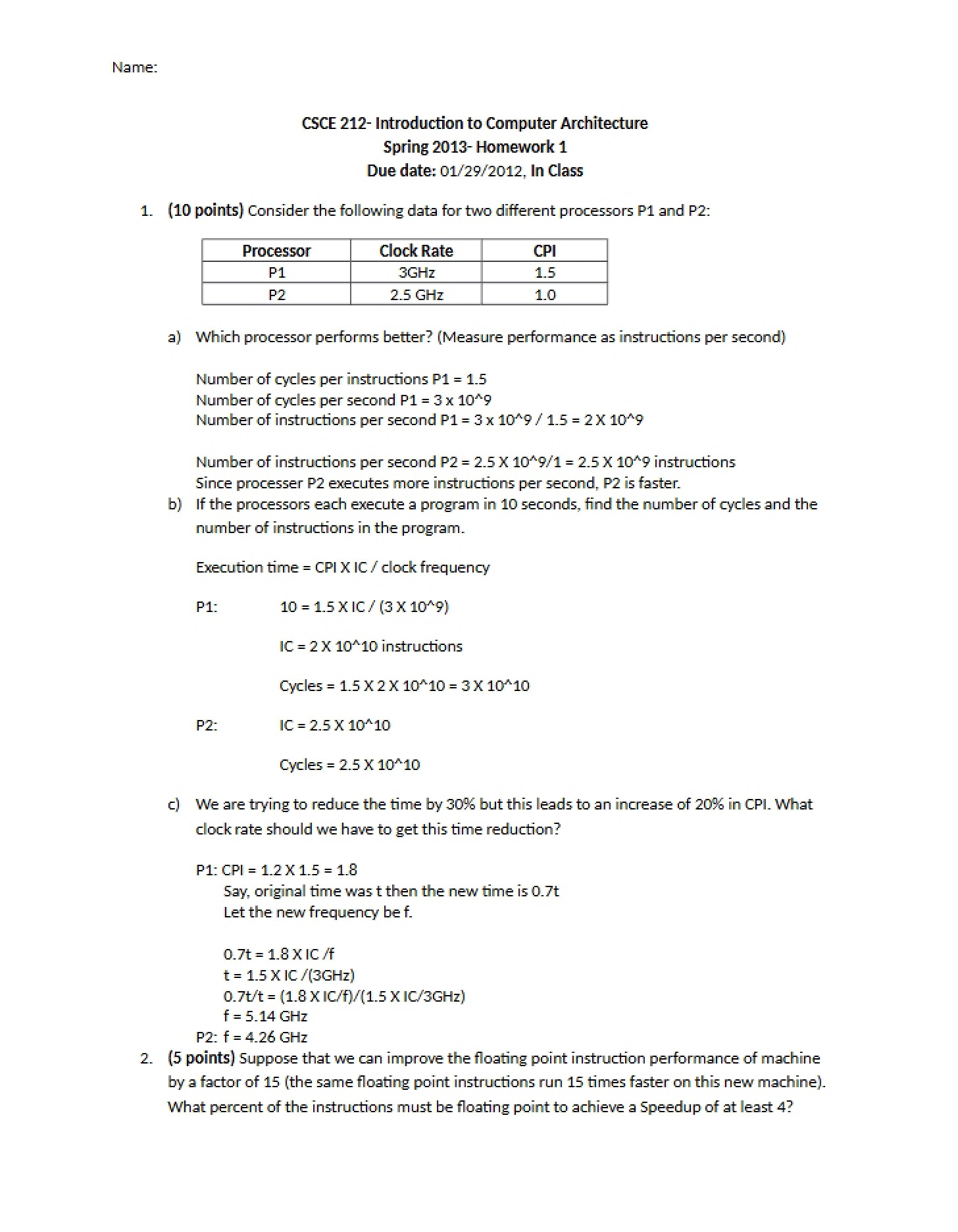
* Relationship between instruction count, CPI, and clock rate
* Analyzing the impact of hardware modifications on performance
What This Document Provides
* A detailed exploration of the concepts used to define and evaluate computer performance.
* A framework for comparing the performance of different systems.
* An introduction to the key components that contribute to CPU time.
* A foundation for understanding how hardware designers balance competing factors like clock rate and cycle count.
* A basis for analyzing the impact of program characteristics on performance.