What This Document Is
This document represents Lecture 07 from the Chemical Structure (CHEM 20A) course at UCLA. It’s a focused exploration of the theoretical underpinnings of molecular shapes and bonding, building upon previously established concepts of atomic orbitals and molecular orbital theory. The lecture delves into observed discrepancies between simple orbital models and actual molecular geometries, setting the stage for a more nuanced understanding of chemical bonding.
Why This Document Matters
This lecture is crucial for students seeking a deeper grasp of how atomic properties dictate molecular structure. It’s particularly beneficial for those studying organic chemistry or preparing for more advanced chemistry courses. Reviewing this material will strengthen your foundational knowledge before tackling complex molecular systems and reaction mechanisms. It’s best utilized after familiarizing yourself with basic atomic orbital theory and VSEPR principles.
Topics Covered
* The relationship between atomic orbital shapes and molecular geometry.
* Anomalies observed when applying simple orbital models to real molecules.
* The limitations of initial molecular orbital (MO) theory in explaining bonding.
* The need for a refined understanding of how atomic orbitals interact.
* Considerations of specific molecules like acetylene and methane as case studies.
* The concept of hybridization as a potential resolution to observed discrepancies.
What This Document Provides
* A detailed examination of the challenges in predicting molecular shapes based solely on atomic orbital configurations.
* Comparative analysis of theoretical predictions versus experimentally determined molecular structures.
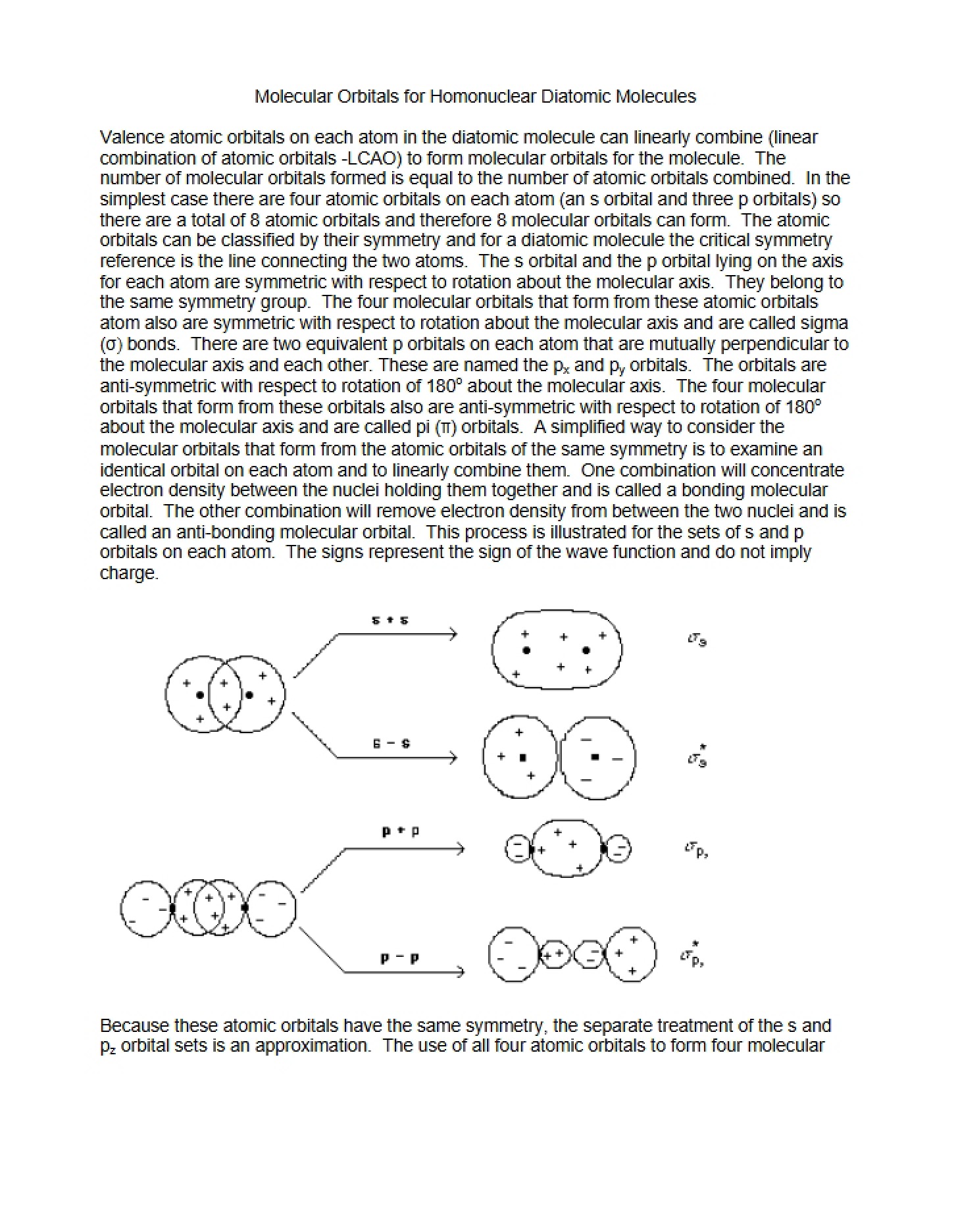
* Visual representations illustrating potential bonding scenarios and their shortcomings.
* A framework for understanding why initial models require further development to accurately describe chemical bonding.
* A springboard for exploring the concept of hybridization and its impact on molecular properties.