What This Document Is
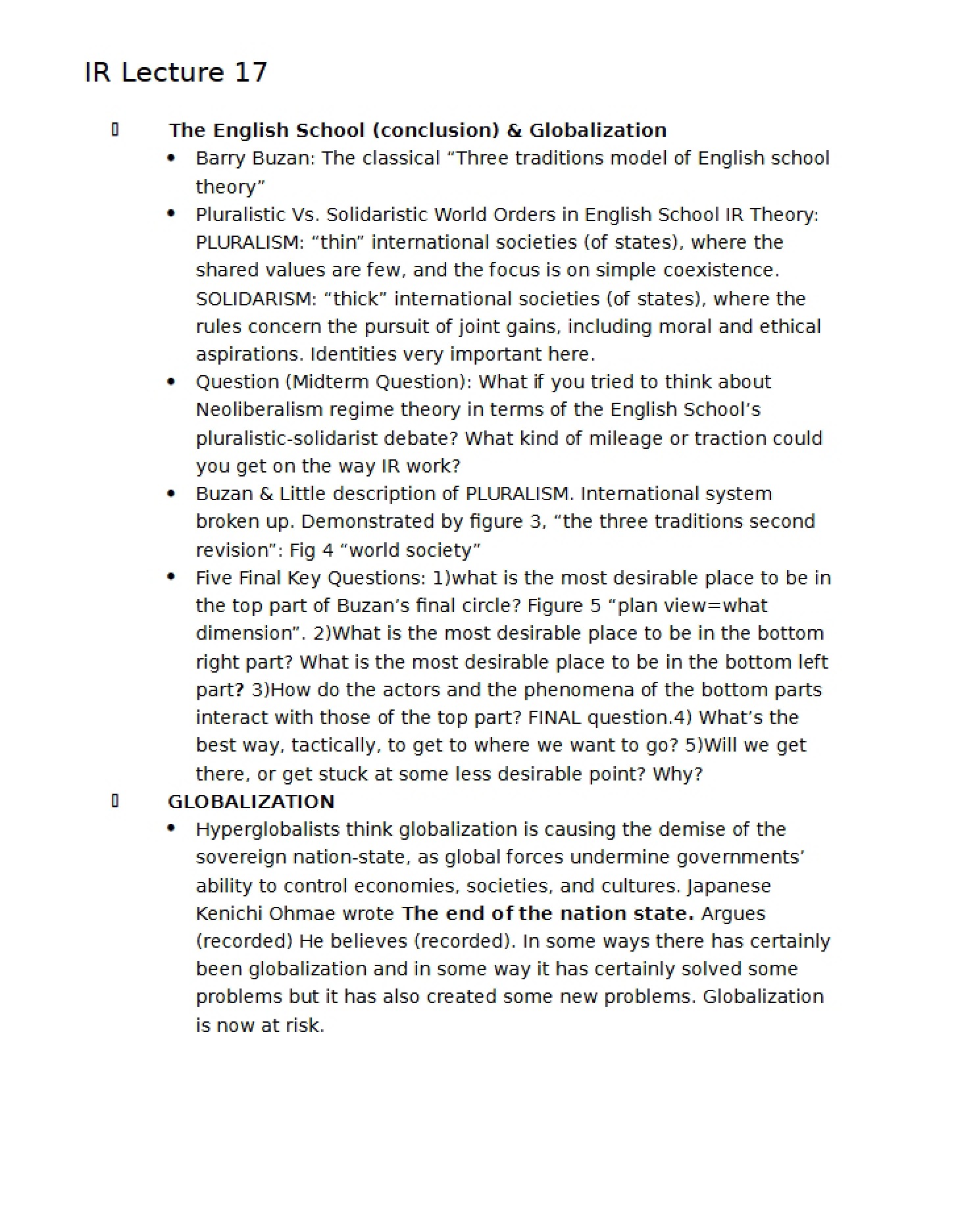
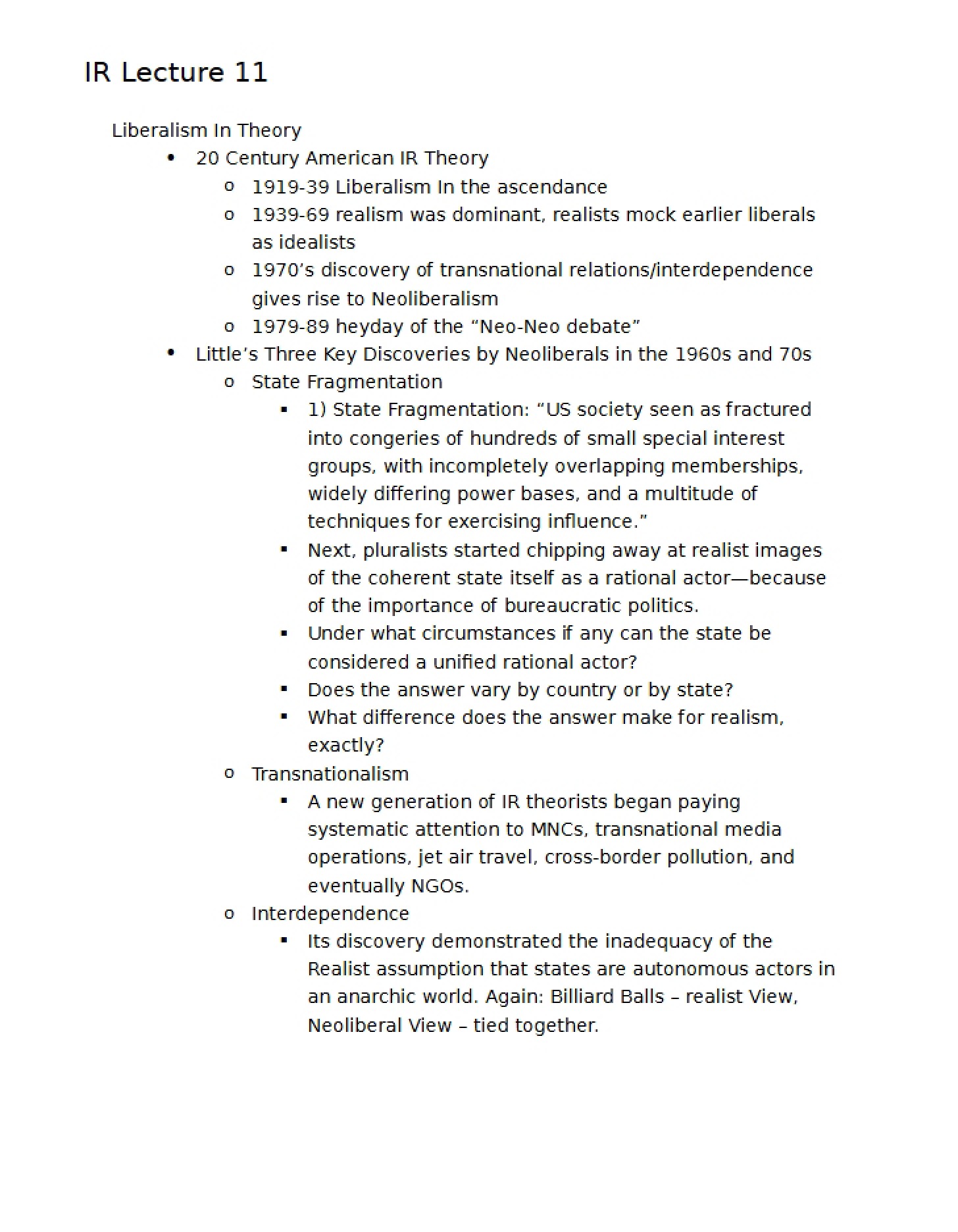
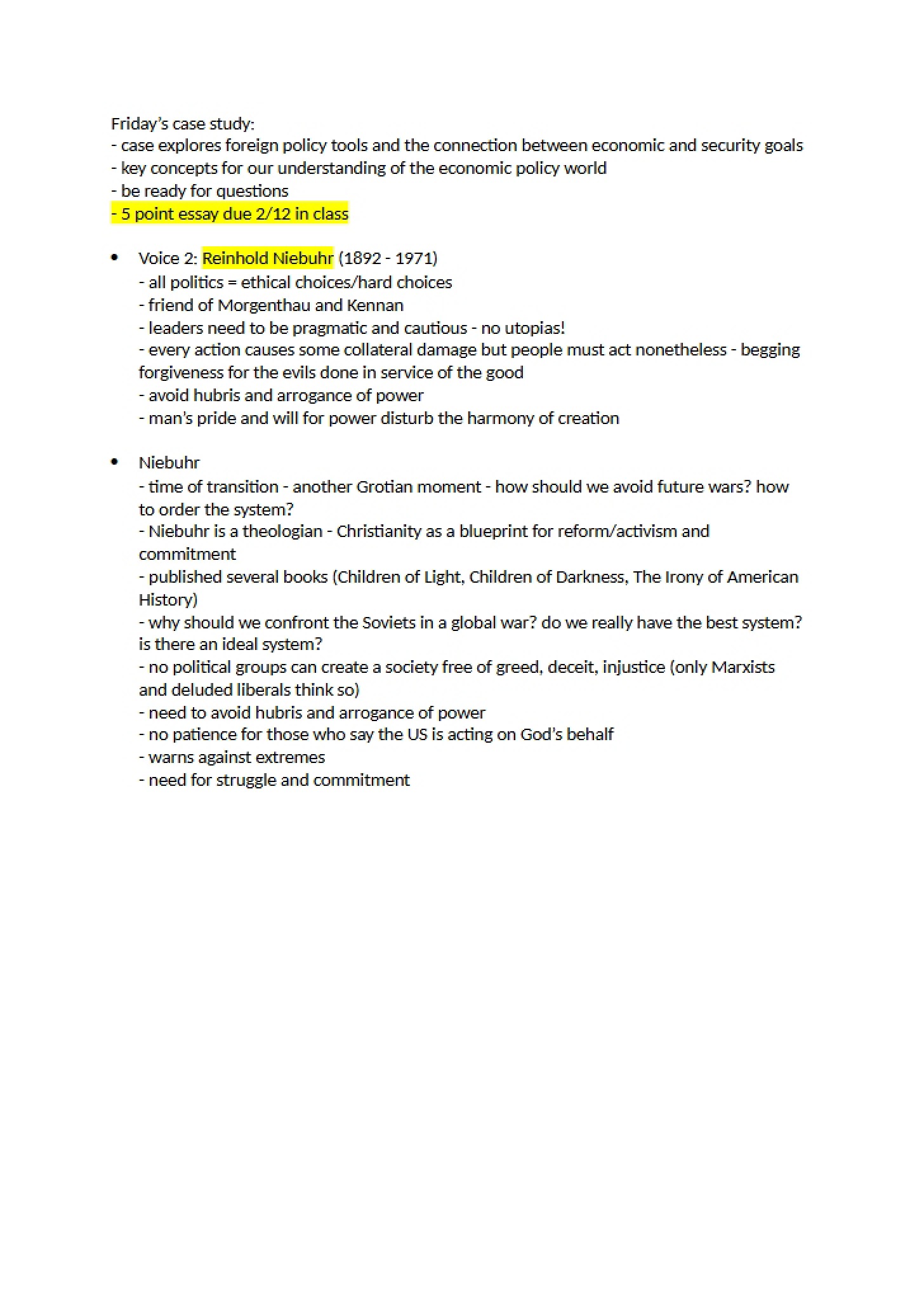
This study guide provides a detailed overview of core theoretical frameworks within the field of International Relations. Specifically, it focuses on foundational concepts related to Realism, Liberalism, and emerging debates that shaped the discipline. It appears to be a set of lecture notes, likely compiled for an upper-level undergraduate course, and delves into the nuances within each school of thought – including distinctions between “classical” and “neo” approaches. The material also introduces key thinkers and historical events relevant to understanding these theories.
Why This Document Matters
Students enrolled in International Relations courses, particularly introductory or intermediate levels, will find this resource exceptionally valuable. It’s ideal for those seeking to solidify their understanding of the major theoretical underpinnings of the field *before*, *during*, or *after* lectures. It can also be helpful when preparing for exams or writing research papers that require a strong grasp of these foundational concepts. Individuals looking to refresh their knowledge of IR theory will also benefit.
Common Limitations or Challenges
This resource is designed to *supplement* course materials, not replace them. It does not offer a comprehensive history of international relations, nor does it provide detailed case studies illustrating the application of these theories. It focuses primarily on theoretical concepts and the evolution of thought within the discipline. It also assumes a basic familiarity with political science terminology. Access to the full material is required for a complete understanding of the arguments presented.
What This Document Provides
* An exploration of key figures associated with Realism and Liberalism.
* Discussion of the “Neo-Neo” debate and the points of convergence between Neorealism and Neoliberalism.
* Introduction to the concept of “International Regimes” and their role in international politics.
* Examination of core concepts like the Security Dilemma and the Prisoner’s Dilemma.
* Overview of strategic interactions and models used to analyze international behavior.
* Consideration of how cooperation can emerge even in anarchic international systems.