What This Document Is
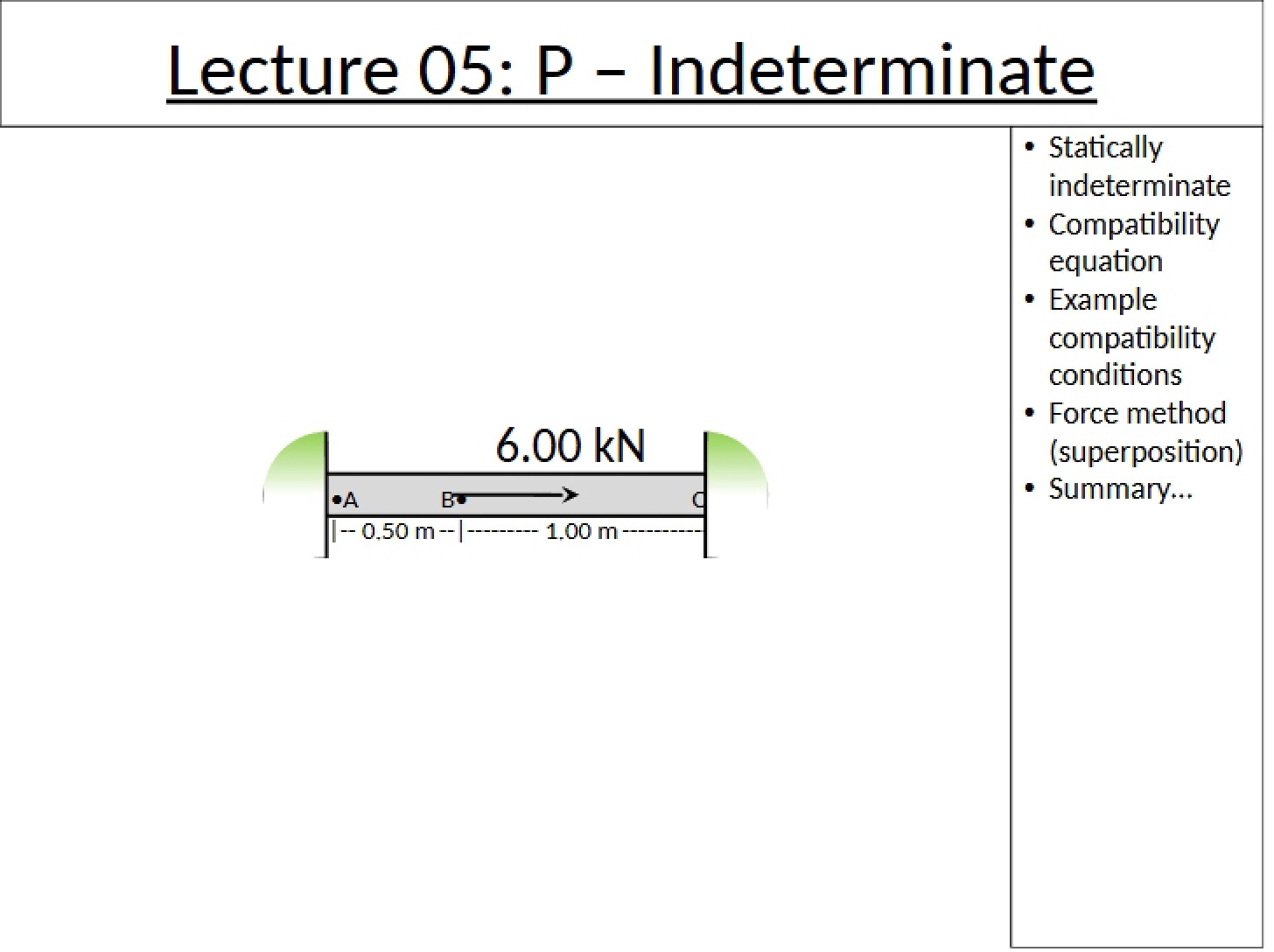
This is a lecture resource focusing on the analysis of statically indeterminate structures within the field of solid mechanics. Specifically, it delves into methods for resolving problems where the reactions and internal forces cannot be determined solely using the equations of static equilibrium. This lecture, originating from TAM 251 at the University of Illinois at Urbana-Champaign, explores advanced techniques crucial for understanding the behavior of complex structural systems. It builds upon foundational concepts of force, moment, and deformation, applying them to scenarios requiring more sophisticated analytical approaches.
Why This Document Matters
This resource is invaluable for students enrolled in introductory solid mechanics courses, particularly those tackling indeterminate beam and frame analysis. It’s most beneficial when you’ve mastered the basics of statics and are ready to expand your problem-solving toolkit to handle real-world engineering scenarios. Engineers and designers will find the principles discussed here essential for ensuring the safety and stability of structures. If you're struggling to determine internal forces and deflections in structures with more constraints than available equilibrium equations, this lecture will provide a deeper understanding of the methodologies needed to overcome those challenges.
Common Limitations or Challenges
This lecture focuses on the *methods* for approaching indeterminate problems, but it doesn’t offer a comprehensive treatment of all possible structural configurations. It assumes a foundational understanding of concepts like bending moment, shear force, and material properties. While the lecture outlines the core principles, applying these methods to highly complex structures may require additional practice and a strong grasp of calculus and differential equations. It also doesn’t provide step-by-step solutions to a wide variety of problems; rather, it focuses on the conceptual framework.
What This Document Provides
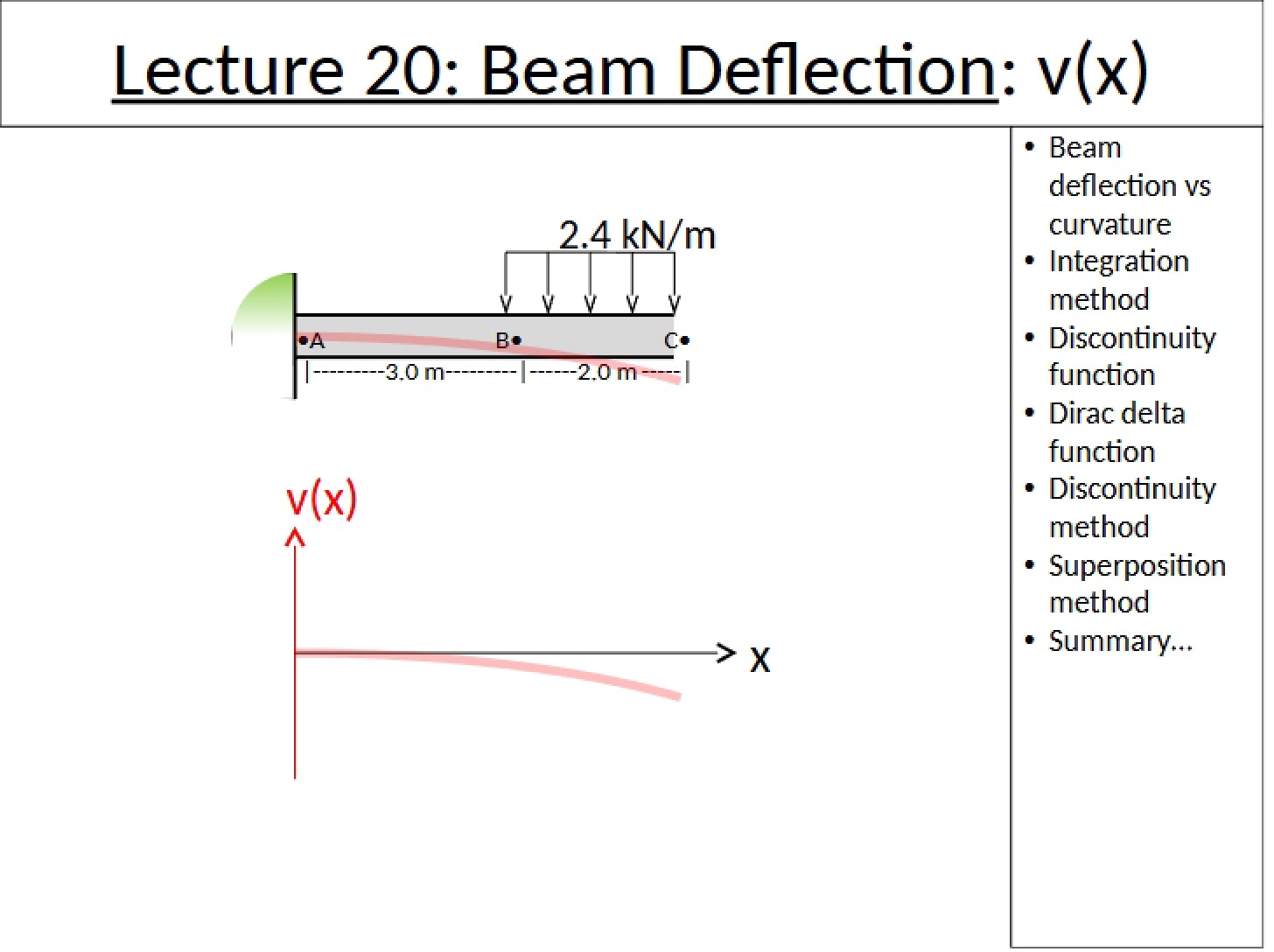
* A detailed exploration of the **Integration Method** for solving indeterminate problems.
* An in-depth look at the **Discontinuity Method**, offering an alternative approach to determine unknown reactions and internal forces.
* A comprehensive overview of the **Superposition Method**, demonstrating how to combine the effects of multiple loads to solve complex scenarios.
* Discussion of how to strategically apply **boundary conditions** to achieve solvable systems.
* A summary of key takeaways to reinforce understanding of each method.