What This Document Is
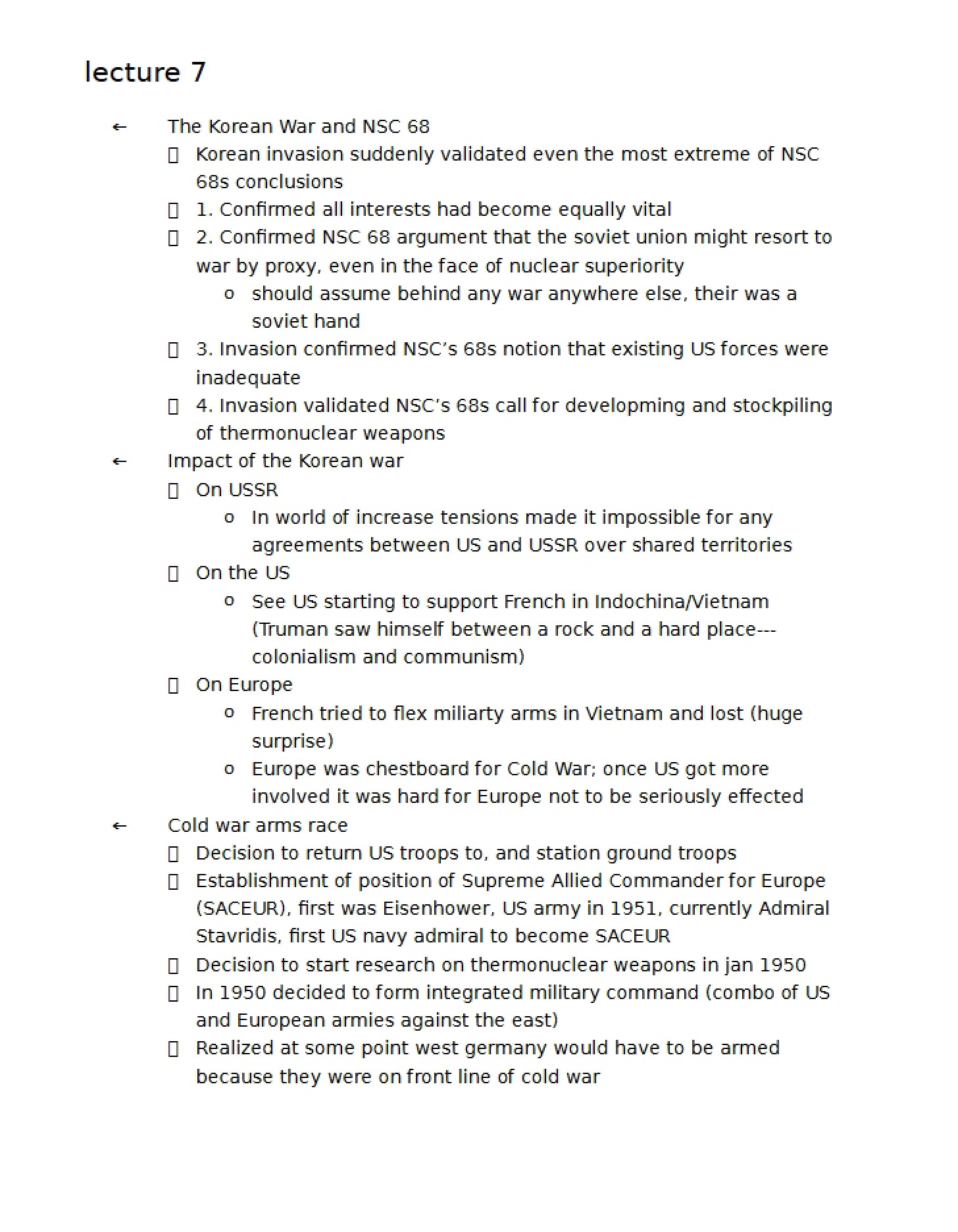
This document comprises lecture notes from a university-level course on Contemporary European International Relations. Specifically, it focuses on a pivotal moment in post-war history – the challenges faced in establishing a new world order following the conclusion of World War II. It delves into the complex geopolitical landscape that emerged, examining the motivations and strategies of key actors and the foundational ideas that shaped the subsequent decades of international politics. The lecture explores the immediate aftermath of global conflict and the attempts to forge lasting peace and stability.
Why This Document Matters
Students enrolled in International Relations, History, or Political Science courses will find this material particularly valuable. It’s ideal for those seeking a deeper understanding of the origins of the Cold War, the formation of post-war alliances, and the ideological clashes that defined much of the 20th century. This resource is best utilized when preparing for class discussions, formulating research questions, or seeking to contextualize current international events within a historical framework. It provides a foundational understanding of core concepts essential for advanced study in the field.
Common Limitations or Challenges
This lecture provides a focused analysis of a specific historical juncture. It does not offer a comprehensive overview of all aspects of European International Relations, nor does it present a complete timeline of events. It’s important to note that this material represents one perspective on these complex historical events and should be supplemented with further research and critical analysis. It does not include detailed case studies or in-depth analyses of specific regional conflicts beyond those directly relevant to the core themes.
What This Document Provides
* Exploration of the successes and failures in establishing a post-war order.
* Discussion of the strategic considerations surrounding the use of novel technologies.
* Analysis of key diplomatic initiatives and agreements.
* Examination of the intellectual foundations of post-war strategies, including the concept of containment.
* Insights into the perspectives of prominent figures involved in shaping the new world order.
* Contextualization of the emergence of long-term geopolitical rivalries.