What This Document Is
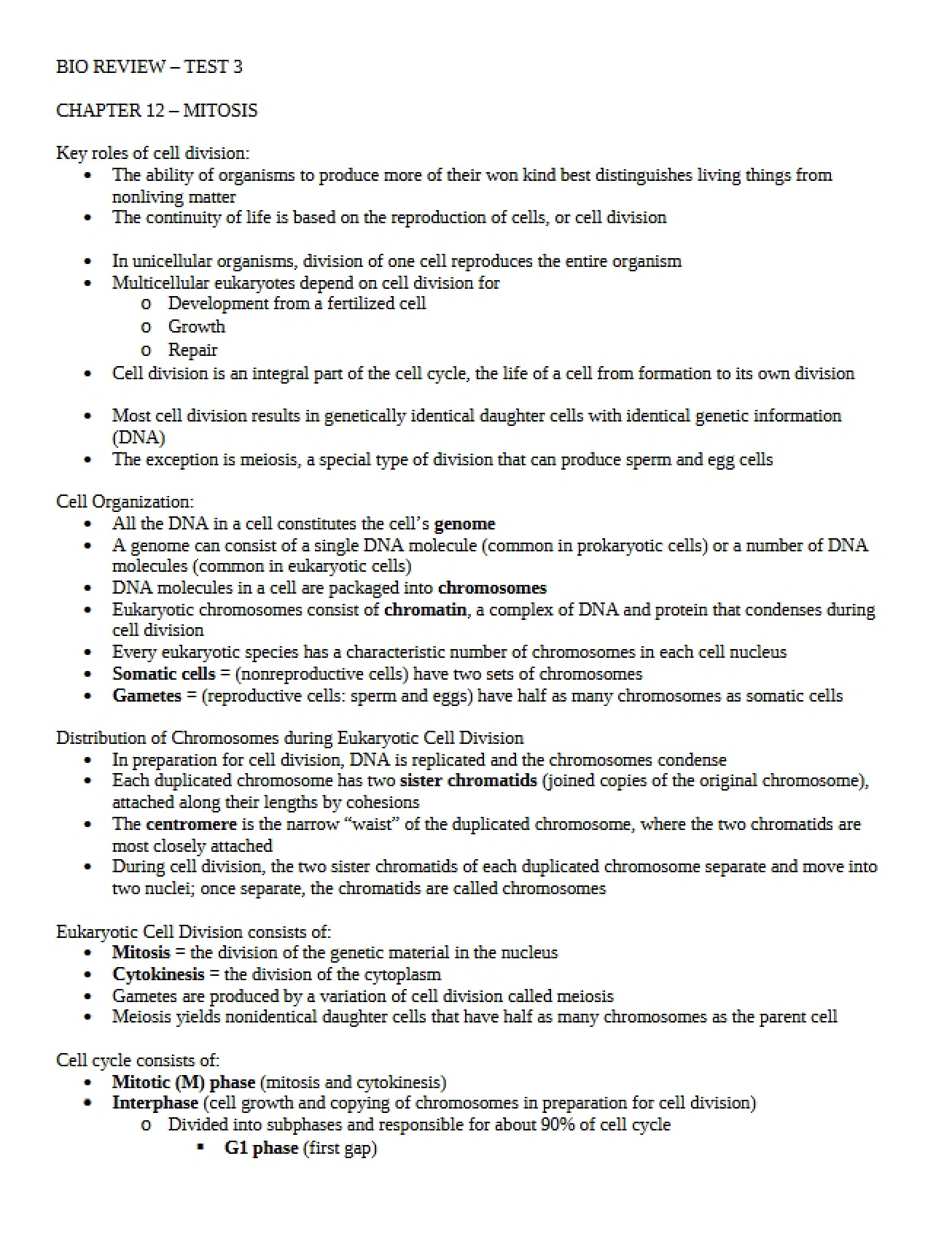
This document is a lecture outline for Chapter 12 of Reece’s *Biology*, 10th Edition, focusing on the cell cycle. It provides a structured overview of the processes involved in cell growth, division, and the transmission of genetic information. The outline highlights key concepts related to both prokaryotic and eukaryotic cell division, emphasizing the importance of accurate DNA replication and distribution.
Why This Document Matters
This lecture outline is essential for students enrolled in Biological Principles I (BIO 130) at Farmingdale State College. It serves as a roadmap for understanding the fundamental processes underpinning all life – how cells create more cells. It’s particularly valuable when paired with the textbook chapter, offering a focused guide during lectures and for subsequent review. Understanding the cell cycle is foundational for more advanced topics in biology, including genetics, development, and cancer biology.
Common Limitations or Challenges
This outline provides a high-level overview and does *not* contain detailed explanations of the molecular mechanisms driving each stage of the cell cycle. It won’t substitute for reading the full chapter, attending lectures, or engaging with supplemental materials. It also doesn’t include practice questions or detailed diagrams to aid in memorization or application of the concepts.
What This Document Provides
This outline includes:
* An overview of the roles of cell division in reproduction, growth, and repair.
* A comparison of cell division in prokaryotes and eukaryotes.
* Definitions of key terms like genome, chromosomes, chromatin, sister chromatids, and centromeres.
* A description of the organization of DNA within chromosomes, including the difference between somatic and gamete cells.
* An introduction to the stages of chromosome duplication and condensation.
* An explanation of mitosis and cytokinesis as related processes.
This preview *does not* include detailed explanations of the phases of mitosis, the regulation of the cell cycle, or the consequences of errors in cell division. It also does not contain any visual aids or interactive elements found in a complete lecture presentation.