What This Document Is
This material represents lecture notes from a Structure and Synthesis (CHEM 237) course at the University of Illinois at Urbana-Champaign, specifically from a March 3, 2015 lecture. It focuses on the principles and practical application of Nuclear Magnetic Resonance (NMR) spectroscopy, a crucial technique in organic chemistry for determining molecular structure. The notes also include preparatory material for an accompanying NMR laboratory session.
Why This Document Matters
Students enrolled in organic chemistry courses, particularly those focusing on spectroscopic analysis, will find these notes valuable. They are especially helpful for those seeking to reinforce concepts presented in lectures and prepare for laboratory work involving NMR. Reviewing this material can aid in understanding the theoretical underpinnings of NMR and building confidence in interpreting spectral data. It’s a resource to consult while working through related assignments and studying for assessments.
Topics Covered
* Fundamentals of NMR spectroscopy
* Analyzing NMR spectra to deduce structural information
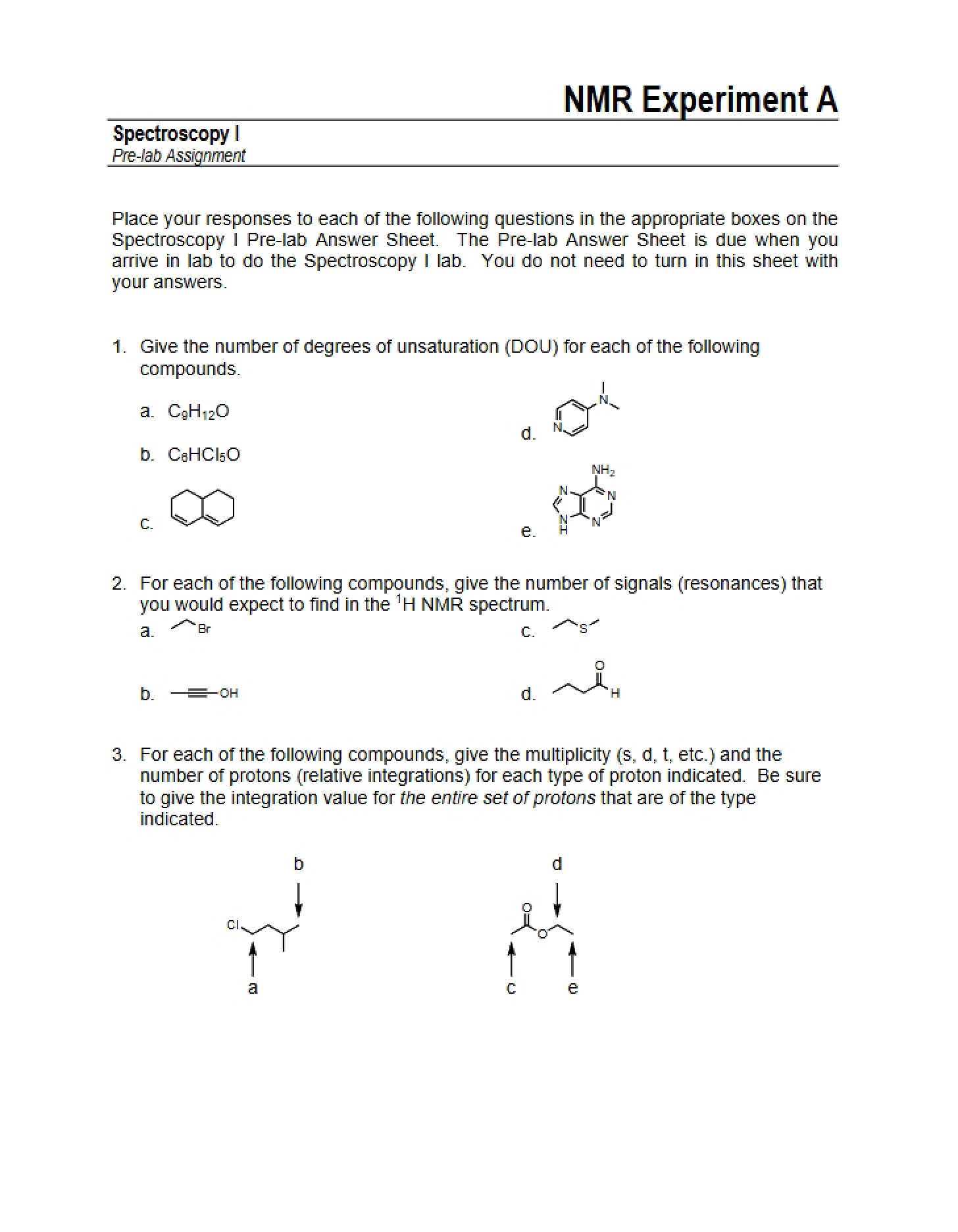
* Determining Degrees of Unsaturation (DOU) from molecular formulas
* Spin-spin splitting and coupling constants
* Interpreting chemical shifts and integration values
* Application of NMR to solve structure elucidation problems
* Introduction to Infrared (IR) Spectroscopy as a complementary technique
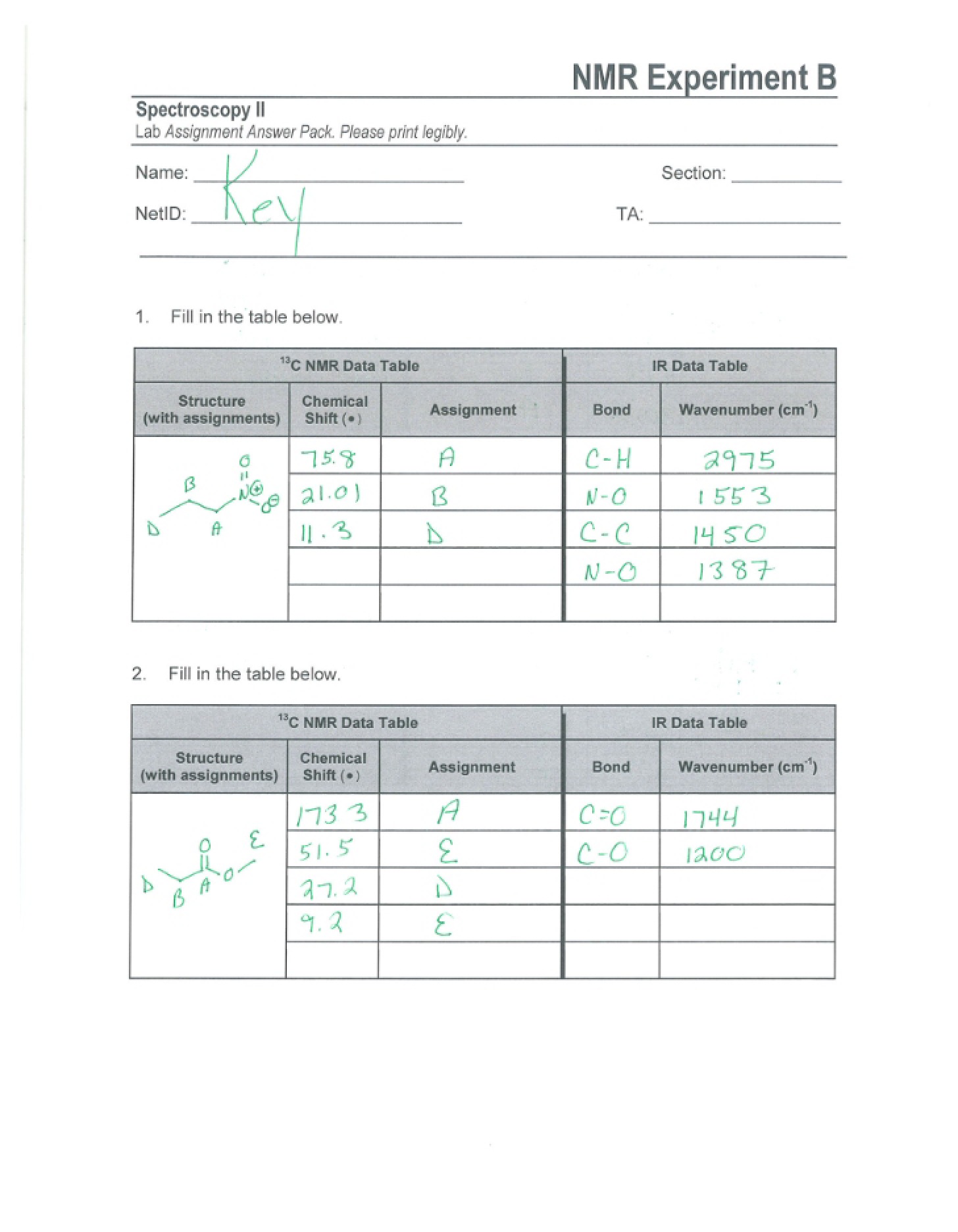
* Laboratory preparation for NMR experiments
What This Document Provides
* Diagrammatic representations of NMR spectrometer components.
* Illustrative examples of splitting patterns for common proton environments.
* Practice problems designed to calculate Degrees of Unsaturation.
* Guidance on expanding molecular structures to identify proton environments.
* A framework for assigning chemical shifts and multiplicities in H NMR spectra.
* Discussion of coupling constants and their relationship to structural features.
* An integrated spectroscopy problem combining multiple spectroscopic techniques.
* An example IR spectrum with key functional group regions highlighted.