What This Document Is
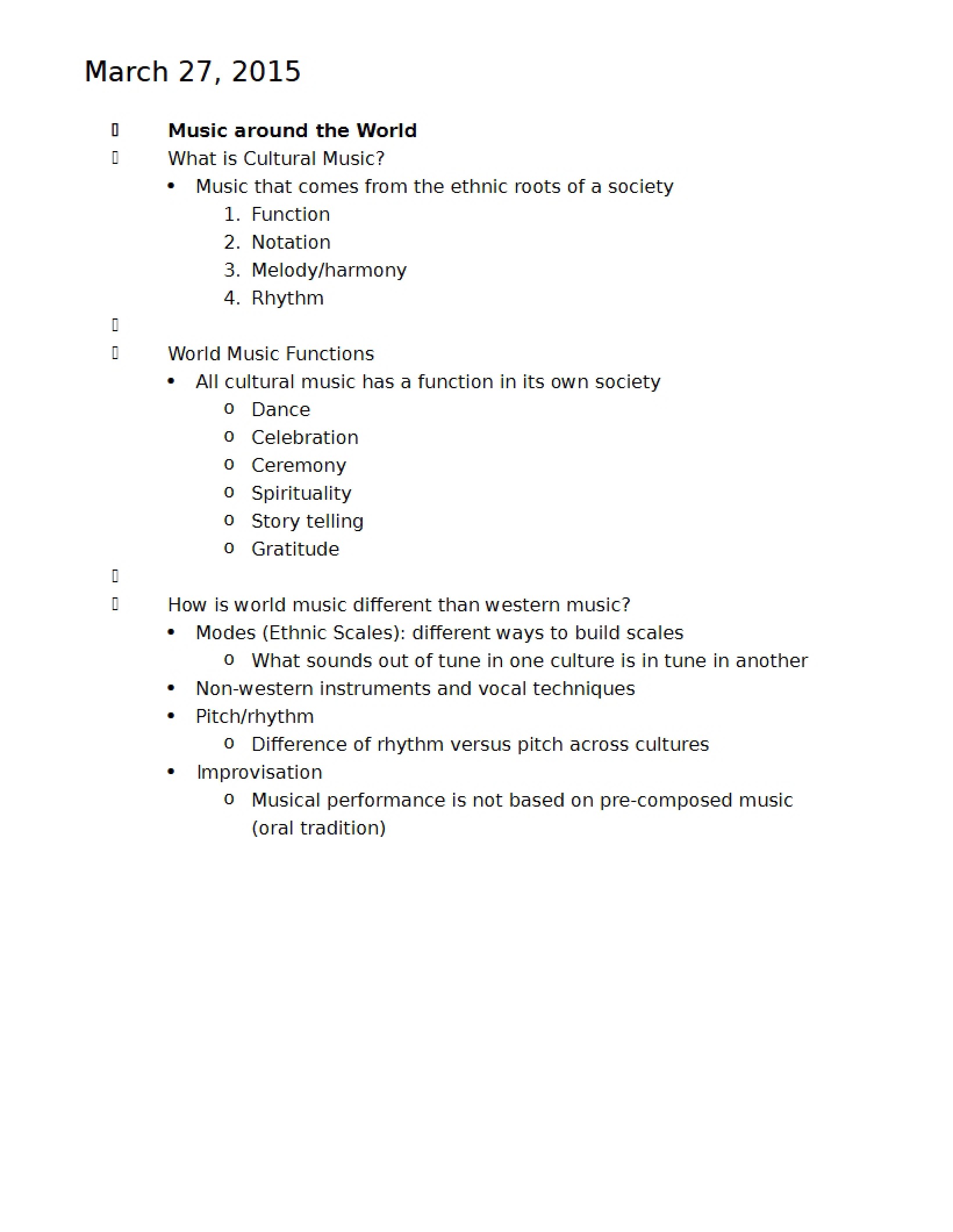
These are lecture notes from Music Appreciation (MU 100) at Colorado State University, covering topics from lectures 1 through 15. The notes provide a foundational overview of musical elements, types, and historical periods, specifically the Medieval Era. They are designed to accompany the course’s lectures and serve as a study resource for students.
Why This Document Matters
This document is essential for students enrolled in Music Appreciation who want a consolidated record of key concepts discussed in class. It’s most useful during exam preparation, when reviewing course material, or when needing a quick reference for musical terminology. The notes bridge the gap between lectures and independent study, helping students build a core understanding of music theory, history, and analysis.
Common Limitations or Challenges
These notes are a *supplement* to the lectures, not a replacement. They offer summaries and key terms but do not include the full depth of discussion, musical examples, or in-class activities. Students will still need to attend lectures and engage with assigned listening materials to fully grasp the concepts. This preview does not include all 15 lectures, only a representative sample of the content.
What This Document Provides
The full set of notes includes detailed information on:
* **Elements of Music:** Melody, harmony, dynamics, articulation, tempo, rhythm, meter, timbre, and form.
* **Music Types:** Classification frameworks, distinctions between art music, folk music, and world music.
* **Medieval Era:** Historical context and foundational musical practices (450-1450).
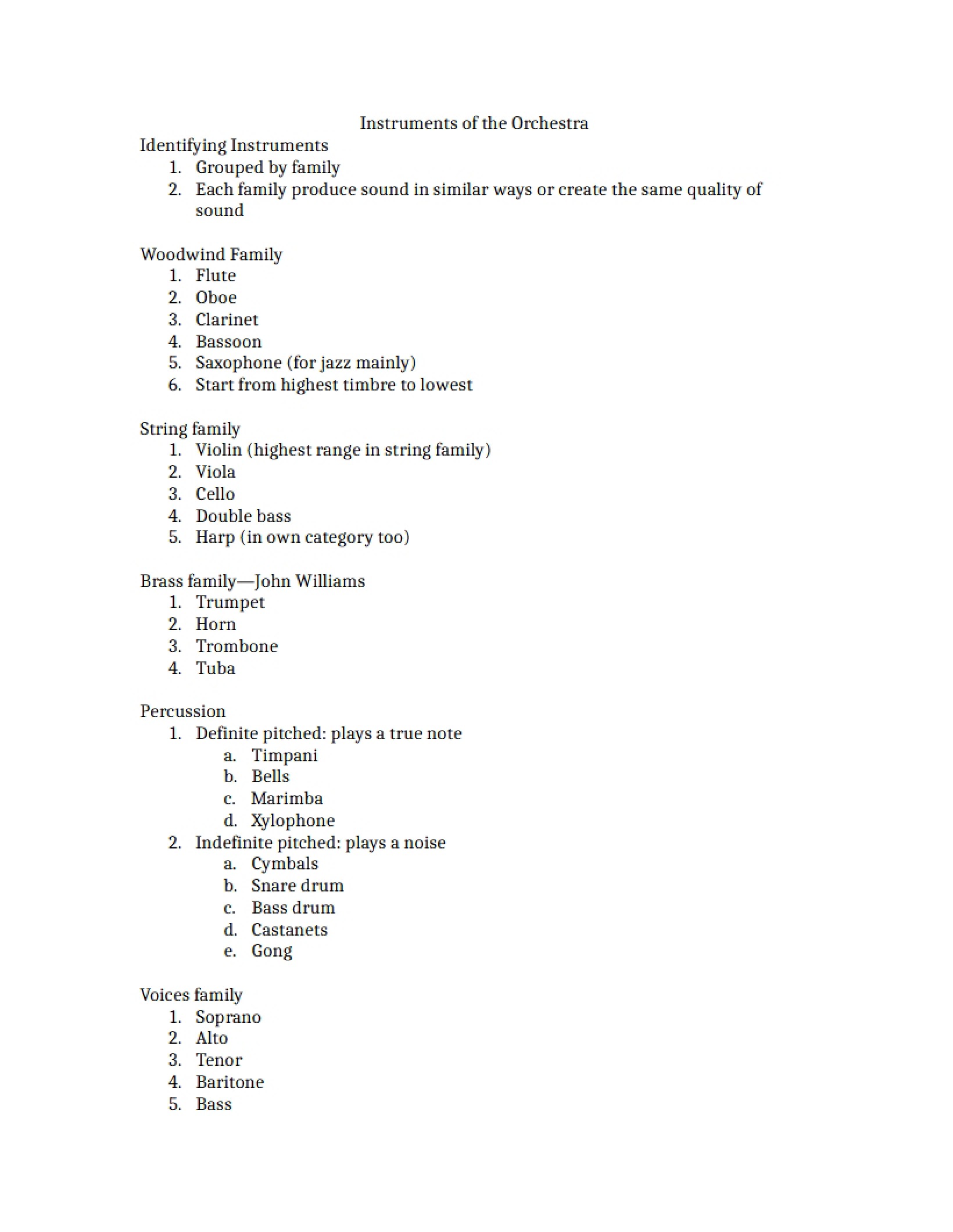
* **Vocal and Instrumental Families:** Categorization of voices (soprano, alto, tenor, bass) and instruments (string, woodwind, brass, percussion, keyboard).
* **Ensemble Types:** Descriptions of string quartets and woodwind quintets.
This preview only provides a glimpse into the initial lectures focusing on musical elements and the beginning of historical context. It does *not* include later lectures on specific musical periods beyond the Medieval Era, detailed analyses of musical works, or in-depth explorations of different musical genres.