What This Document Is
These are lecture notes for Foundations of Business I (BUSN 101) at Drexel University, specifically covering Chapter 13: Marketing. The notes outline the core principles of marketing, tracing its evolution from early production and sales-focused approaches to modern customer-centric strategies. It provides a foundational overview of how businesses create value for customers and build lasting relationships.
Why This Document Matters
These notes are essential for students in introductory business courses. They are typically used during lectures to supplement textbook readings and provide a structured understanding of marketing concepts. Understanding marketing is crucial for anyone entering the business world, as it impacts nearly every aspect of an organization, from product development to customer service. This document provides a high-level framework for understanding the marketing landscape.
Common Limitations or Challenges
This document provides a conceptual overview and does *not* delve into detailed marketing plans, case studies, or advanced analytical techniques. It’s a starting point for understanding the “what” and “why” of marketing, but won’t equip you to *execute* a marketing campaign. Further study and practical application are needed to become proficient in marketing.
What This Document Provides
This lecture note preview includes:
* An overview of the definition of marketing and its historical evolution (Production, Selling, Marketing Concept, Customer Relationship, and Mobile/On-Demand eras).
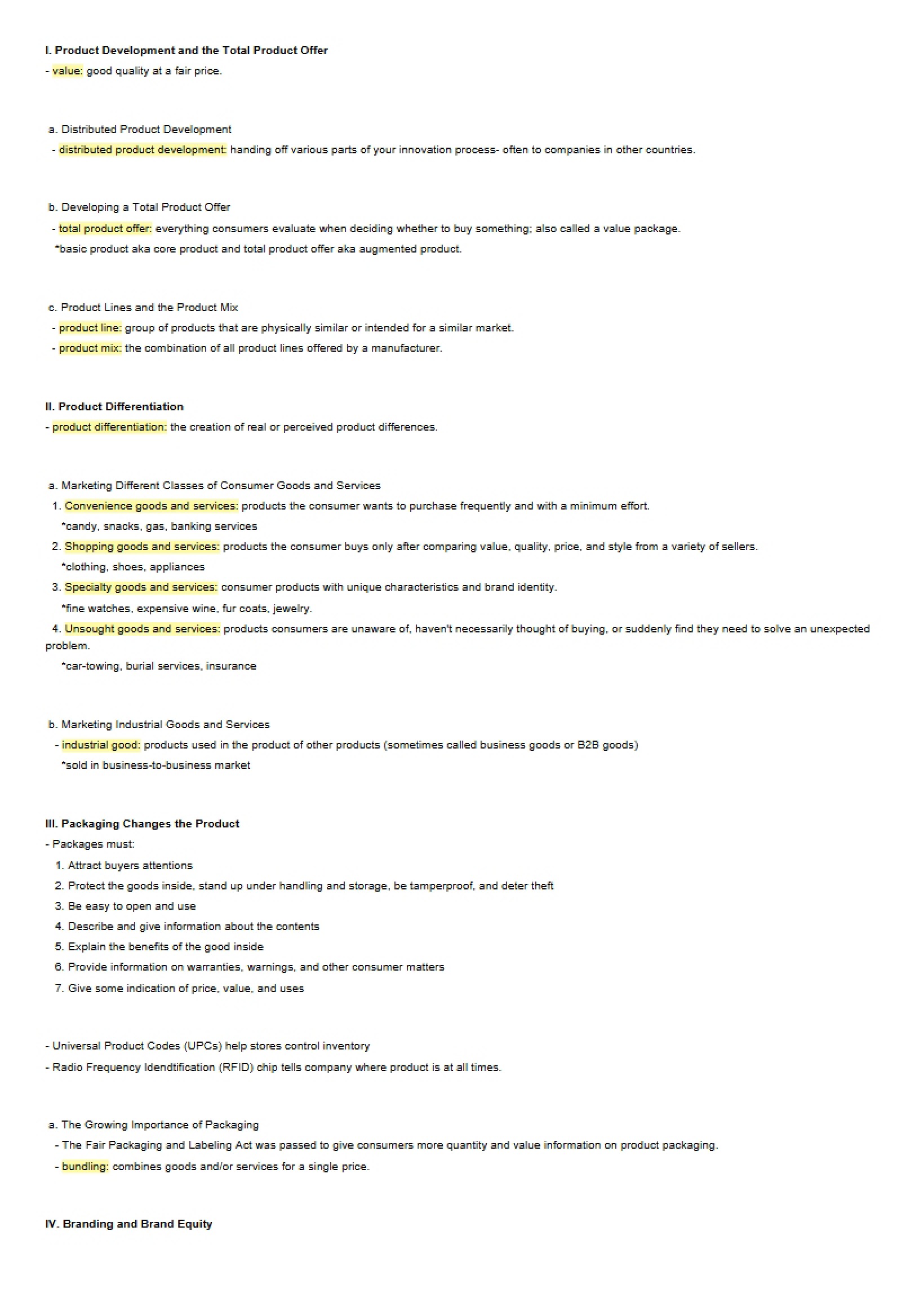
* An introduction to the “Marketing Mix” (Product, Price, Place, and Promotion) and its components.
* Key concepts like test marketing, brand names, and marketing research.
* A discussion of primary and secondary data, and methods like focus groups and environmental scanning.
* An outline of the two major market types: Consumer and Business-to-Business.
* An explanation of market segmentation strategies (Geographic, Demographic, Psychographic, Benefit, and Volume).
* An overview of different marketing approaches (Mass Marketing, Relationship Marketing, Niche Marketing, and One-to-One Marketing).
* Factors influencing consumer behavior (Learning, Reference Groups, Culture, Subculture, and Cognitive Dissonance).
This preview *does not* include detailed examples, case studies, or in-depth analysis of specific marketing tools or technologies. It is a foundational overview intended to prepare you for more detailed study.