What This Document Is
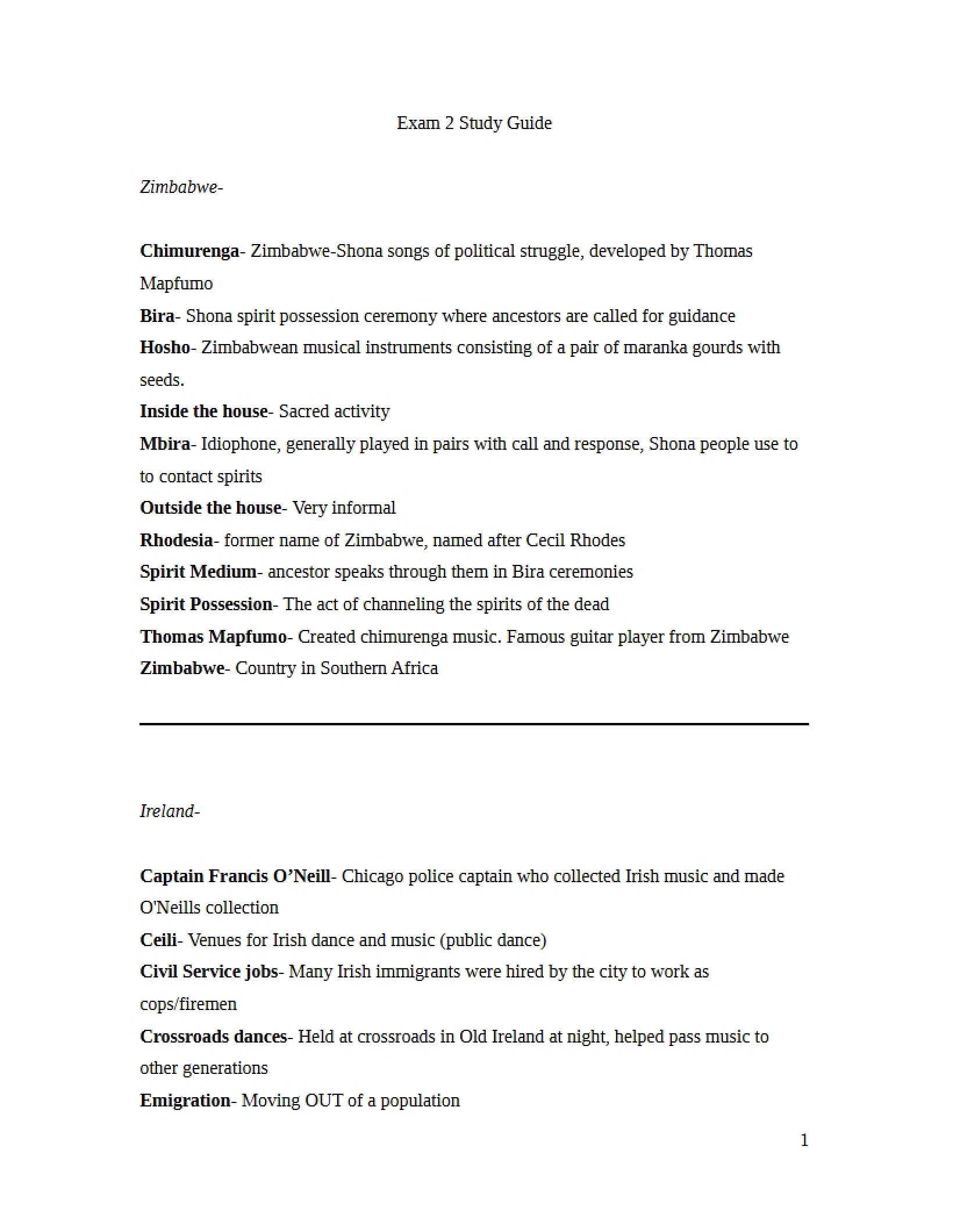
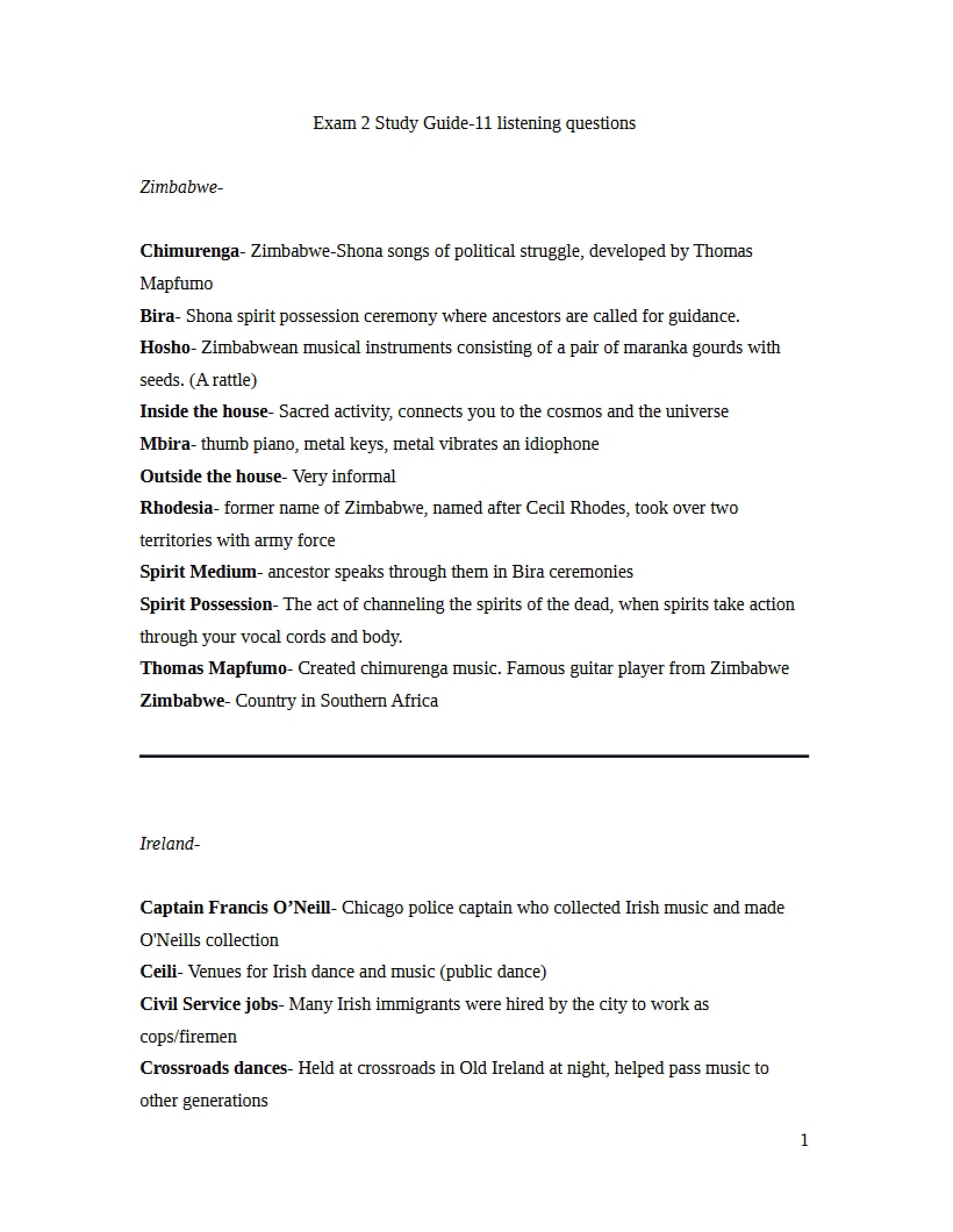
These are lecture notes and a review document designed to help students prepare for the second exam in Illinois State University’s Experiencing Music (MUS 152) course. It consolidates key terms, concepts, and examples covered in lectures relating to music from Africa and its diaspora, alongside broader musical concepts like “flow” and categorization of musical styles.
Why This Document Matters
This review is essential for students enrolled in MUS 152 who are studying for their second exam. It serves as a focused recap of important material, helping to identify areas for further study. It’s most useful *after* attending lectures and completing assigned readings, acting as a tool for solidifying understanding, not initial learning.
Common Limitations or Challenges
This document is a *review* – it doesn’t replace the need to attend lectures, complete readings, or engage with the course materials directly. It provides a condensed overview and won’t cover every nuance discussed in class. It also doesn’t offer practice exam questions or detailed analyses of musical pieces.
What This Document Provides
The full document includes definitions and notes on: a cappella music, characteristics of African music (polyrhythm, call and response, etc.), specific artists like Béla Fleck and Thomas Mapfumo, cultural concepts like colonialism and griots, and terms related to musical experience like “flow.” It also covers the film *Throw Down Your Heart* and categorizations of music (traditional, popular, classical). The review also touches on specific ceremonies like Bira and the historical context of Zimbabwe.
This preview does *not* include detailed musical analyses, practice questions, or the full scope of lecture content. It is a high-level overview to help you determine if the full document will be a valuable study aid.