What This Document Is
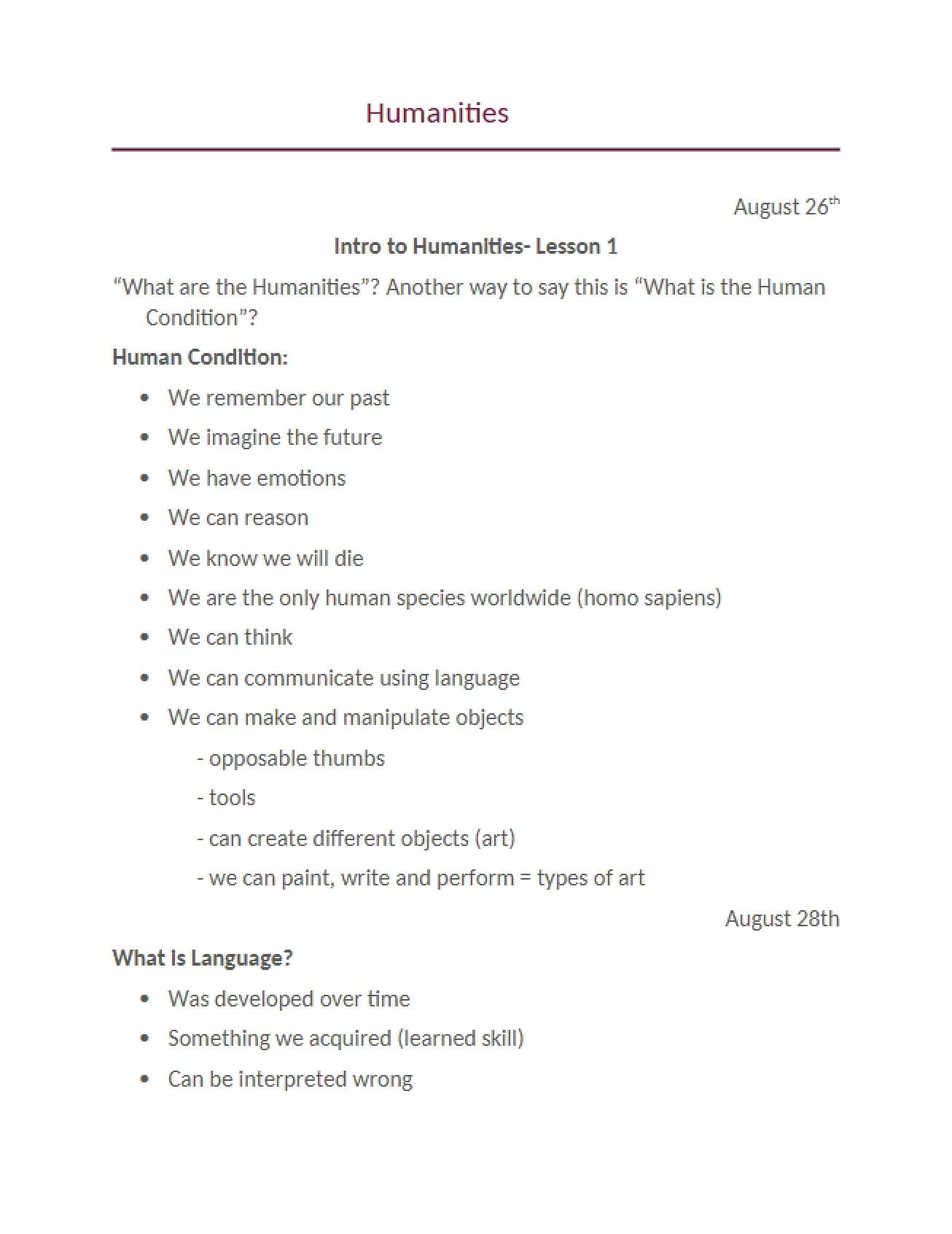
These are lecture notes from Humanities 1020 at Miami Dade College, covering foundational material from prehistory through the early civilizations of Mesopotamia, Egypt, and Persia. The notes condense key information presented in lectures during the August 2016 – December 2016 semester. It serves as a structured overview of the course’s initial units, focusing on the emergence of culture, art, and societal structures.
Why This Document Matters
This document is valuable for students enrolled in HUM 1020, or anyone seeking a concise introduction to the origins of Western civilization. It’s particularly useful for review before quizzes or exams, or for quickly grasping the chronological sequence of early human development and the rise of the first complex societies. It provides a foundational understanding necessary for more in-depth study of these periods.
Common Limitations or Challenges
These notes are a *summary* of lectures and do not replace textbook readings or full engagement with course materials. They are not a comprehensive history, and lack the detailed analysis and scholarly debate found in academic sources. This preview only represents a portion of the full document; later units are not included here.
What This Document Provides
The full document includes:
* An overview of prehistoric periods (Paleolithic, Mesolithic, Neolithic) with key dates and characteristics.
* Discussion of early human life as hunter-gatherers.
* Analysis of significant prehistoric artworks like the Hall of the Running Bulls and the Venus of Willendorf.
* An introduction to Mesopotamia, including its geography, the Sumerians, and the development of cuneiform.
* Information on Mesopotamian religion, architecture (ziggurats), and art (the Bull-headed lyre, the Standard of Ur, the Epic of Gilgamesh).
* Coverage of the Akkadian, Old Babylonian, and Chaldean empires.
* An overview of the Persian Empire, including its infrastructure, religion (Zoroastrianism), and artistic influences.
* An introduction to Ancient Egypt, focusing on the Nile River, hieroglyphics, religion, and the Old, Middle, and New Kingdoms.
* Key terms related to Egyptian beliefs about the afterlife (Ma’at, Ka, mummification).
* Discussion of significant Egyptian structures like the Great Pyramid of Giza and the Sphinx.
* Analysis of the Amarna Period and the art of Akhenaten and Tutankhamun.
This preview focuses on the initial sections covering prehistory and the earliest civilizations of Mesopotamia and Egypt. It does *not* include the later sections of the course.