What This Document Is
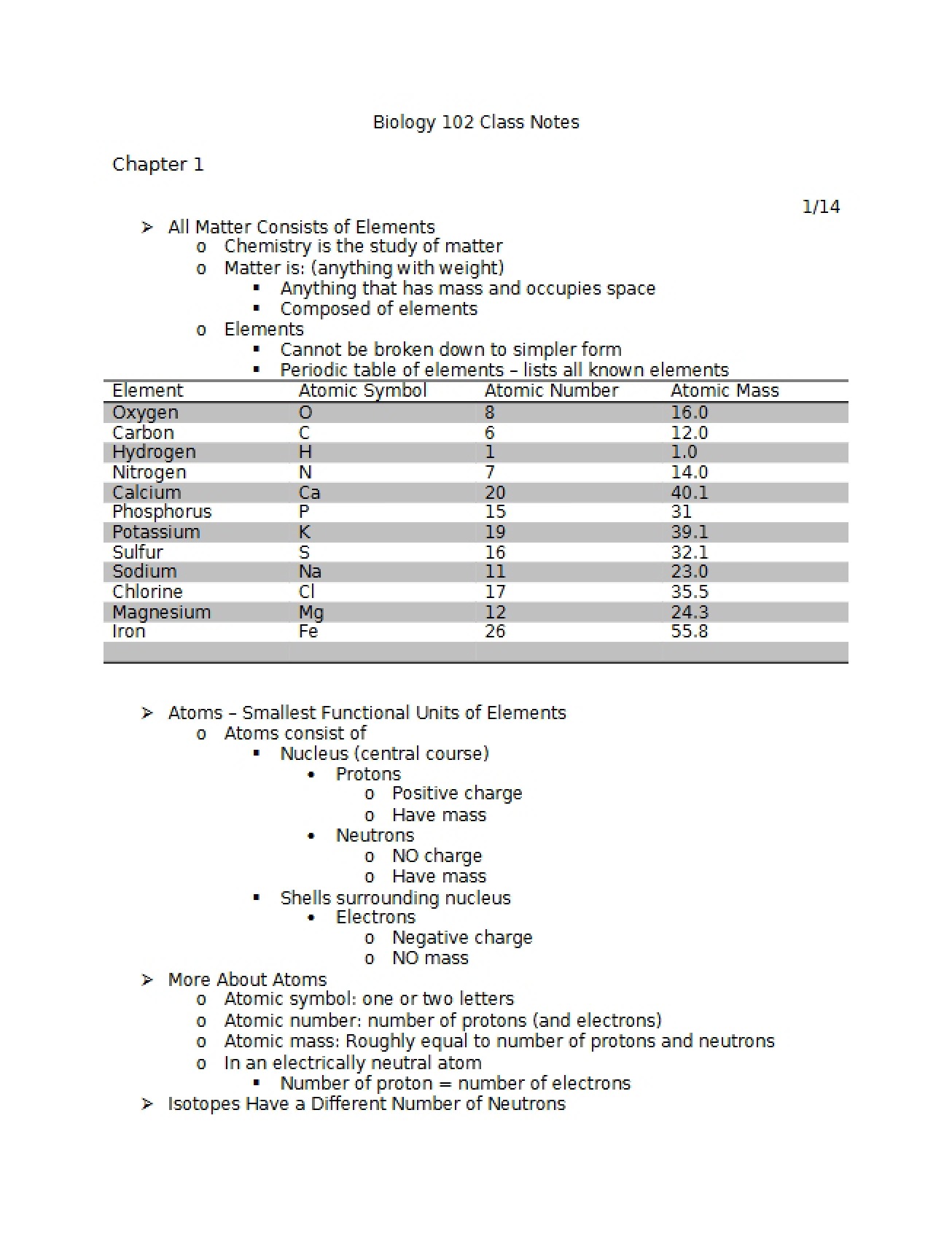
These are lecture notes from Liberty University’s BIOL 102: Principles of Human Biology, covering Sessions 5 through 10. The material focuses on the skeletal and muscular systems – the foundational structures that enable movement and provide bodily support and protection. It’s a comprehensive overview of bone composition, types, development, and the human skeleton’s organization, alongside a detailed look at muscle function and structure.
Why This Document Matters
These notes are essential for students enrolled in BIOL 102. They serve as a study aid to complement classroom lectures, providing a structured record of key concepts. Understanding the skeletal and muscular systems is crucial not only for this course but also for further studies in biology, pre-med, or related health science fields. The notes are most valuable when used *during* and *after* lectures to reinforce learning and prepare for assessments.
Common Limitations or Challenges
These notes are a *summary* of lecture content. They are not a substitute for attending class or completing assigned readings. The notes provide an overview but do not include in-depth explanations, diagrams, or interactive elements found in the full course materials. They also do not include practice questions or self-assessment tools.
What This Document Provides
This document includes detailed information on:
* Bone structure (compact, spongy, cells like osteoblasts and osteoclasts)
* Types of bones (long, short, flat, irregular)
* The axial and appendicular skeleton, including vertebral column regions (cervical, thoracic, lumbar, sacral, coccygeal) and rib structure.
* Joint classifications (cartilaginous, synovial) and types.
* Muscle function, structure (fasicles, fibers, myofibrils), and groups (synergistic, antagonistic).
* Common skeletal system diseases and disorders (sprains, arthritis, osteoporosis).
This preview *does not* include detailed illustrations, clinical case studies, or the full scope of the lecture discussions on bone remodeling, hormonal regulation, or specific muscle contraction mechanisms.