What This Document Is
These lecture notes, originating from STAT 709 – Mathematical Statistics I at the University of Wisconsin-Madison, delve into the critical area of unbiased estimation within statistical theory. The material focuses on methods for constructing and identifying optimal estimators, specifically those exhibiting unbiasedness – a fundamental property desired in statistical inference. It builds upon foundational concepts in point estimation and explores the relationship between unbiasedness and consistency.
Why This Document Matters
This resource is invaluable for graduate students in statistics, mathematics, or related quantitative fields tackling advanced statistical theory. It’s particularly helpful for those seeking a rigorous understanding of estimation procedures and the properties that define “good” estimators. Students preparing for exams, working on research projects involving statistical modeling, or needing a solid theoretical base for more applied statistical work will find this material beneficial. It’s best utilized alongside coursework and other learning resources to reinforce understanding.
Common Limitations or Challenges
This material presents theoretical concepts and requires a strong foundation in probability theory and mathematical statistics. It does *not* provide step-by-step calculations for specific datasets, nor does it offer practical implementations in statistical software. The notes focus on the ‘why’ behind estimation techniques, rather than the ‘how’ of applying them to real-world problems. It assumes a level of mathematical maturity and familiarity with statistical terminology.
What This Document Provides
* A detailed exploration of unbiased and asymptotically unbiased estimators.
* Discussion of estimable parameters and their significance.
* A formal definition and explanation of the Uniformly Minimum Variance Unbiased Estimator (UMVUE).
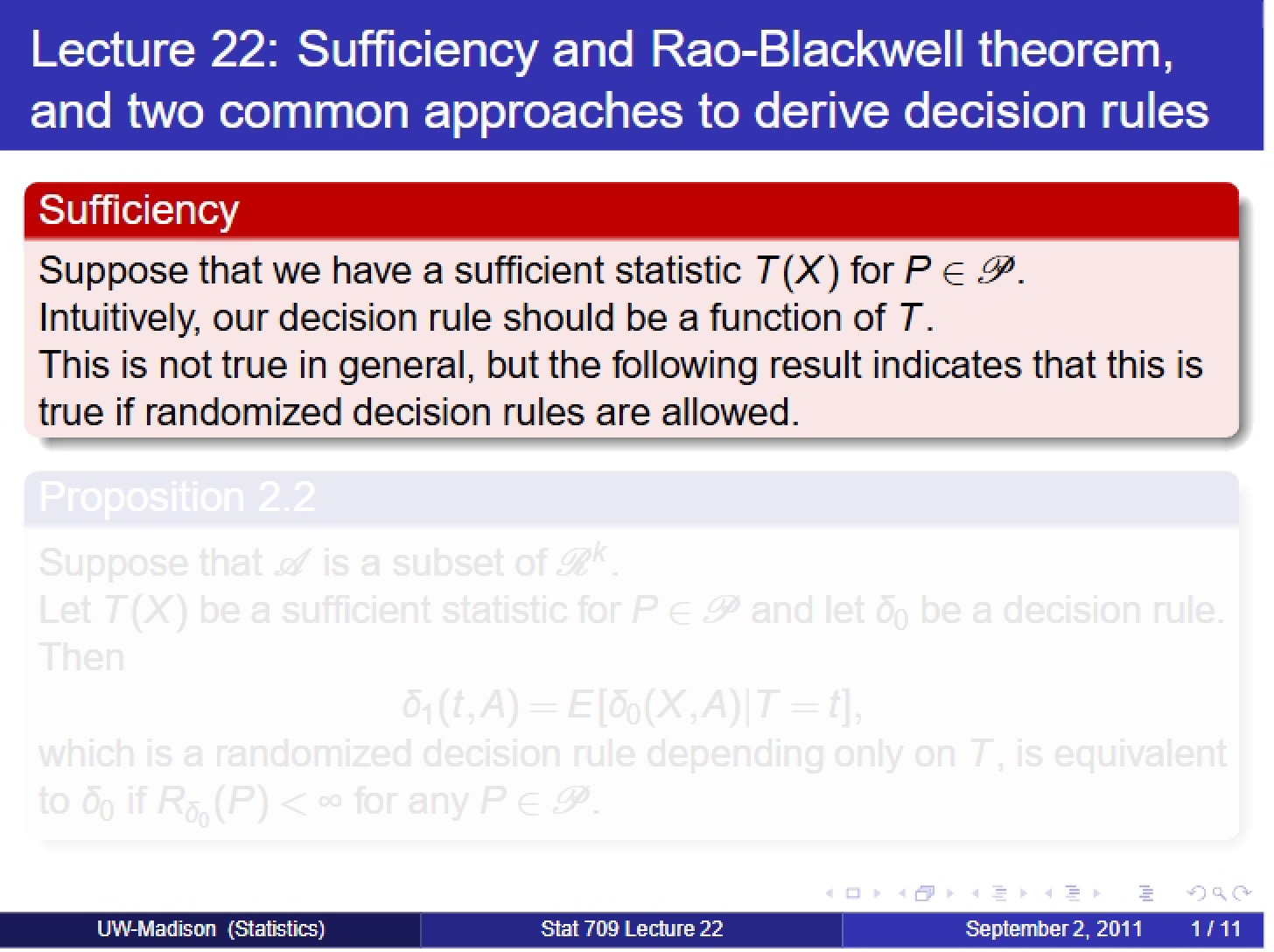
* Key theorems relating to sufficient and complete statistics and their role in deriving UMVUEs (including the Lehmann-Scheffe theorem).
* An overview of strategies for deriving UMVUEs when a sufficient statistic is available.