What This Document Is
This is a lecture exploring the critical back-end phases of compiler design, specifically focusing on instruction selection. It delves into the complexities of translating intermediate representations into executable assembly code for electronic materials processing applications, as part of the ELEG 622 course at the University of Delaware. The material examines the foundational principles and practical considerations involved in optimizing code generation for modern computer architectures.
Why This Document Matters
This lecture is essential for students and professionals involved in compiler construction, optimization techniques, and low-level programming. It’s particularly valuable for those seeking a deeper understanding of how high-level code is transformed into efficient machine instructions. Anyone working on performance-critical applications, embedded systems, or seeking to improve code execution speed will find this material beneficial. It’s best utilized during a compiler design course or when tackling projects requiring optimized code generation.
Topics Covered
* The role of back-end optimization within the broader compiler framework.
* The challenges and nuances of mapping intermediate representations to assembly language.
* Techniques for managing instruction complexity in modern processors.
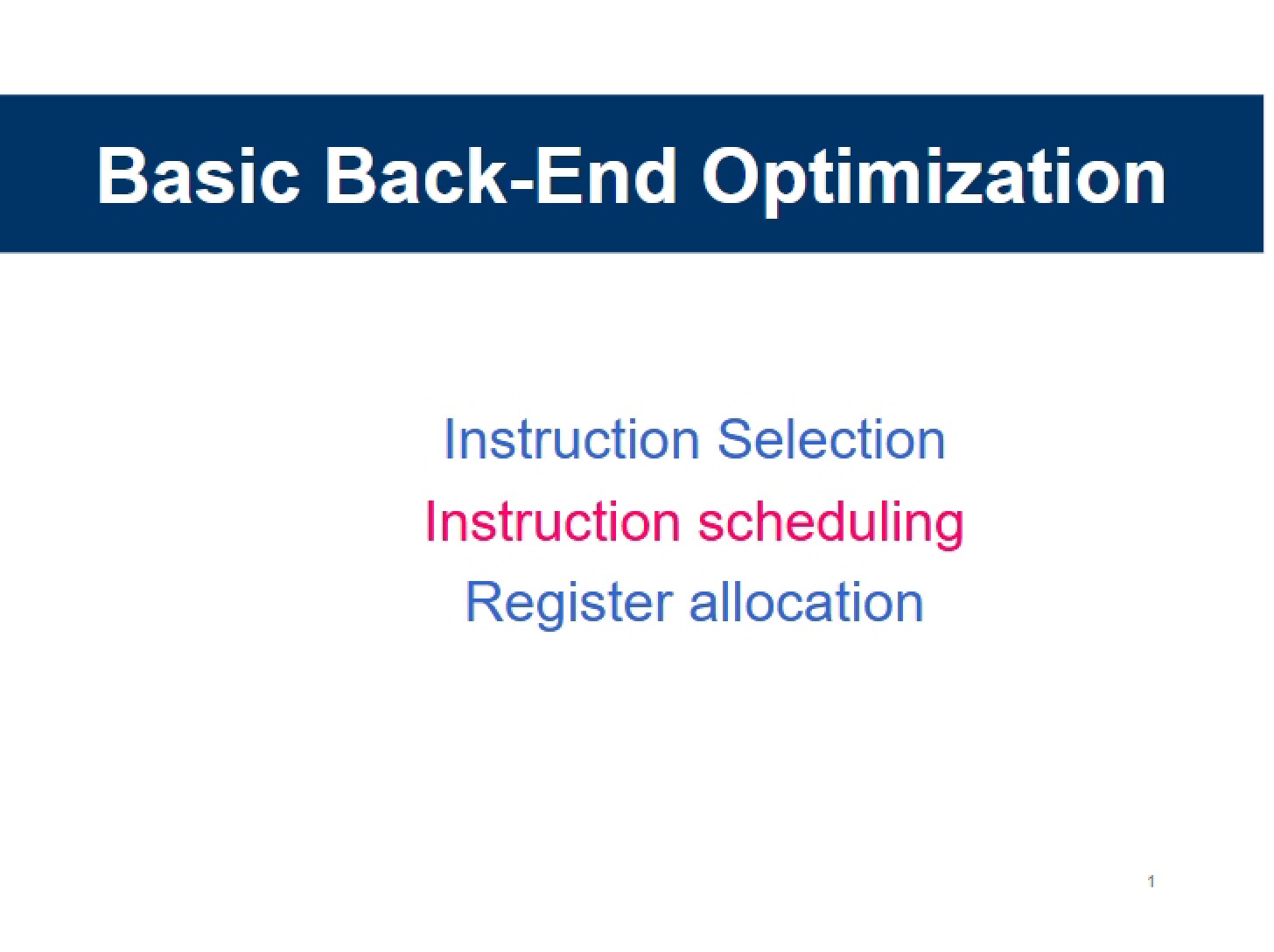
* The interplay between instruction selection, scheduling, and register allocation.
* Approaches to retargetable code generation.
* Pattern matching methodologies for instruction selection.
What This Document Provides
* An overview of fundamental concepts in instruction selection.
* Discussion of the trade-offs involved in choosing optimal instruction sequences.
* Exploration of different instruction selection techniques, including tree pattern matching and peephole-based methods.
* Insights into the constraints imposed by specific hardware architectures.
* References to key resources in the field of compiler design for further study.