What This Document Is
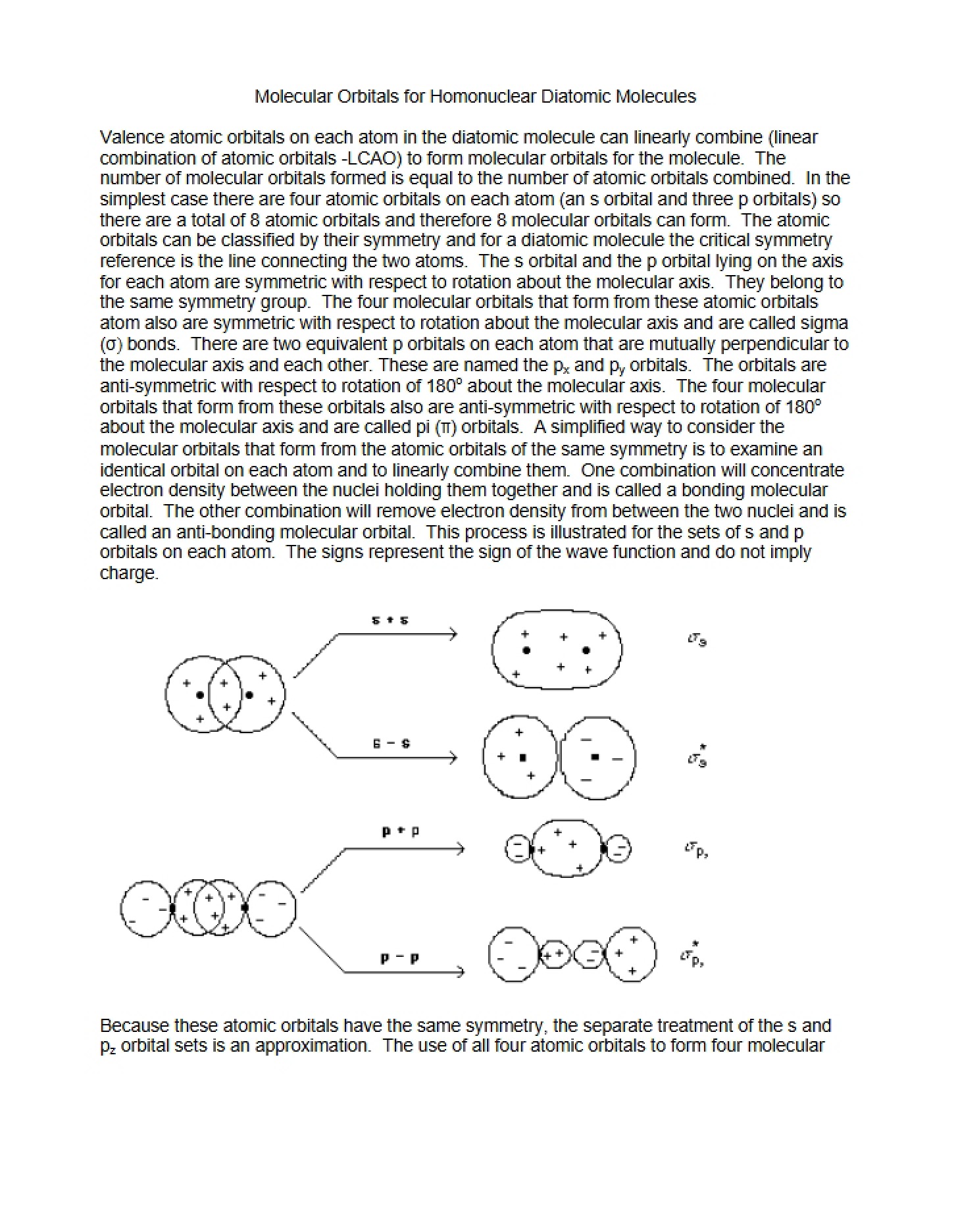
This document comprises Lecture Seven from the Chemical Structure (CHEM 20A) course at UCLA. It delves into advanced concepts related to molecular orbital theory and its connection to observed molecular geometries. The lecture builds upon previous discussions of atomic orbitals and diatomic molecules, addressing apparent discrepancies between theoretical predictions and experimental observations. It explores the fundamental principles governing how atomic orbitals combine to form molecular orbitals and influence the three-dimensional arrangement of atoms in molecules.
Why This Document Matters
This lecture is crucial for students seeking a deeper understanding of chemical bonding and molecular structure. It’s particularly beneficial for those preparing to study organic chemistry, biochemistry, or materials science, where a strong grasp of these concepts is essential. Reviewing this material will strengthen your ability to predict and rationalize molecular shapes and properties. It’s best utilized after a solid foundation in atomic orbital theory and molecular orbital diagrams has been established – ideally after completing the preceding lectures in the course.
Topics Covered
* Corrections and refinements to molecular orbital diagrams for diatomic molecules.
* The relationship between atomic orbital energies and ionization potentials.
* The concept of hybridization of atomic orbitals.
* Discrepancies between simple molecular orbital theory and observed molecular geometries.
* Analysis of bonding in simple molecules like acetylene and methane.
* The influence of orbital overlap on molecular structure.
What This Document Provides
* Detailed examination of molecular orbital diagrams, including considerations for heteronuclear diatomics.
* Illustrative examples used to highlight challenges in applying basic molecular orbital theory.
* A framework for understanding the need for more sophisticated bonding models.
* A foundation for predicting and explaining molecular shapes based on atomic orbital interactions.
* A springboard for further exploration of advanced bonding theories and their applications.