What This Document Is
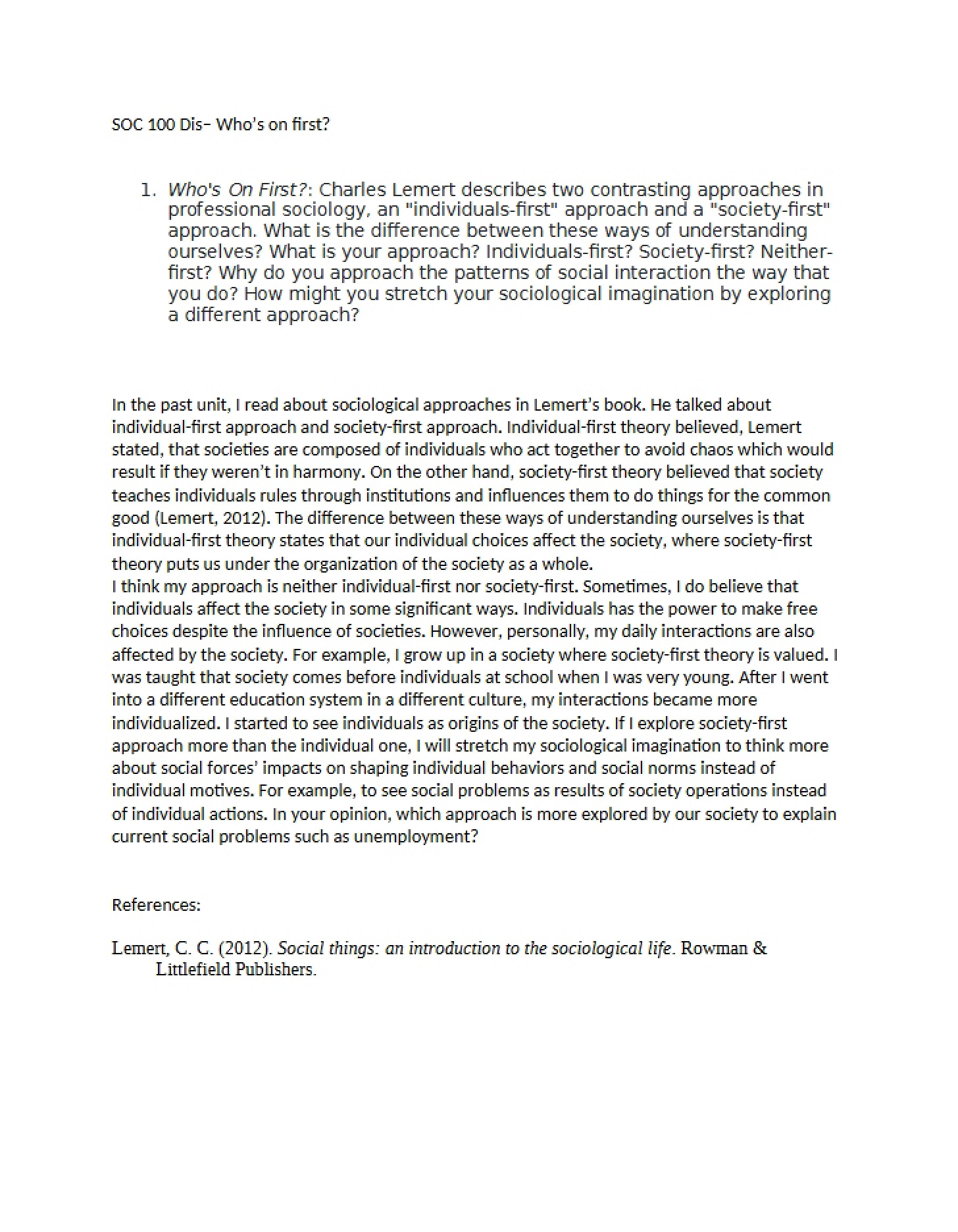
This is a comprehensive study guide designed to support students enrolled in an introductory sociology course (SOC 100) at the University of Illinois at Urbana-Champaign. It focuses on foundational concepts and theories explored in the first examination of the course. The guide is structured around key themes central to understanding the sociological perspective, including the relationship between individual experiences and broader societal forces. It delves into the core principles that underpin the discipline of sociology and prepares students to critically analyze social phenomena.
Why This Document Matters
This study guide is an invaluable resource for students aiming to solidify their understanding of introductory sociological concepts. It’s particularly helpful for those preparing for their first exam, seeking to review lecture material, or wanting a focused resource to complement textbook readings. Students who utilize this guide will be better equipped to approach essay questions, identify key theoretical frameworks, and demonstrate a grasp of the fundamental building blocks of sociological thought. It’s most effective when used *in conjunction* with course lectures and assigned readings.
Common Limitations or Challenges
This study guide is not a substitute for attending lectures or completing assigned readings. It serves as a focused review tool, and assumes a base level of familiarity with the course material. It does not provide complete definitions of all sociological terms, nor does it offer detailed explanations of research methodologies. Furthermore, it does not contain the actual exam questions or provide direct answers to potential assessment items. It is designed to guide your study, not to *be* your study.
What This Document Provides
* An overview of the core concept of the “Sociological Imagination” and its application.
* A breakdown of different levels of social structures – from intimate relationships to global systems.
* Summaries of major sociological theories, including Structural Functionalism.
* Key insights from foundational sociological thinkers and their contributions to the field.
* An exploration of theories related to social stratification and inequality.
* Discussion points regarding the complexities of social solidarity and its impact.