What This Document Is
This is a lecture resource from ABE 436: Renewable Energy Systems at the University of Illinois at Urbana-Champaign, specifically focusing on the principles behind harnessing wind energy. It delves into the core concepts governing wind turbine operation, providing a foundational understanding of the aerodynamic forces at play. This material is designed to supplement in-class learning and build a strong theoretical base for more advanced topics in renewable energy.
Why This Document Matters
This resource is ideal for students enrolled in renewable energy courses, particularly those concentrating on wind power technology. It’s also beneficial for anyone seeking a deeper understanding of the physics behind wind energy conversion – from engineering students to professionals looking to expand their knowledge base. Reviewing this material before tackling complex system designs or performance analyses will prove invaluable. It’s best utilized as a study aid alongside coursework and practical applications.
Topics Covered
* Wind turbine classifications (Horizontal and Vertical Axis)
* Fundamental aerodynamic principles related to wind energy
* Lift and drag forces acting on turbine blades
* Bernoulli’s principle and its application to airfoil design
* The concept of stall angle and its impact on performance
* Lift and Drag Coefficients and their significance
* Relative wind velocity and angle in wind turbine operation
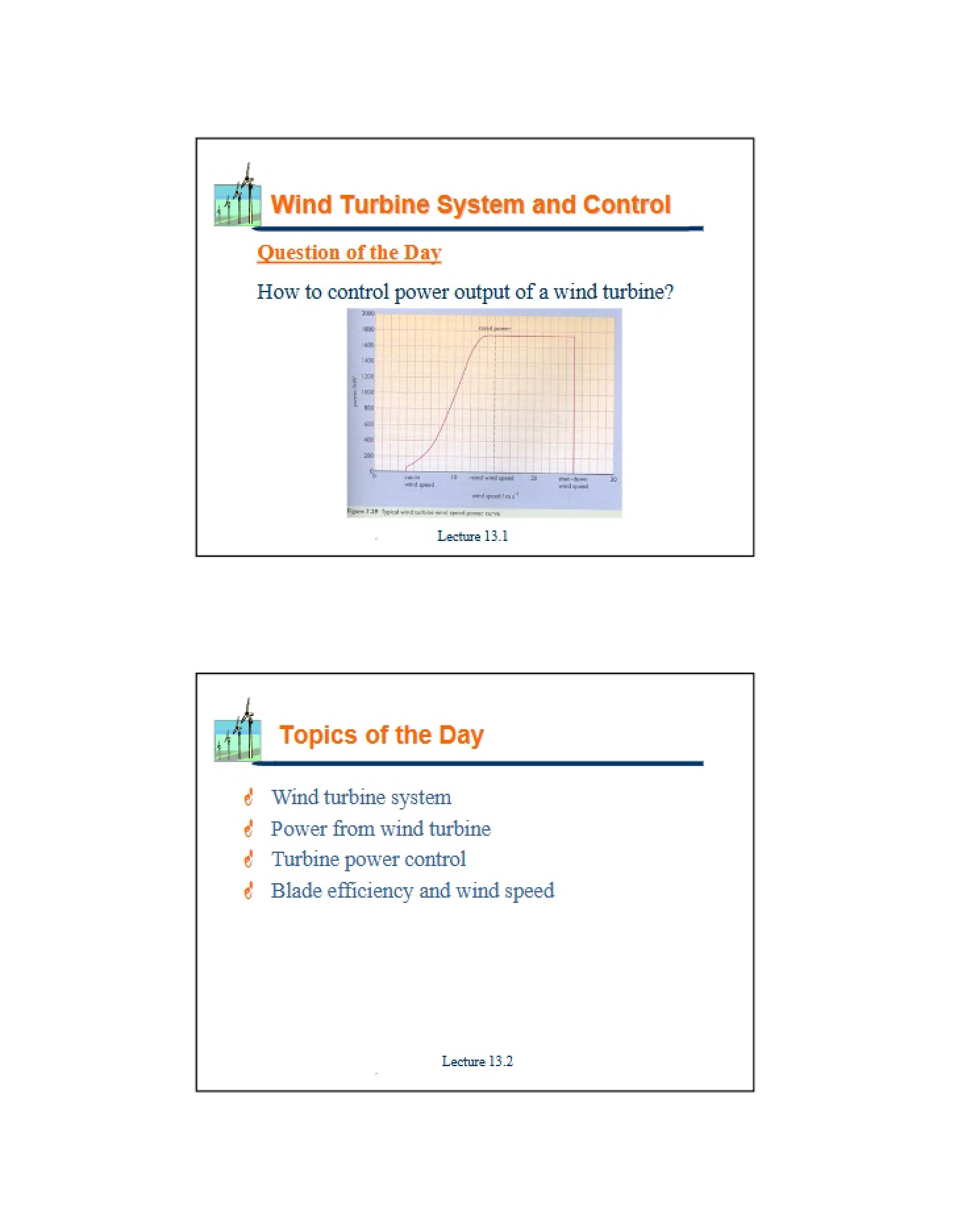
* Power generation principles within a wind turbine system
What This Document Provides
* Detailed explanations of key aerodynamic concepts.
* Visual aids illustrating wind turbine configurations and airflow patterns.
* Formulas relating to drag and lift forces, setting the stage for quantitative analysis.
* A framework for understanding the relationship between wind speed, blade geometry, and power output.
* Definitions of critical terminology used in the field of wind energy.
* References to external resources for further exploration.