What This Document Is
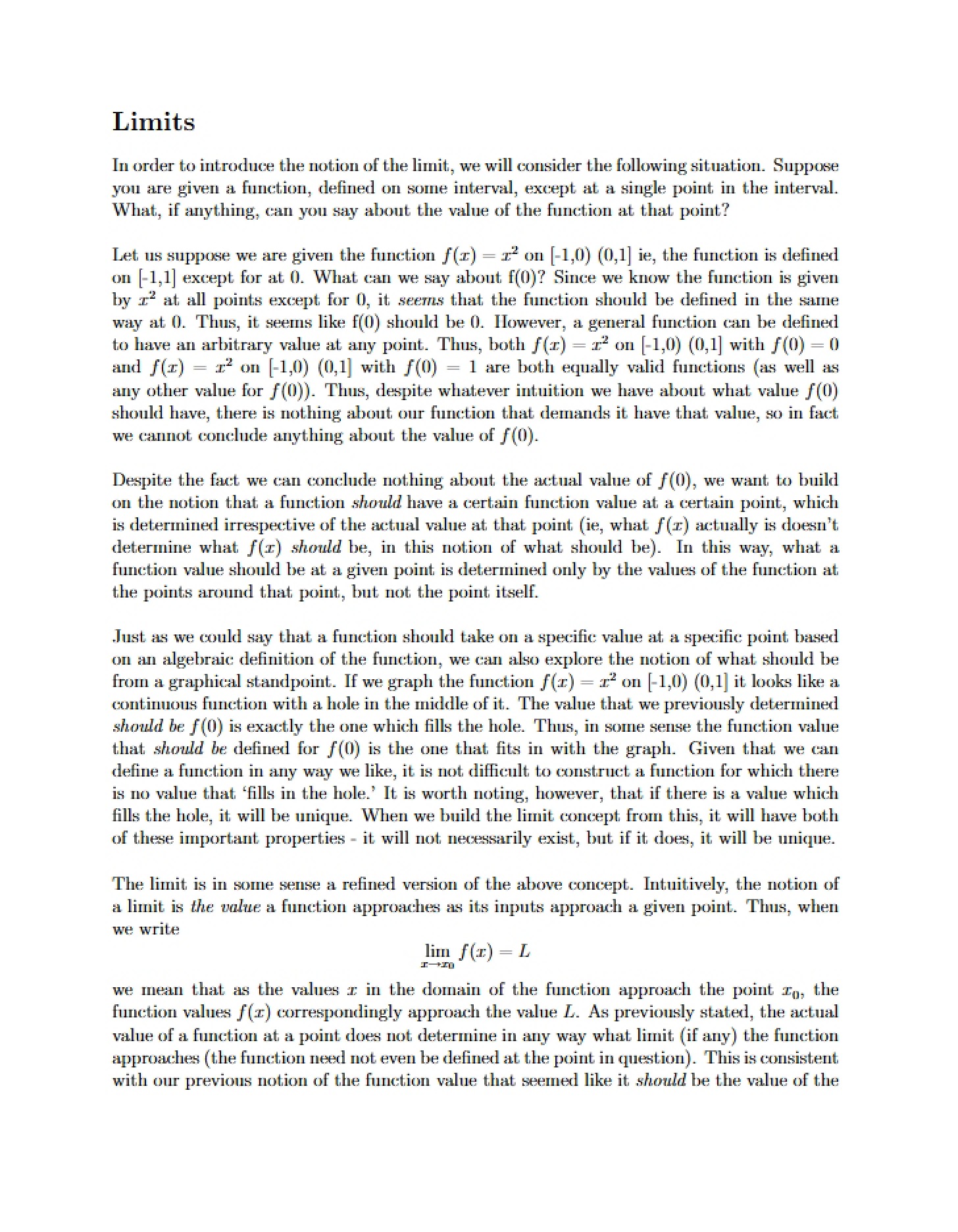
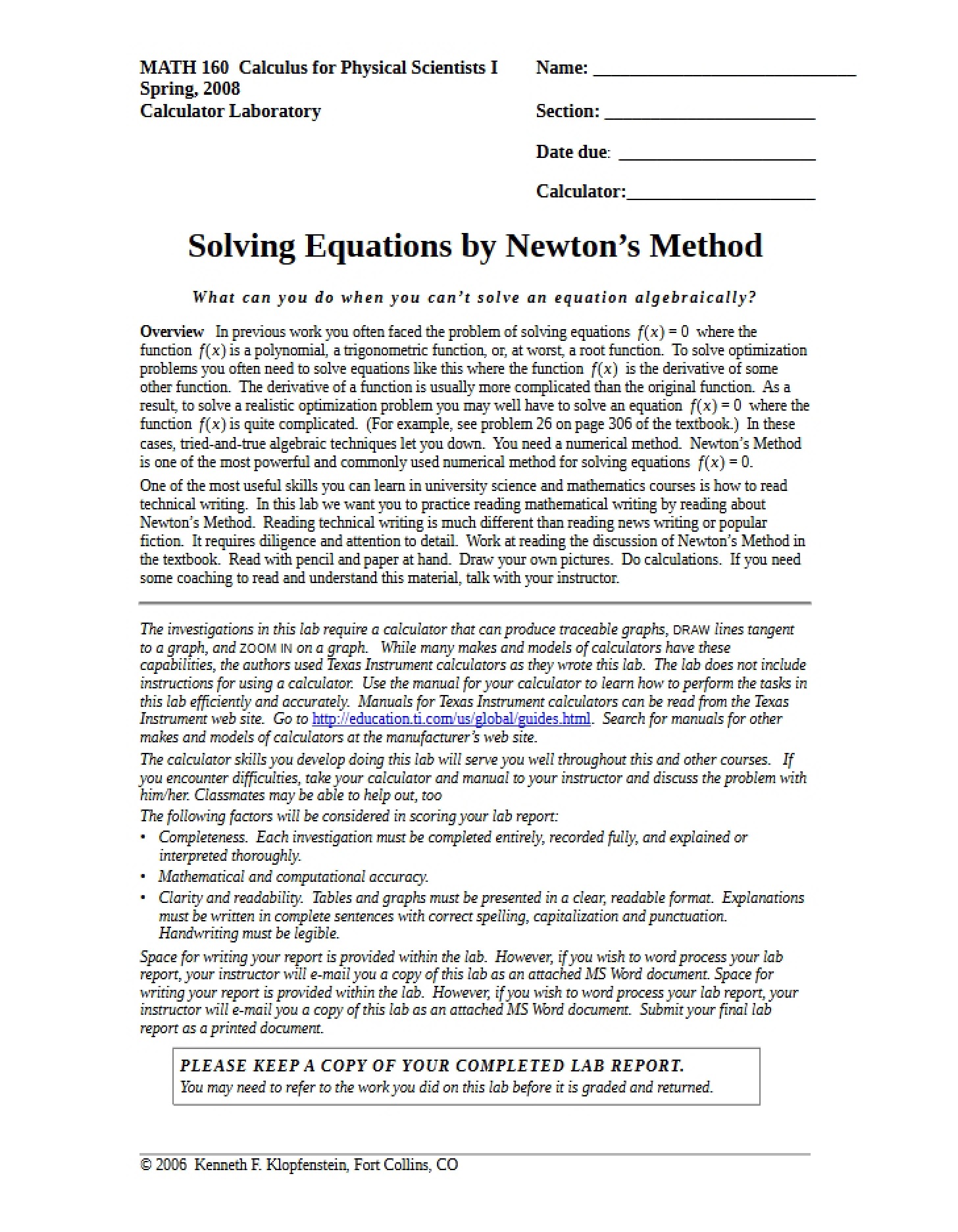
This is a laboratory investigation designed to accompany a Calculus course, specifically focusing on the concept of limits. Developed for students at the University of California, Berkeley’s MATH 160 (Calculus for Physical Scientists I), this resource provides a hands-on exploration of limits using a calculator. It’s intended to be used in conjunction with classroom lectures and textbook material, offering a practical application of theoretical concepts. The lab emphasizes the importance of careful calculation and critical thinking when using technology to analyze mathematical ideas.
Why This Document Matters
This investigation is ideal for students who want to solidify their understanding of limits beyond abstract definitions. It’s particularly beneficial for those who learn best by doing and those preparing for more advanced coursework in mathematics and related fields like physics and engineering. Students will gain valuable experience interpreting the results of numerical calculations and recognizing potential pitfalls in applying technology to mathematical problems. This resource is most useful when working through the course material and needing to reinforce understanding of limit evaluation.
Topics Covered
* The fundamental concept of a limit
* Numerical methods for investigating limits
* Potential limitations and inaccuracies of calculator-based calculations
* Interpreting function values to approximate limits
* The relationship between input values and function approximations
* Accuracy and precision in numerical calculations
* Identifying potential errors in limit evaluation
What This Document Provides
* A structured laboratory investigation with clear objectives
* Guidance on utilizing calculator functions for analyzing limits (though specific calculator instructions are *not* included – users are expected to consult their calculator’s manual)
* Considerations for evaluating the completeness, accuracy, and clarity of lab reports
* A framework for understanding the nuances of applying numerical methods to mathematical concepts
* A scoring rubric outlining expectations for lab report submissions
* A focus on the importance of careful interpretation of results.