What This Document Is
This document represents lecture notes from MOS VLSI Circuit Design (EE 477L) at the University of Southern California, specifically focusing on dynamic logic gates. It delves into the fundamental building blocks of digital circuits, moving beyond static logic to explore techniques that leverage transient behavior for improved speed and efficiency. The material builds upon prior lectures concerning transistor structures and foundational gate designs.
Why This Document Matters
This resource is invaluable for electrical engineering students enrolled in VLSI design courses. It’s particularly helpful for those seeking a deeper understanding of how logic functions are implemented at the transistor level, and the trade-offs involved in choosing different circuit architectures. Students preparing for exams, working on circuit design projects, or needing to solidify their grasp of CMOS technology will find this material beneficial. It’s best utilized *after* a foundational understanding of static logic gates and transistor operation has been established.
Common Limitations or Challenges
This lecture material provides a theoretical exploration of dynamic logic. It does not offer step-by-step instructions for circuit simulation or physical layout. Furthermore, it assumes a pre-existing knowledge of semiconductor physics and basic circuit analysis techniques. The notes are focused on core concepts and may not cover every nuanced aspect of dynamic logic implementation or advanced optimization strategies. Practical considerations related to manufacturing variations and signal integrity are also not extensively detailed.
What This Document Provides
* An examination of latch designs and their fabrication within CMOS technology.
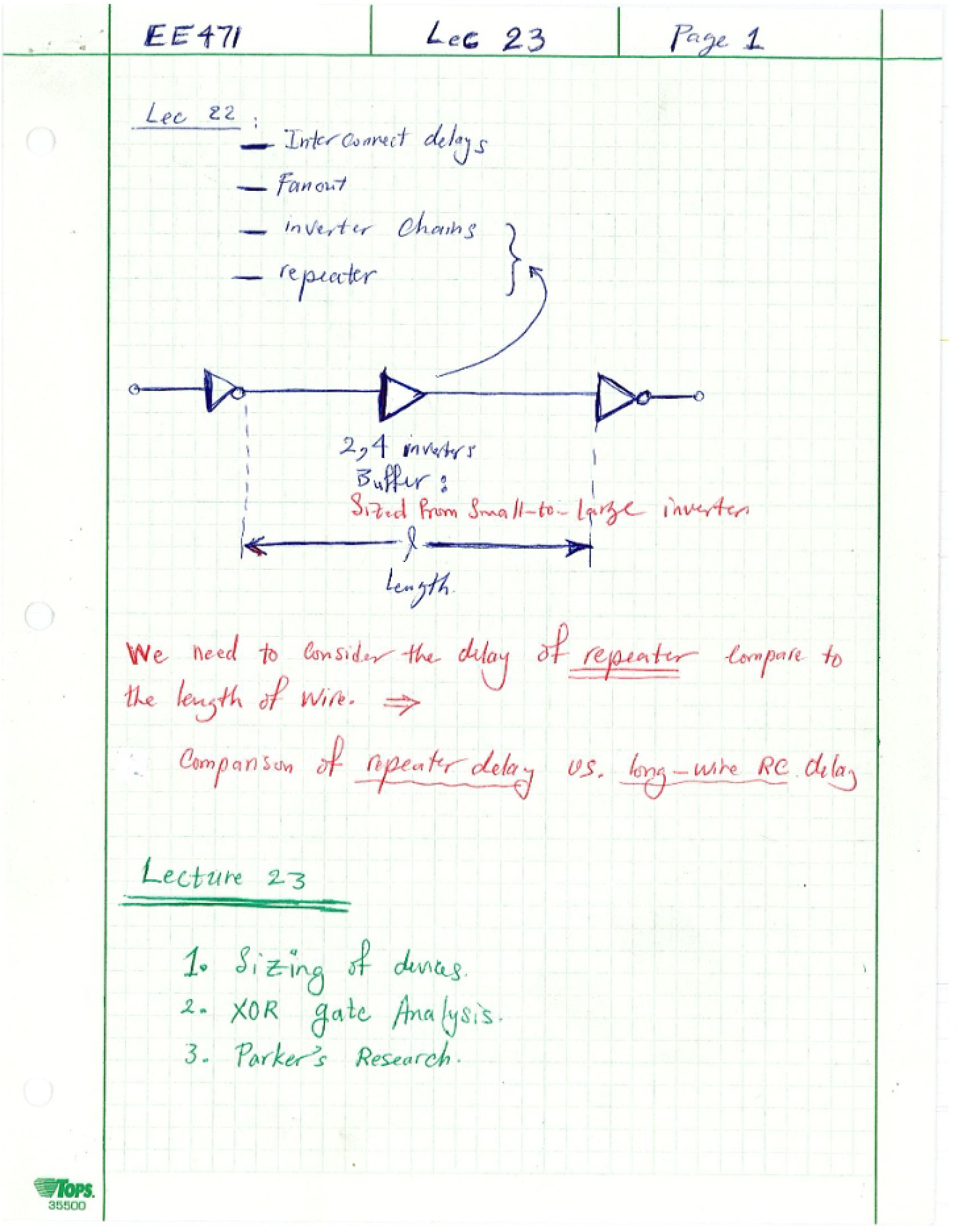
* Discussion of techniques for optimizing circuit performance through the strategic placement of inverters.
* Analysis of parasitic capacitances and their impact on circuit behavior.
* Exploration of pass transistor logic and its advantages.
* Consideration of charge transfer mechanisms within dynamic circuits.
* An introduction to level-sensitive latches and edge-triggered flip-flops.
* Overview of fabrication processes relevant to CMOS circuits.
* Discussion of the fundamental differences between combinational and sequential logic.