What This Document Is
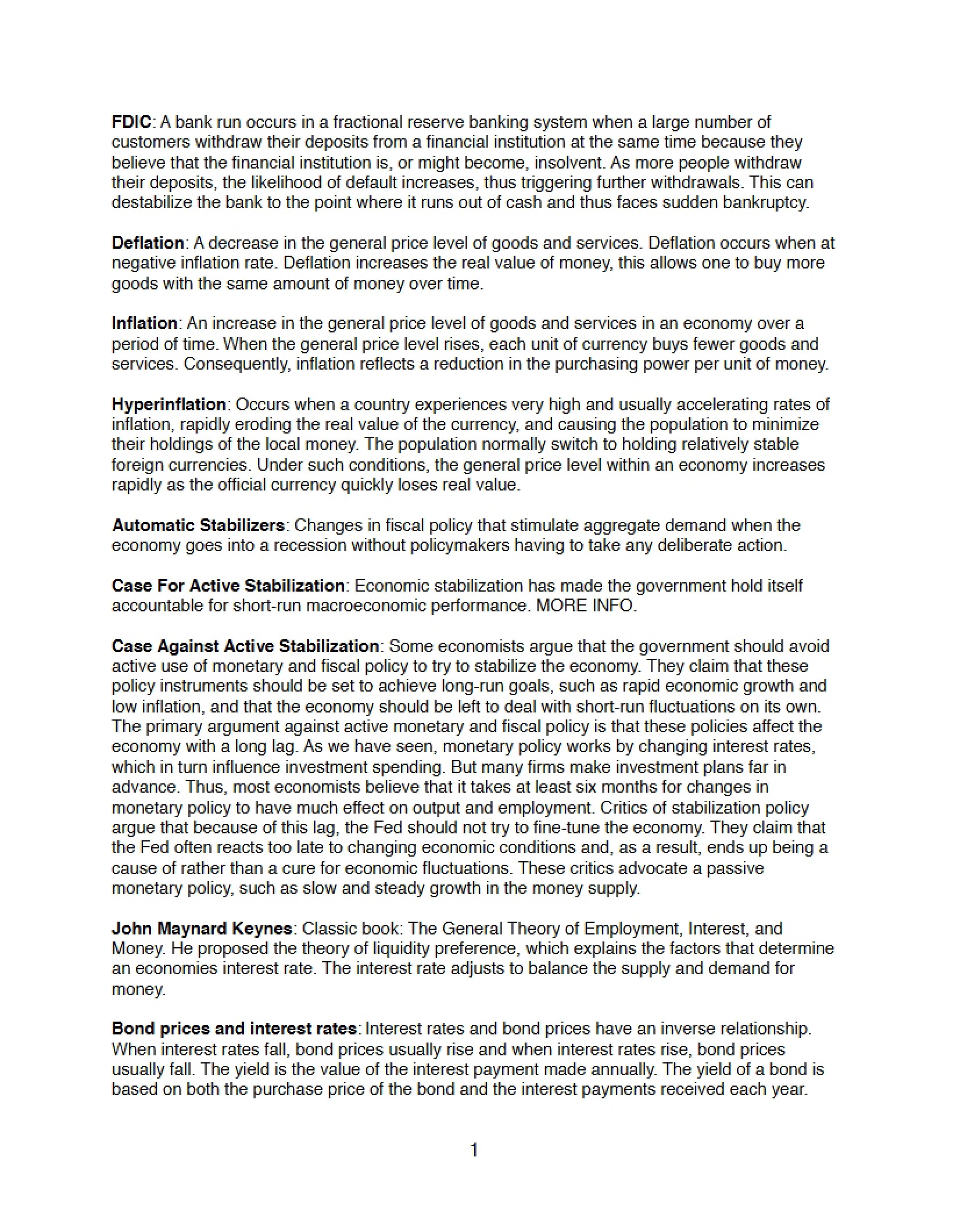
This document is a summary of key concepts from Chapter Eight of a Macroeconomics course (ECON 100) at American University, focusing on the topic of economic growth. It provides an overview of how economic growth is defined, measured, and the factors that contribute to it, both historically and in modern economies.
Why This Document Matters
This summary is valuable for students enrolled in introductory macroeconomics courses. It serves as a concise review of the core ideas presented in the chapter, useful for exam preparation, reinforcing understanding after lectures, or quickly grasping the main themes of economic growth. Understanding economic growth is fundamental to understanding broader macroeconomic trends and policy decisions.
Common Limitations or Challenges
This document is a *summary* and therefore does not provide in-depth analysis or detailed explanations of complex economic models. It won’t substitute for reading the full chapter, attending lectures, or completing assigned problem sets. It also doesn’t cover specific case studies or current events related to economic growth.
What This Document Provides
The full document includes:
* Definitions of economic growth, both in terms of real GDP and real GDP per capita.
* An explanation of the “Rule of 70” and its application to calculating doubling times for economic variables.
* A discussion of “modern economic growth” and its impact on cultural, social, and political structures.
* An overview of growth-promoting institutional structures, including property rights, patents, financial institutions, education, free trade, and competitive markets.
* A breakdown of the determinants of growth into supply, demand, and efficiency factors.
* An introduction to growth accounting and the concepts of human capital and economies of scale.
* Discussion of the rise in average productivity growth.
This preview only provides a high-level overview of these topics; the full document contains detailed explanations and supporting information.