What This Document Is
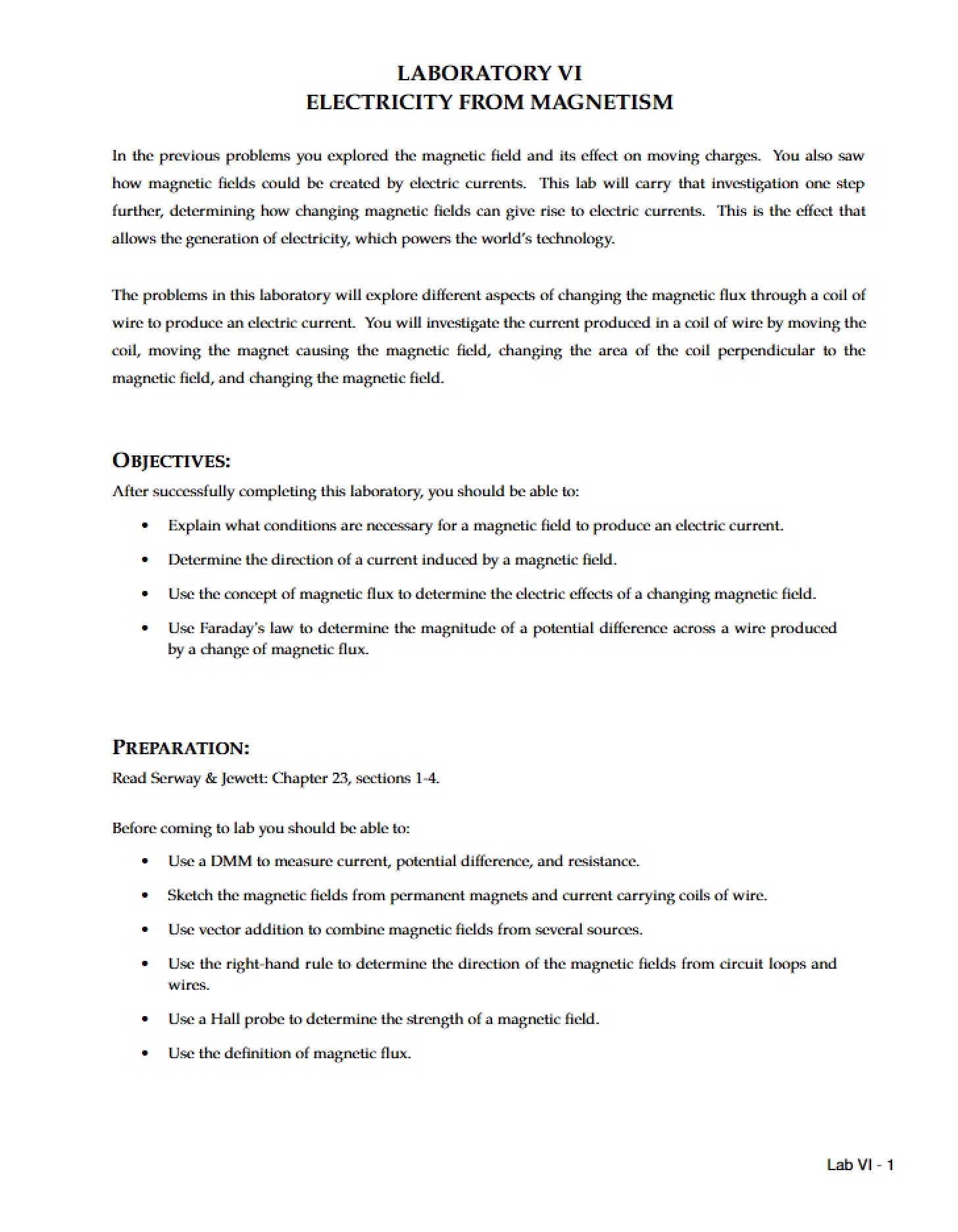
This is a laboratory manual designed to accompany an introductory physics course, specifically focusing on the relationship between magnetism and electricity. It details a hands-on experiment exploring electromagnetic induction – the process of generating an electric current using a changing magnetic field. This lab is part of a sequence building upon prior knowledge of magnetic fields and their interactions with moving charges. It’s geared towards students in physics or pre-medicine programs needing a practical understanding of these fundamental concepts.
Why This Document Matters
This resource is invaluable for students enrolled in a second-semester introductory physics course. It’s particularly helpful when preparing for lab sessions, reinforcing theoretical concepts with practical application, and developing experimental skills. Students who struggle with visualizing the connection between magnetic fields and electric currents, or those needing to solidify their understanding of Faraday’s Law, will find this lab manual especially beneficial. It’s best used *during* and *immediately after* completing the associated lab experiment to analyze results and deepen comprehension.
Common Limitations or Challenges
This manual provides the framework for a laboratory experience; it does *not* contain completed data, analysis, or conclusions. It will not substitute for attending the lab session itself, nor will it provide pre-filled answers to questions posed within the experiment. It assumes a foundational understanding of physics principles and basic laboratory techniques, such as using a multimeter and interpreting graphical data. It also requires access to the specified lab equipment.
What This Document Provides
* Clearly stated learning objectives outlining the skills and knowledge students will gain.
* A preparatory reading assignment referencing specific textbook chapters.
* A detailed description of the experimental setup and required equipment.
* A structured exploration section designed to guide students through the investigative process.
* A problem scenario framed around a real-world application – improving the efficiency of electric generators.
* Guidance on making predictions *before* conducting the experiment.
* Instructions for using specific data acquisition software and probes.