What This Document Is
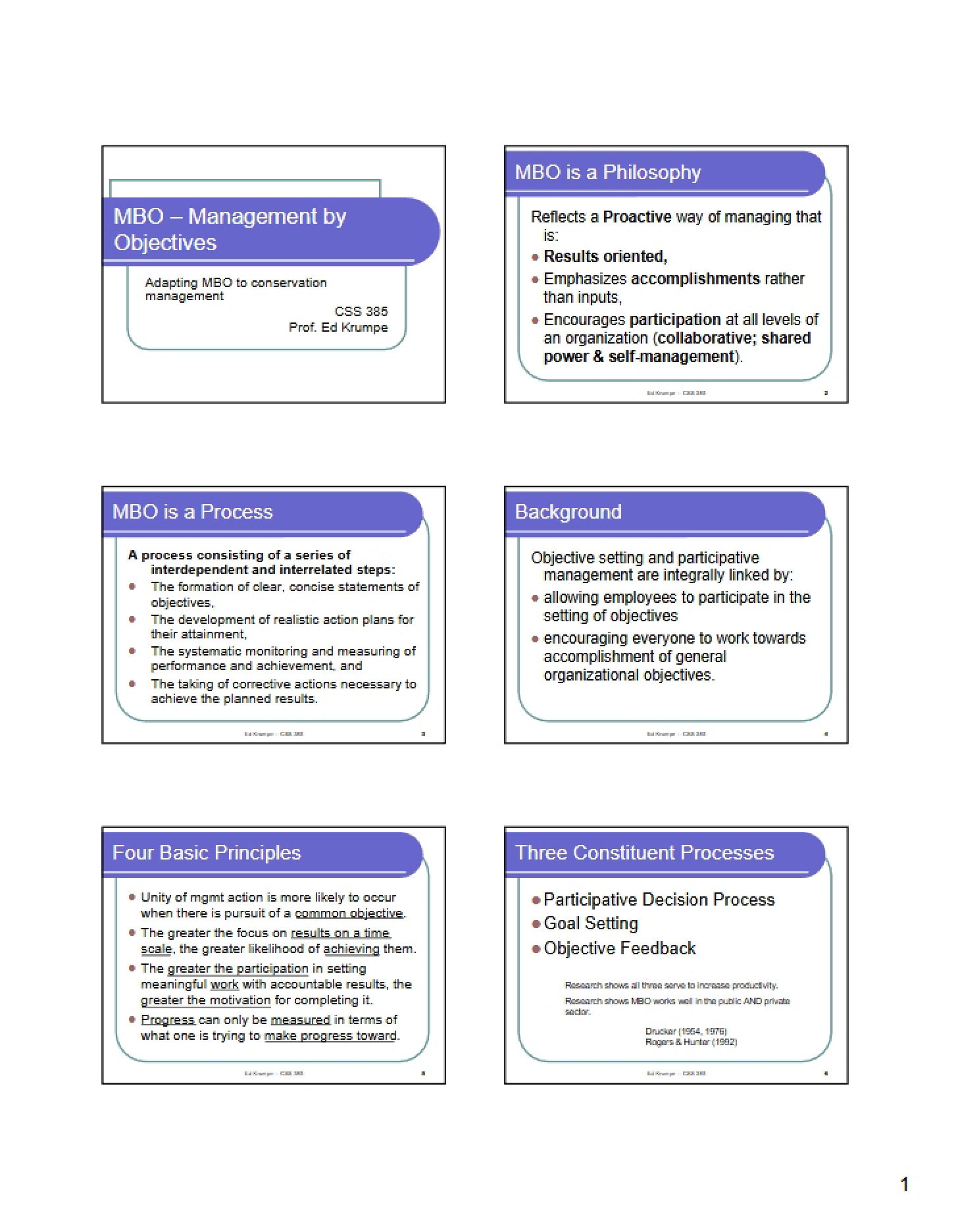
This resource explores a widely-used management technique focused on goal setting and performance evaluation. It details a structured process designed to improve organizational effectiveness by aligning individual and team objectives with broader strategic goals. Specifically, it centers on “Management by Objectives” (MBO) and how it’s applied within a field management context, likely related to natural resource or conservation work given the course affiliation. The material provides a framework for developing, implementing, and assessing performance based on clearly defined targets.
Why This Document Matters
Students in Conservation Management and Planning, and future professionals in related fields, will find this particularly valuable. Understanding MBO is crucial for anyone involved in leading teams, managing projects, or evaluating the success of conservation initiatives. It’s beneficial when you need to translate broad organizational aims into actionable plans for staff, and when you need a systematic way to measure progress and ensure accountability. Professionals preparing for supervisory roles or project leadership will especially benefit from grasping these concepts.
Topics Covered
* The core principles of Management by Objectives
* Defining effective and measurable objectives
* Aligning individual performance with organizational goals
* The importance of staff empowerment in the MBO process
* Utilizing performance evaluations for improvement and future planning
* The relationship between MBO and resource allocation
* Communicating objectives and accomplishments to stakeholders
What This Document Provides
* A detailed overview of the MBO process, from initial planning to final evaluation.
* A breakdown of the characteristics of well-defined objectives.
* Considerations for ensuring objectives are achievable and relevant.
* Insights into how MBO can contribute to staff motivation and engagement.
* A framework for integrating MBO into broader organizational functions like budgeting and public communication.
* Discussion of how to adjust objectives based on preliminary evaluations.