What This Document Is
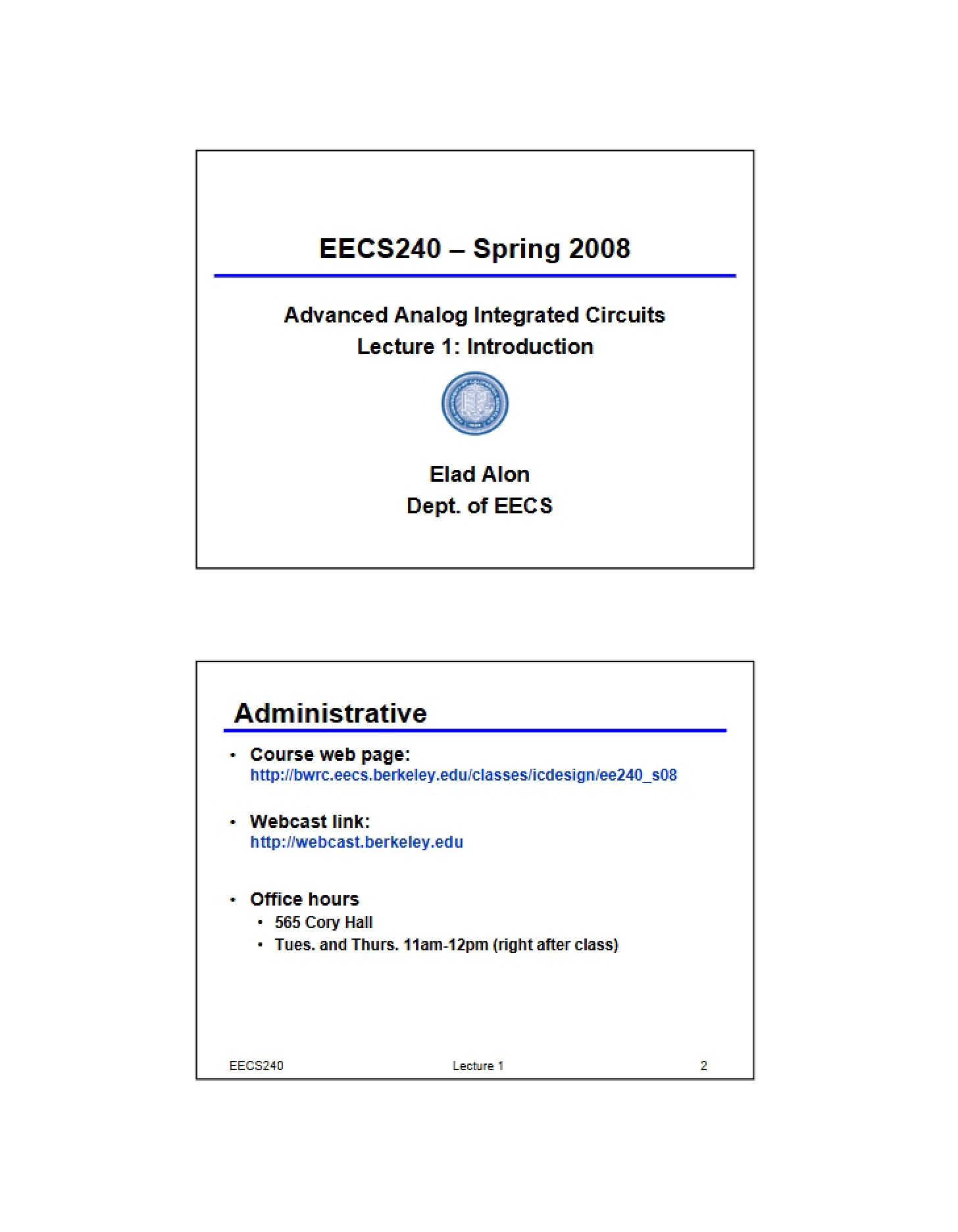
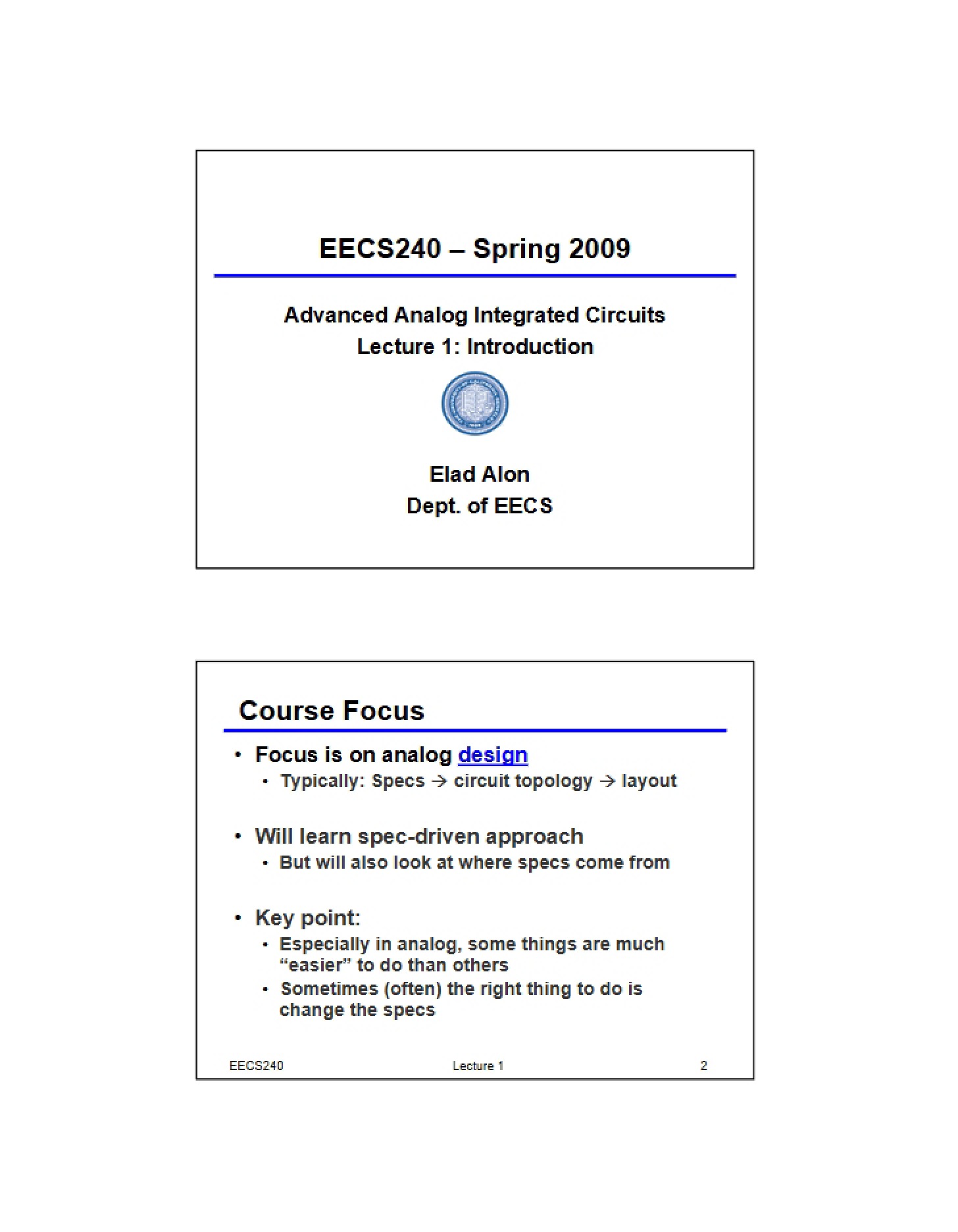
This document provides a detailed overview of the core material covered in ELENG 240B, Advanced Analog Integrated Circuits, at the University of California, Berkeley. It functions as a syllabus and introductory guide, outlining the course structure, expectations, and key areas of focus for students delving into the complexities of analog IC design. It’s designed to give a comprehensive understanding of the course’s scope before diving into the detailed lecture materials.
Why This Document Matters
This resource is invaluable for students enrolled in or considering enrollment in ELENG 240B. It’s particularly helpful at the beginning of the semester to understand the course workload, grading breakdown, and required resources. Prospective students can use this to gauge their preparedness and interest in the subject matter. Current students will find it useful as a constant reference for important dates, policies, and a high-level view of the topics to be explored throughout the term.
Topics Covered
* Course logistics and administrative details
* Overview of essential reference materials for advanced study
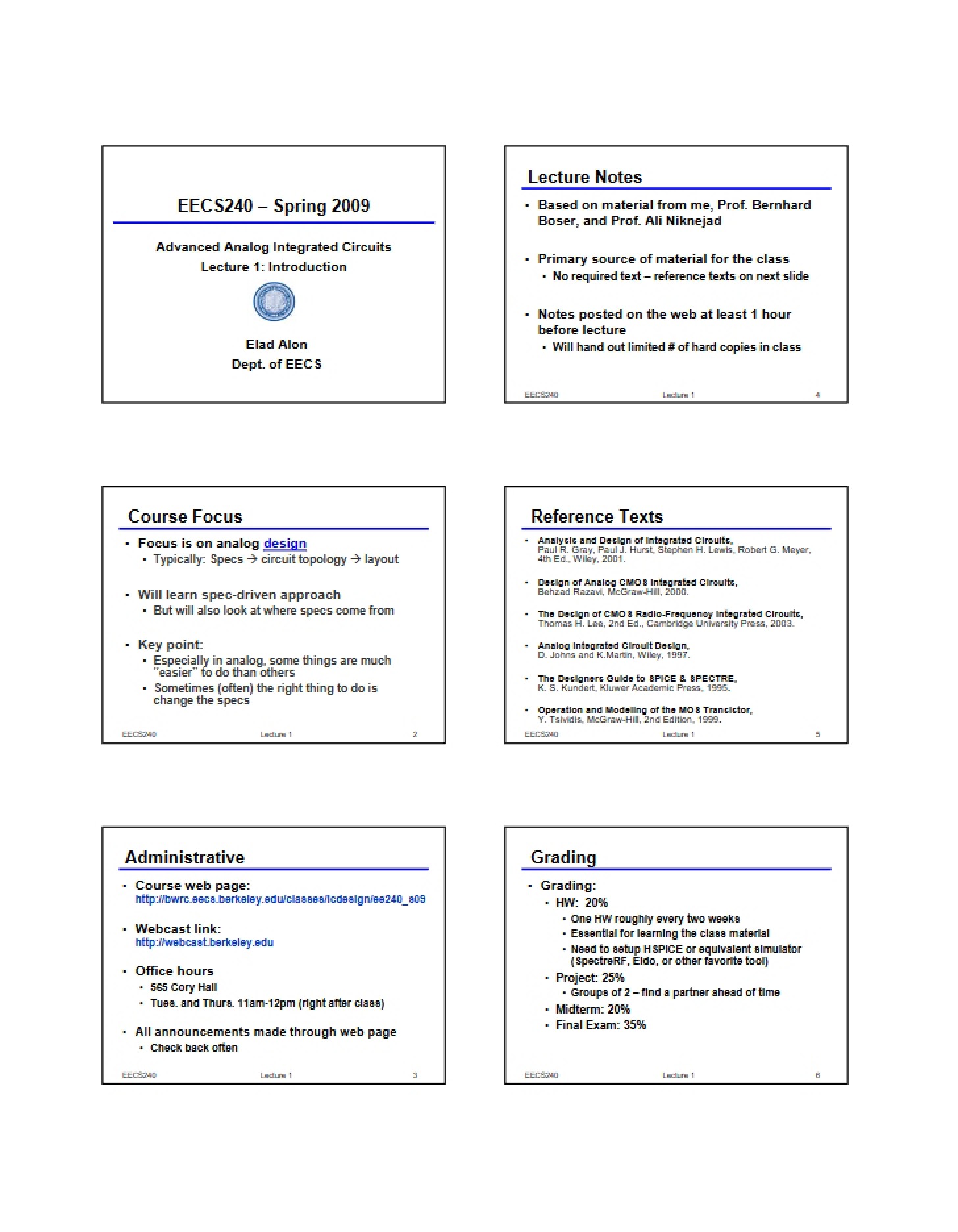
* Grading policies and assessment components (homework, projects, exams)
* Course schedule and important dates (including potential adjustments for events)
* The role of analog circuits in modern electronic systems
* Fundamental concepts relating analog design to digital systems
* Considerations for high-performance circuit design
* Emerging trends and challenges in analog IC development
* The relationship between analog and RF circuit design
What This Document Provides
* A clear outline of homework assignments and project expectations.
* Information regarding office hour availability and location.
* A list of recommended textbooks and supplemental reading materials.
* A preliminary schedule of lecture topics and key milestones.
* Insight into the motivations and applications of advanced analog circuit design.
* A foundational understanding of the course’s approach to bridging analog and digital domains.