What This Document Is
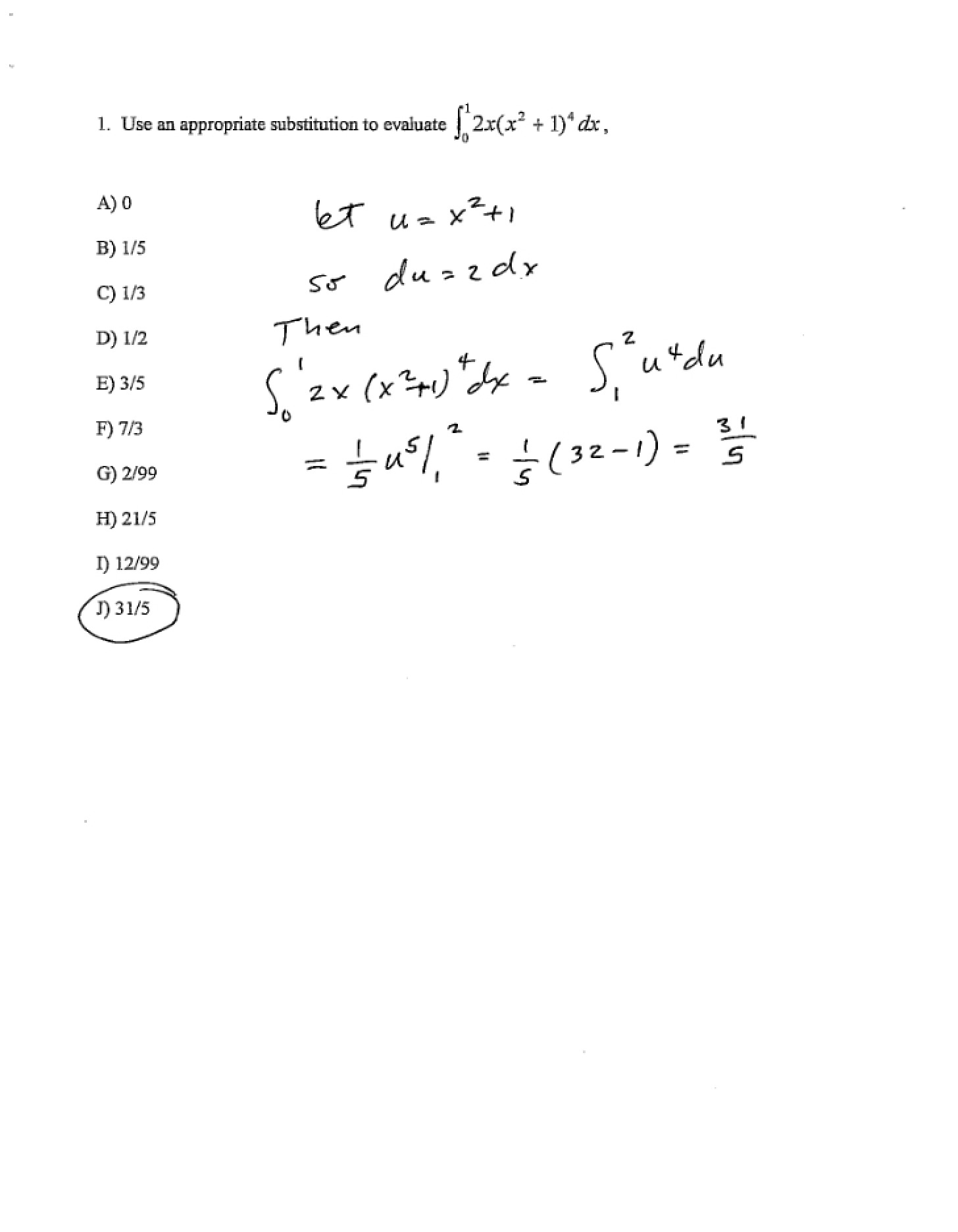
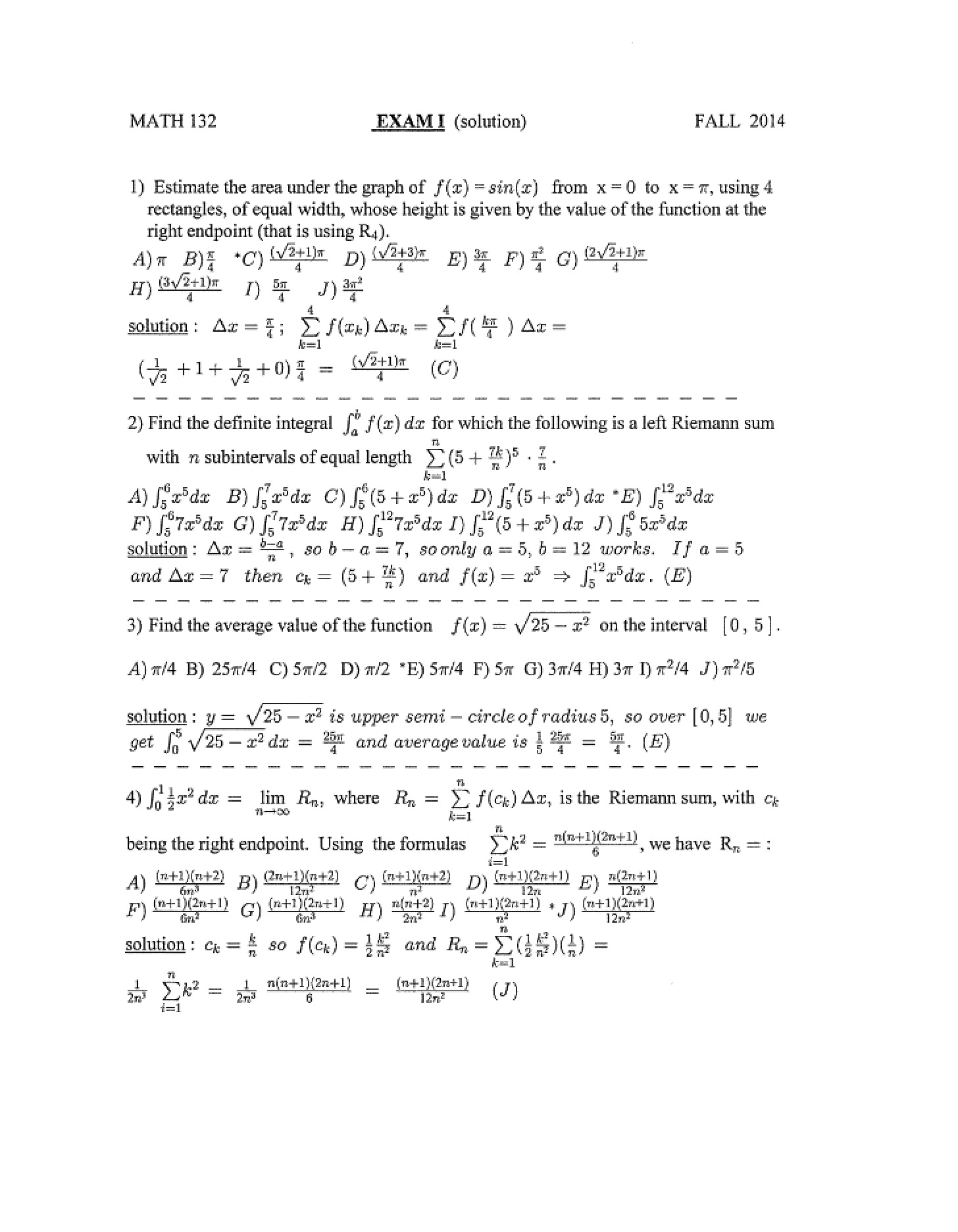
This is a past exam from a Calculus II course (MATH 132) at Washington University in St. Louis, originally administered in Spring 2006. It’s a comprehensive assessment designed to evaluate a student’s understanding of key concepts covered in the course up to the third exam. The exam focuses on integral calculus applications and related problem-solving techniques. It’s formatted as a traditional exam with multiple-choice questions and space for longer-form responses on a separate booklet.
Why This Document Matters
This resource is invaluable for students currently enrolled in Calculus II, or those preparing to take the course. It provides a realistic glimpse into the types of questions, the level of difficulty, and the overall exam format used by the instructor at Washington University in St. Louis. Utilizing past exams is a proven strategy for effective exam preparation, allowing students to identify knowledge gaps and practice applying concepts under timed conditions. It’s particularly useful for self-assessment and pinpointing areas needing further study. Students who want to understand the expectations of this specific course will find this particularly helpful.
Common Limitations or Challenges
While this exam offers excellent practice, it’s important to remember that course content and instructor emphasis can evolve over time. Therefore, this exam should be used as a supplemental resource alongside current coursework and assigned materials. It does not include detailed explanations or worked-out solutions; it’s purely an assessment tool. Furthermore, it represents a single version of the exam (Version 0.0), and other versions may exist with differing questions.
What This Document Provides
* A full set of multiple-choice questions covering topics typically found in a Calculus II curriculum.
* Questions relating to applications of integration, such as calculating volumes of solids of revolution.
* Problems involving arc length calculations for parametric curves.
* Questions testing understanding of average values of functions.
* Application problems related to work and springs, and work related to chains and fluid dynamics.
* Insight into the exam’s structure, including instructions and logistical details.
* A sense of the question style and difficulty level expected in this Calculus II course.