What This Document Is
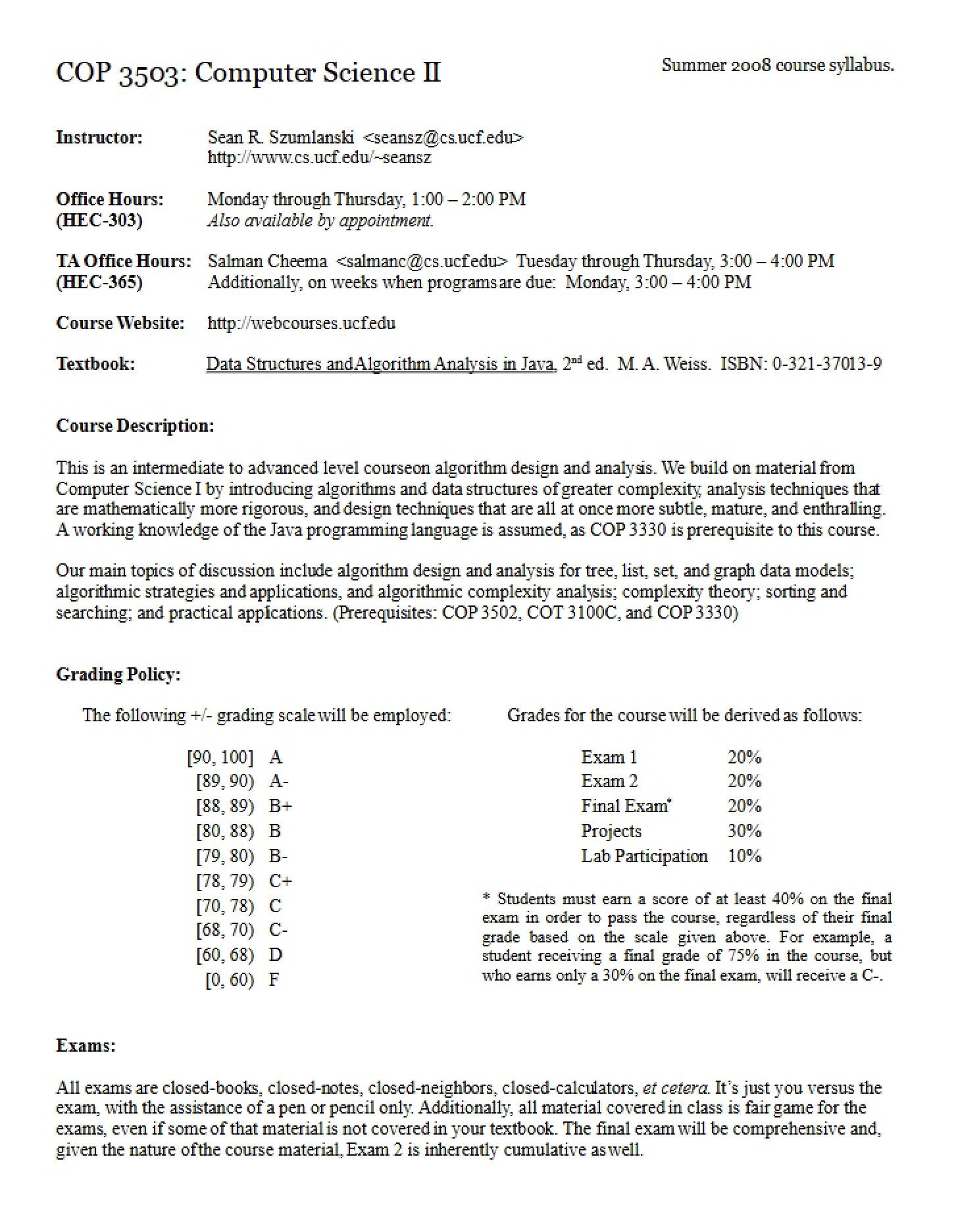
This resource is a foundational lecture introduction for Computer Science II (COP 3503C) at the University of Central Florida. It serves as a crucial bridge between introductory programming concepts and more advanced topics in algorithm design and analysis. The material focuses on establishing a strong mathematical basis for evaluating the efficiency of computer programs and understanding how different approaches scale with increasing data sizes. It’s designed to be presented alongside initial group activities to reinforce learning.
Why This Document Matters
This material is essential for any student seeking to excel in COP 3503C and beyond. It’s particularly beneficial for those who want to move beyond simply writing code that *works* to writing code that is *efficient* and scalable. Students preparing for more complex projects, internships, or advanced coursework in computer science will find a solid grasp of these concepts invaluable. Reviewing this content before tackling coding assignments involving performance considerations will significantly improve your problem-solving abilities.
Topics Covered
* The distinctions between introductory and intermediate computer science coursework.
* The core goals of a Computer Science II curriculum, including algorithmic techniques and data structures.
* The fundamental principles of algorithm analysis and its importance in software development.
* Methods for approximating algorithm runtime and understanding input size dependencies.
* The concept of “Big-Oh” notation and its role in comparing algorithm efficiency.
* Identifying and categorizing basic computational operations for analysis.
What This Document Provides
* An overview of the instructor’s background and expertise.
* A description of the course’s objectives and expectations.
* A framework for understanding the challenges of determining exact algorithm runtime.
* An introduction to the idea of using mathematical functions to represent algorithm performance.
* A discussion of the factors that contribute to variations in runtime across different machines.
* A clear articulation of the ultimate goal of algorithm analysis: counting simple operations.