What This Document Is
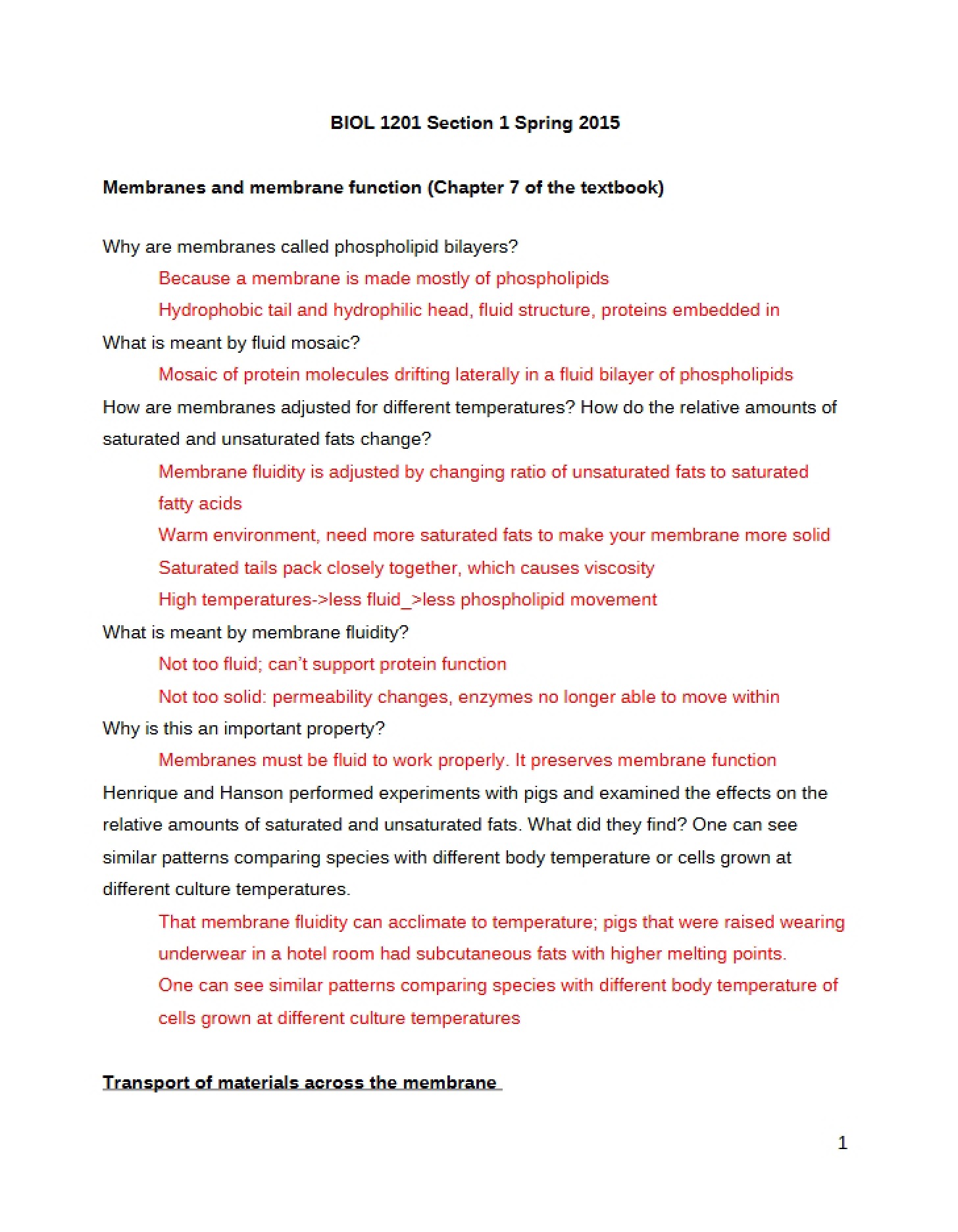
This study guide provides a comprehensive overview of membrane structure and function, a foundational topic in biology. Specifically designed for students in BIOL 1201 at UCLA, it delves into the complexities of cellular boundaries and how they regulate the internal environment. It’s built to support understanding of key concepts presented in Chapter 7 of the course textbook.
Why This Document Matters
This resource is ideal for students looking to solidify their understanding of membrane biology, whether preparing for quizzes, exams, or simply seeking a deeper grasp of the material. It’s particularly helpful for those who benefit from a structured review of core principles and the relationships between different concepts. If you’re struggling to visualize how membranes work or need a clear explanation of transport mechanisms, this guide can be a valuable asset to your studies.
Topics Covered
* The fundamental structure of biological membranes, including the arrangement of key components.
* Factors influencing membrane fluidity and how cells adapt to changing environmental conditions.
* The principles of selective permeability and how different molecules interact with the membrane.
* Various mechanisms of transport across cell membranes, including passive and active processes.
* The concept of tonicity and its impact on cells in different environments.
* The role of specialized proteins in membrane transport.
What This Document Provides
* Detailed explanations of key terminology related to membrane biology.
* A focused exploration of the relationship between membrane structure and its functional properties.
* A framework for understanding how cells maintain internal stability through membrane regulation.
* Conceptual insights into the processes governing the movement of substances across cellular boundaries.
* A resource to help you connect theoretical concepts to real-world examples.