What This Document Is
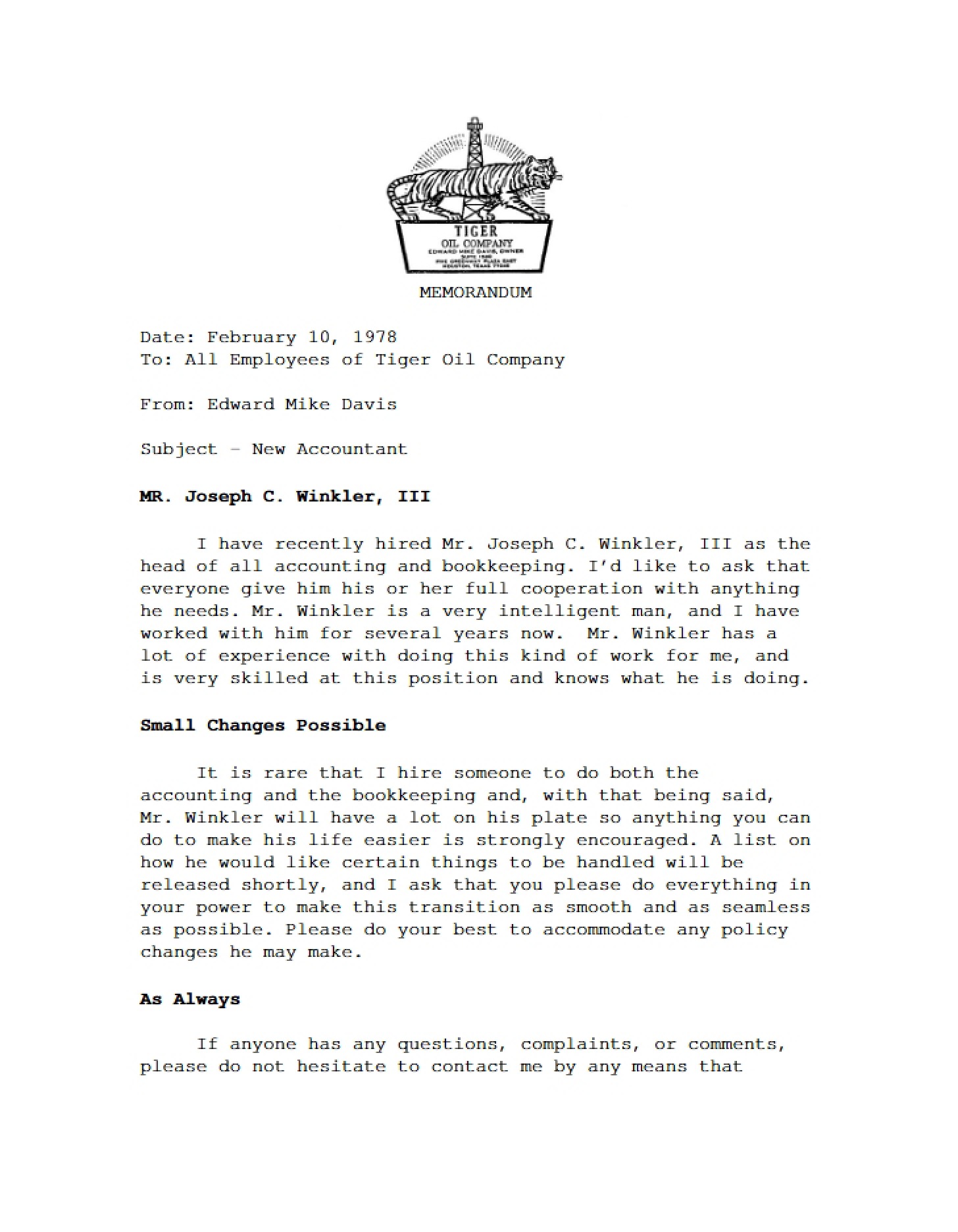
This is a historical business memorandum originating from a corporate setting in 1978. It functions as an official communication distributed internally to various departments – including landmen, geologists, geophysicists, and engineers – addressing important company policies and providing updates on internal matters. The memo format itself is a key element, representing a standard method of professional communication during that era. It’s a primary source example of how organizations conveyed information to their employees before widespread email and digital communication.
Why This Document Matters
Students of professional communication, business administration, and organizational studies will find this memo particularly valuable. It offers a real-world illustration of internal corporate communication practices from a specific historical context. Analyzing this memo can enhance understanding of how companies established expectations, addressed employee conduct, and maintained operational efficiency. It’s useful for coursework focusing on business writing, workplace etiquette, and the evolution of communication strategies. Professionals seeking to understand the historical roots of modern business practices will also benefit.
Common Limitations or Challenges
This memo represents a snapshot in time. It reflects the specific policies and concerns of one company in 1978 and should not be generalized as universally applicable. It does *not* provide a comprehensive guide to modern expense reporting or company policy. Furthermore, the context surrounding the memo – the specific industry, company size, and broader economic conditions – is not fully detailed within the text itself, requiring additional research for complete understanding. It is a single communication and doesn’t represent a full communication strategy.
What This Document Provides
* A genuine example of a formal business memorandum.
* Insight into company expectations regarding financial responsibility.
* An illustration of internal communication regarding policy adherence.
* A glimpse into the professional tone and style prevalent in the late 1970s.
* A demonstration of how companies addressed employee well-being alongside business needs.