What This Document Is
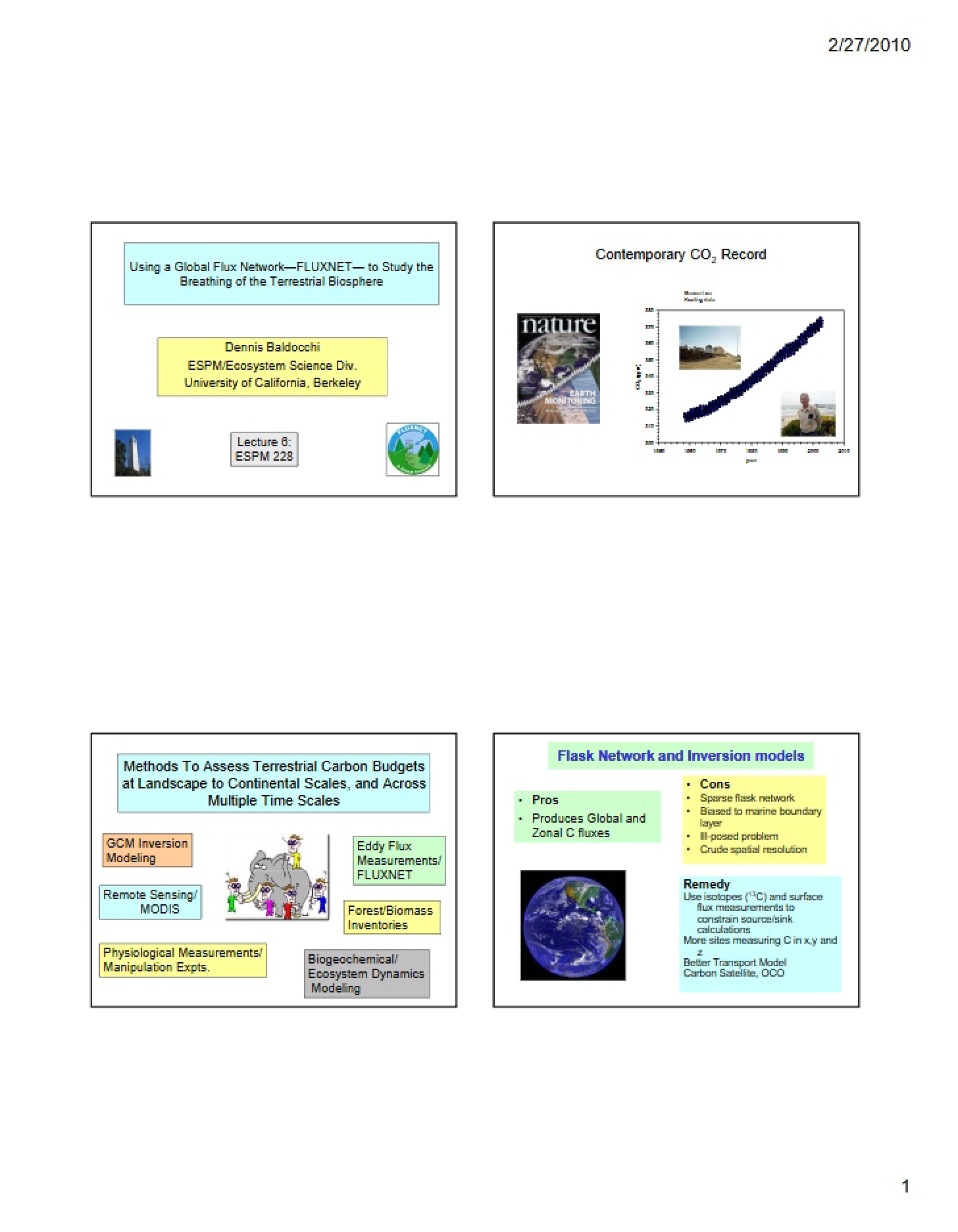
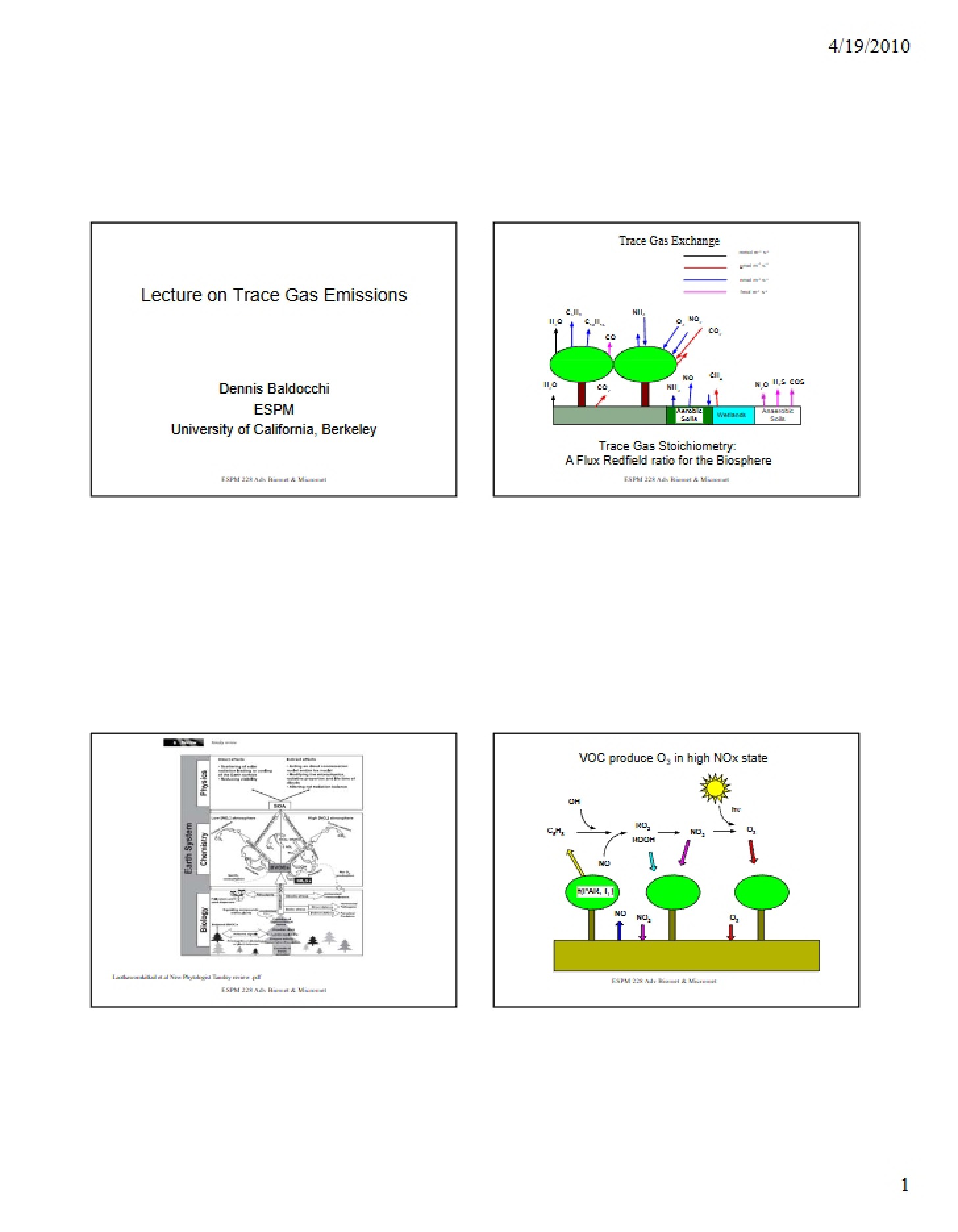
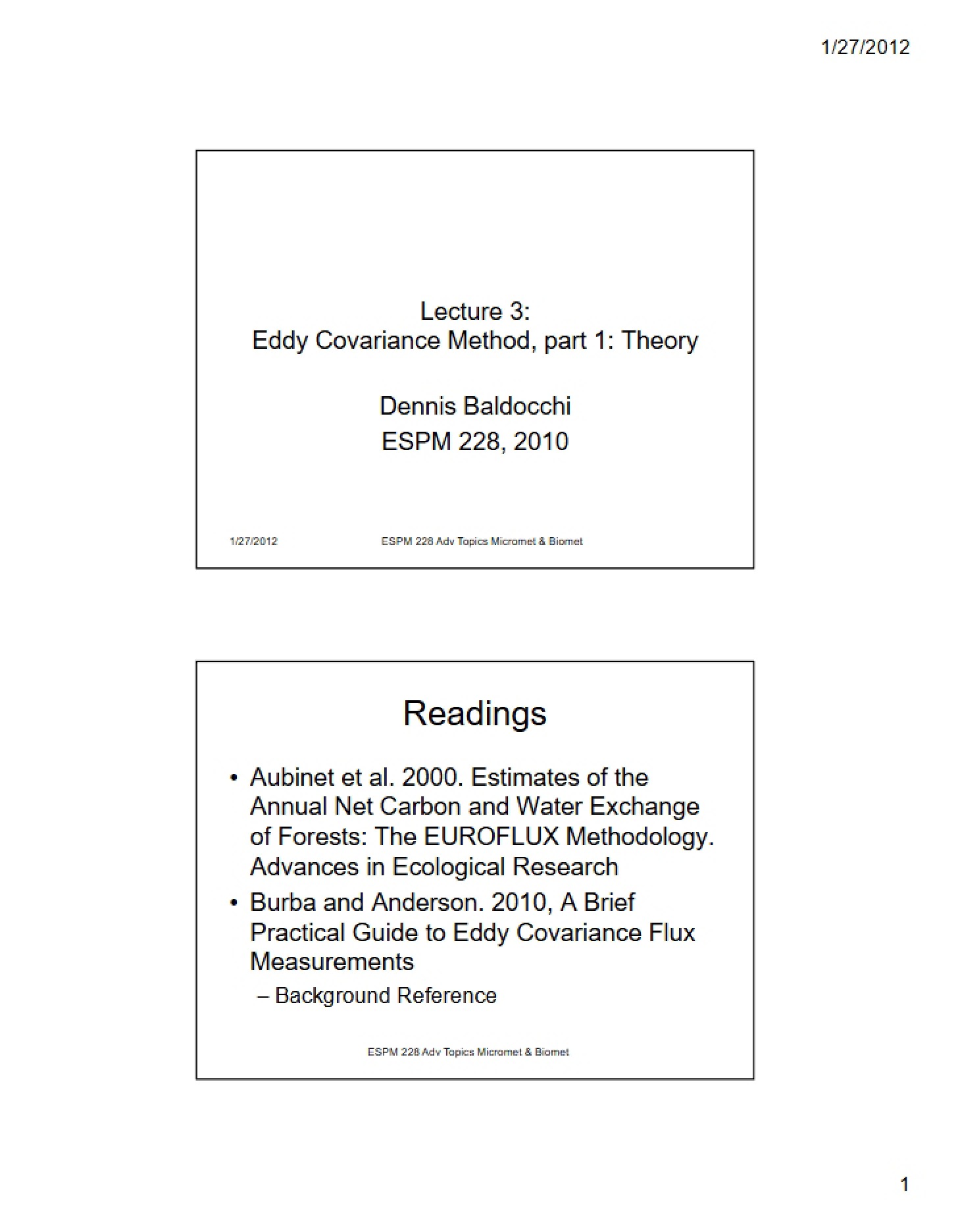
This document presents advanced lecture material from ESPM 228, a course on Biometeorology and Micrometeorology at UC Berkeley. It focuses specifically on micrometeorological flux measurement methods and the underlying Flux-Gradient Theory. This is a detailed exploration of how scientists quantify the exchange of energy, mass, and momentum between ecosystems and the atmosphere. It builds upon foundational knowledge in atmospheric science, ecology, and biogeochemistry.
Why This Document Matters
This resource is invaluable for students and researchers delving into advanced ecological studies, atmospheric science, and related fields. It’s particularly useful for those seeking a deeper understanding of how to measure and interpret ecosystem-atmosphere interactions. Individuals working on projects involving carbon cycling, water balance, or energy budgets within ecosystems will find this material highly relevant. It’s ideal for supplementing coursework or preparing for research involving field measurements and data analysis.
Topics Covered
* Fundamentals of micrometeorological flux methods
* The application of Flux-Gradient Theory
* Assumptions and limitations of micrometeorological techniques
* The principle of ergodicity and its relevance to spatial averaging
* Taylor’s frozen eddy hypothesis
* Concepts related to atmospheric turbulence and diffusion
* Considerations for experimental design and ancillary measurements
What This Document Provides
* A theoretical framework for understanding mass, energy, and momentum exchange.
* Discussion of the advantages and challenges associated with micrometeorological methods.
* Key equations and concepts related to flux measurement.
* Contextual background on the historical development of micrometeorological techniques.
* A foundation for interpreting data obtained from micrometeorological instruments.