What This Document Is
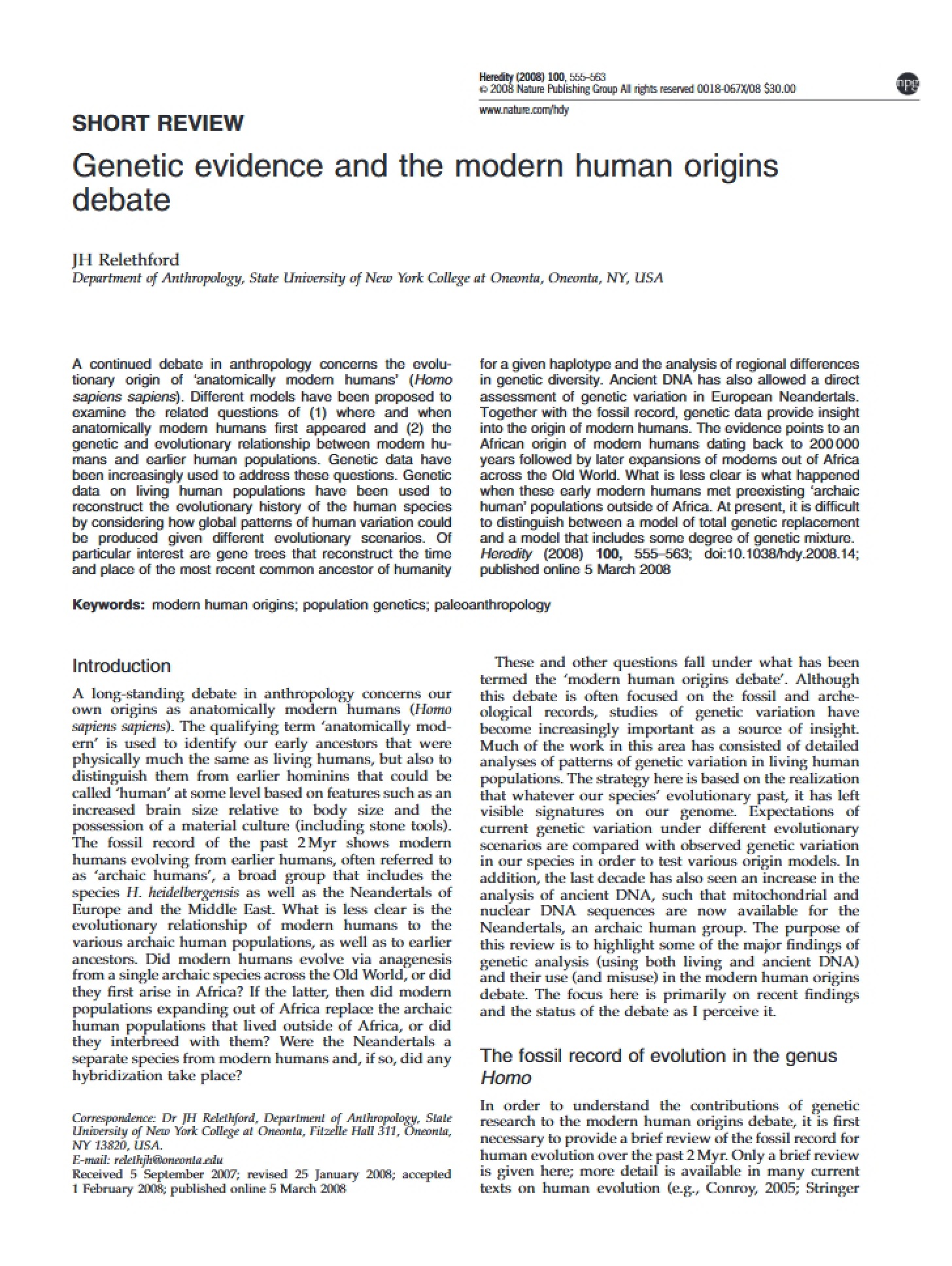
This is a focused scholarly article examining the fossil record of hominins – the group including humans and our extinct ancestors – during the Middle and Late Pleistocene epochs. Specifically, it delves into the physical characteristics and evolutionary relationships of hominid remains discovered in Africa and Southwest Asia. The work, originally published in 2009, represents a synthesis of research on cranial and postcranial morphology (the study of bone structure) as it relates to understanding human origins. It’s a detailed investigation intended for advanced students and researchers in paleoanthropology.
Why This Document Matters
Students enrolled in courses like Paleoanthropology, Human Evolution, or even advanced sections of introductory Anthropology will find this resource particularly valuable. It’s ideal for those seeking a deeper understanding of the complexities of hominin evolution *between* Homo erectus and Homo sapiens. Researchers investigating regional variations in hominin traits or the development of modern human characteristics will also benefit. This material is best utilized when building upon foundational knowledge of primate evolution, geological dating methods, and basic skeletal anatomy.
Common Limitations or Challenges
This article is a specialized academic piece and assumes a pre-existing familiarity with paleoanthropological terminology and concepts. It does *not* provide a general overview of human evolution; rather, it focuses on a specific timeframe and geographic region. It also doesn’t offer a comprehensive guide to archaeological methods or fossil dating techniques – those are assumed to be understood by the reader. The analysis is centered on skeletal remains and associated archaeological contexts, and doesn’t extensively cover genetic evidence.
What This Document Provides
* Detailed discussion of hominin fossil finds from key sites in Africa and Southwest Asia.
* Analysis of morphological traits observed in Middle and Late Pleistocene hominin skulls and postcranial skeletons.
* Exploration of potential evolutionary relationships between different hominin populations.
* Consideration of how skeletal features relate to behavioral inferences, such as tool use and potential mortuary practices.
* Examination of the chronological context of fossil discoveries and their connection to archaeological assemblages.