What This Document Is
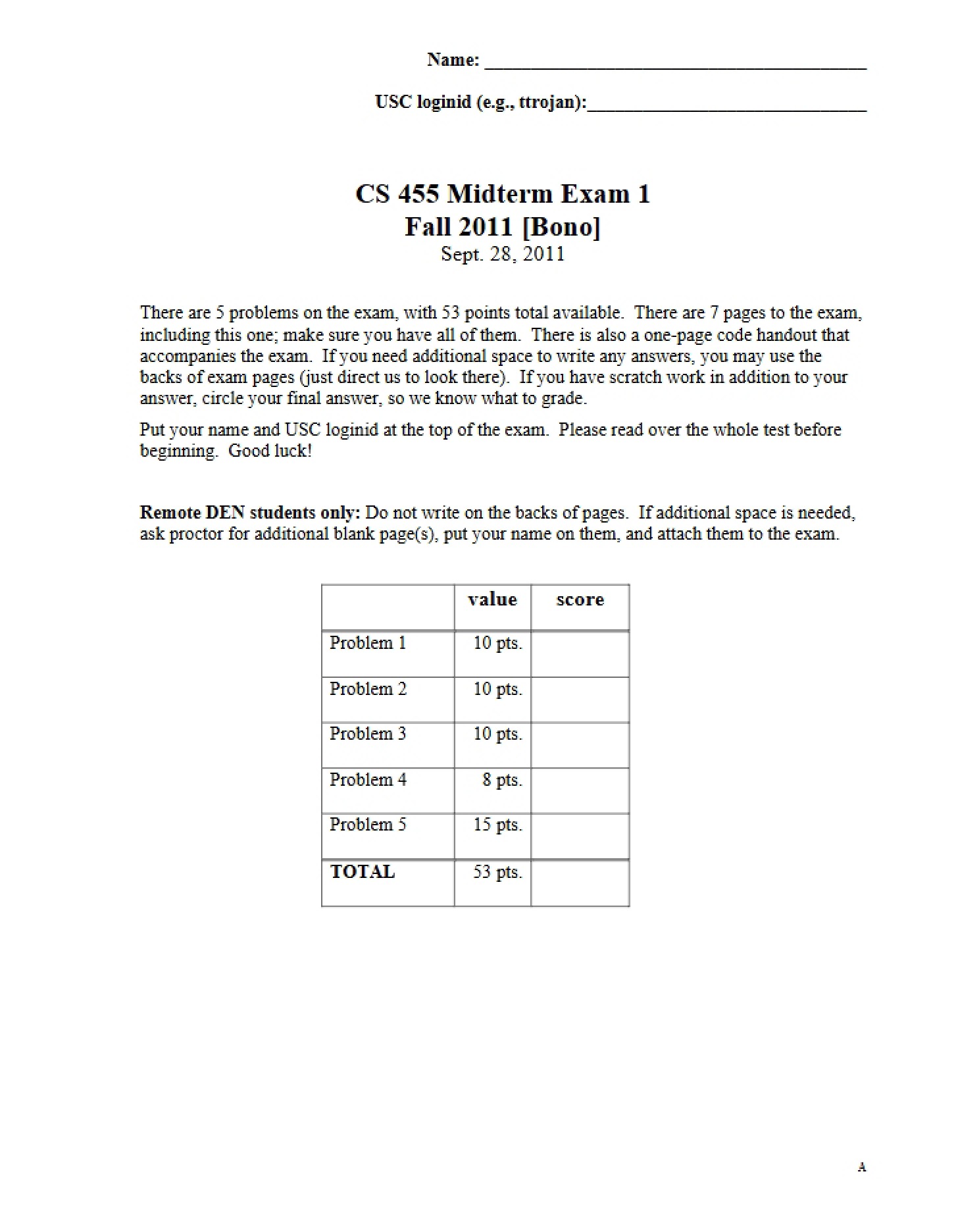
This document is a past midterm examination from CSCI 455x, Introduction to Programming Systems Design, offered at the University of Southern California. Specifically, it’s the first midterm exam administered in Fall 2010. It’s designed to assess a student’s understanding of fundamental programming concepts and their application to systems-level thinking. The exam focuses on core principles related to object-oriented programming and algorithm analysis. It tests the ability to reason about code execution and data structures.
Why This Document Matters
This resource is invaluable for students currently enrolled in or preparing for CSCI 455x. It provides a realistic example of the types of questions, the level of difficulty, and the overall format of the course’s assessments. Studying past exams is a proven method for identifying knowledge gaps and refining test-taking strategies. It’s particularly useful for understanding the instructor’s expectations and preferred problem-solving approaches. Access to this midterm can help you gauge your preparedness and focus your study efforts effectively.
Common Limitations or Challenges
It’s important to remember that this is a past exam. While the core concepts likely remain relevant, the specific details and emphasis may differ in current iterations of the course. This document does *not* include solutions or explanations; it’s purely the exam itself. Relying solely on this resource without engaging with current course materials (lectures, assignments, and readings) will likely be insufficient for success. Furthermore, the coding environment and specific libraries used in the course may have evolved.
What This Document Provides
* A full, previously administered midterm exam for CSCI 455x.
* A variety of problem types, including code analysis and modification.
* Questions covering topics such as object state, method execution, and algorithmic efficiency.
* An indication of the point distribution for each problem, reflecting the relative importance of different concepts.
* A glimpse into the expected problem-solving style and rigor of the course.
* A code handout referenced within the exam questions.