What This Document Is
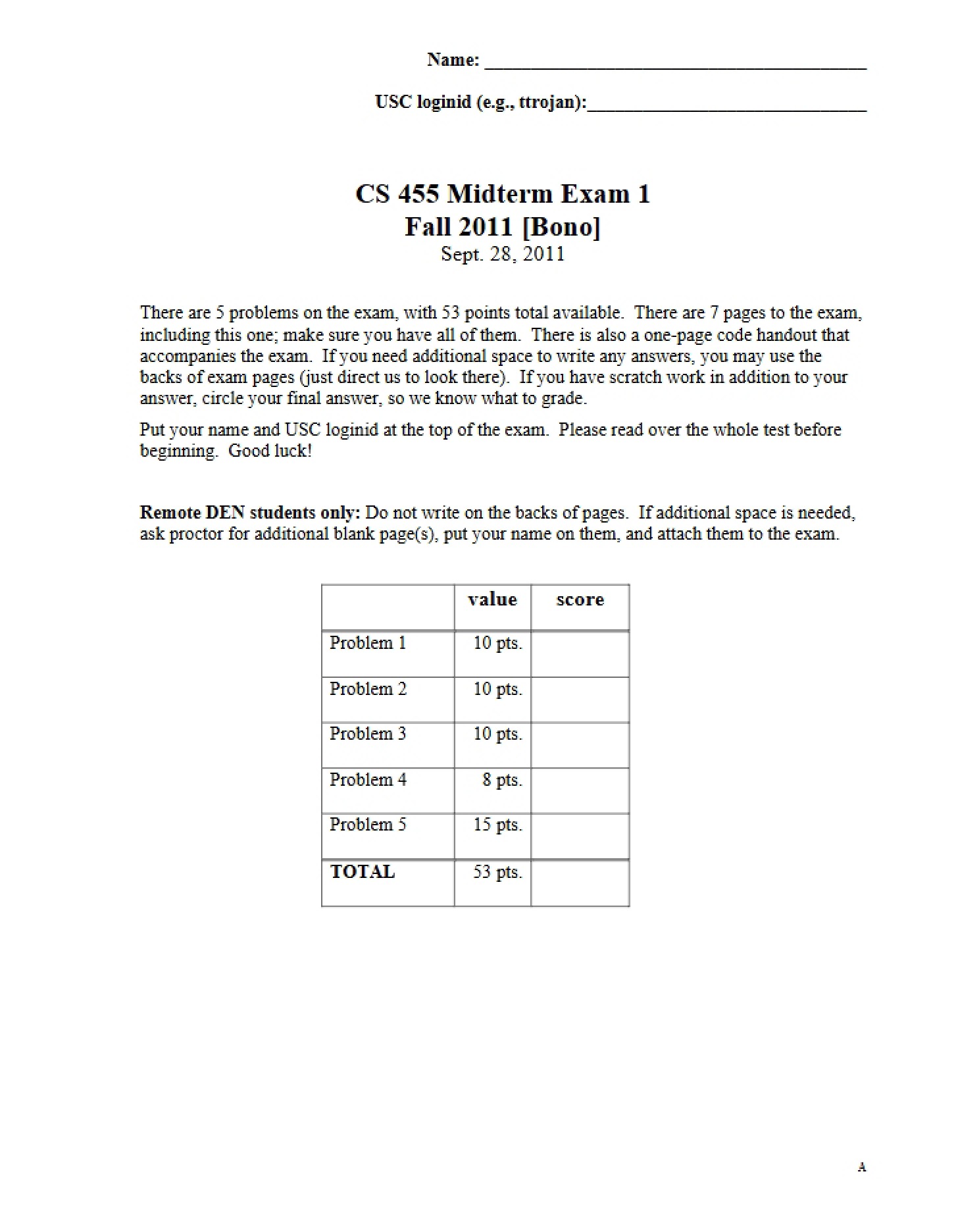
This is a past midterm examination from CSCI 455x, Introduction to Programming Systems Design, offered at the University of Southern California. Specifically, it’s the first midterm exam administered in Fall 2012. The exam assesses foundational understanding of core programming concepts as they relate to systems design principles. It’s a valuable resource for students currently enrolled in or preparing for a similar course. The document includes the exam questions themselves, along with space for answers – though those answers are not included here. A separate code handout accompanied the original exam.
Why This Document Matters
Students preparing for CSCI 455x, or a comparable introductory programming systems design course, will find this document particularly helpful. It provides a realistic assessment of the types of questions and the level of difficulty expected on a midterm exam. Reviewing past exams is a proven strategy for identifying knowledge gaps and focusing study efforts. It’s best used *after* initial coursework has been completed, as a way to self-test and gauge preparedness. It’s also useful for understanding the exam format and the instructor’s expectations regarding problem-solving approaches.
Common Limitations or Challenges
This document represents a single past exam. While indicative of the course material and assessment style, it may not be fully representative of *all* potential exam content. Course content and emphasis can shift from semester to semester. Furthermore, this preview does not include the solutions or answers to the questions posed. Access to the full document is required to view the complete exam and evaluate your understanding. It's important to remember that relying solely on past exams isn’t a substitute for thorough understanding of the course material.
What This Document Provides
* A complete copy of the original midterm exam questions.
* Insight into the point distribution across different problems.
* Examples of the types of programming problems presented in the course (involving Java code).
* Questions designed to assess understanding of memory diagrams and program output.
* A class implementation problem requiring code completion.
* An overview of the exam’s structure and instructions.